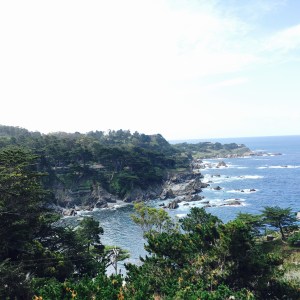
Carmel-by-the-Sea,
so much beauty and money
in one single place.
Carmel-by-the-Sea,
so much beauty and money
in one single place.
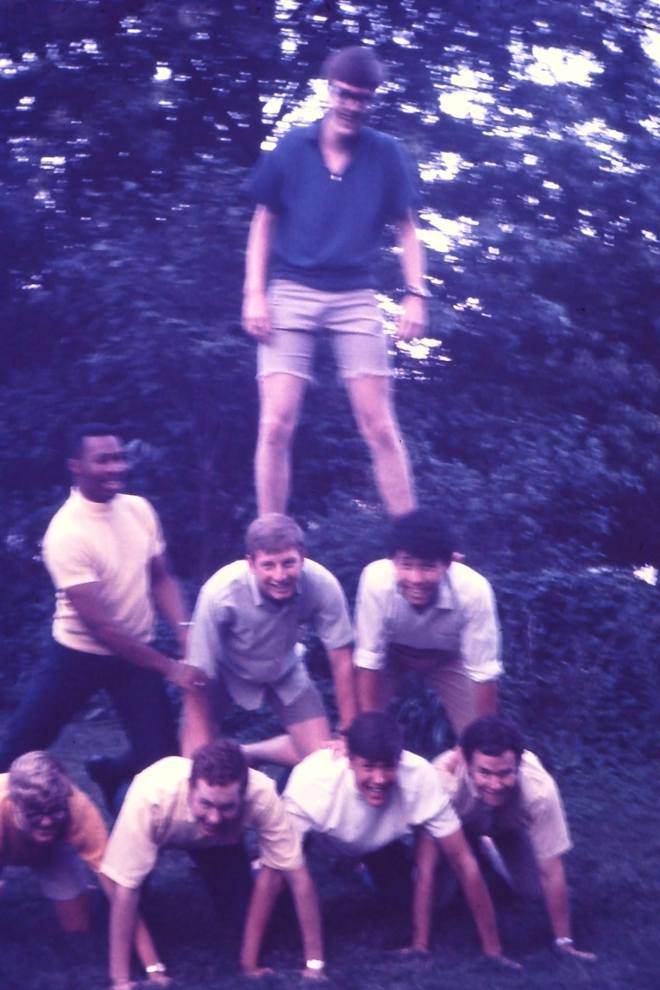
Dear upperclassmen,
we idolized you so much,
you were like heroes.
Then, that class trip fiasco,
And class trips were abolished.
NOTES: The class ahead of us in high school was impressive. It included some very smart and talented people who challenged and inspired us underclassmen.
Counted among its members were some of the best athletes, actors, debaters, musicians and scholars ever to come out of our little Missouri town of Marshall. When they went away to college in the fall of 1969, they returned on their breaks with fascinating stories of life at their campuses.
I paid close attention to their testimonials, and followed a couple of them when it came time to make my own college choice.
The class of 1969 certainly went out with a bang. Our high school had long had a tradition of the senior class trip, which involved a long trek to some exotic destination far enough away to make getting there grueling and sleep-deprived.
That year the seniors made the long bus ride to Six Flags Over Texas. But during the course of that journey, something happened.
The stories we heard were somewhat hushed and confusing, but whatever happened was so serious that school officials cancelled senior trips forevermore.
The next year, there was not even a discussion about our own class taking a senior trip. Not. A. Chance.
The Class of ’69 was already notable in that it had voted to abolish the venerable tradition of selecting the most popular and respected girl to preside over Achievement Night as Miss Fair Marshall.
Now, our heroes had managed to put the kibosh on another tradition. In a way it enhanced the reputation of the Class of ’69 even further. In addition to all their other superlatives, they had also become the Biggest Screw-Ups.
I’m hoping some of my old schoolmates from the Class of ’69 might finally come forward with the true story of what transpired on that notorious trip. Why don’t you just come clean? Confession is good for the soul and the statute of limitations on your crimes certainly has expired.
Some members of my own class are still a bit aggrieved that we didn’t get to have our senior trip because of you.
It would be good to be able to put the scurrilous rumors to rest, and to finally forgive and forget.
STYLE NOTE: Like haiku, the tanka is a traditional Japanese short poem form with a prescribed number of syllables. The pattern is 5-7-5-7-7.

Old streets remind me
I did not know compassion
when I walked them then.
NOTES: I have come into possession of a treasure trove of photos from the late 1960s taken by an old schoolmate, Susumu. He was our Japanese foreign exchange student when I was a junior in high school in 1968 and 1969.
Across the years and across the internet, we reconnected and he sent me the photos he collected during his year in my hometown.
Susumu saw things through his camera lens that I had long forgotten. These are shots I would never have thought to take. Simple street scenes. Iconic buildings long since torn down. Teachers and friends long forgotten.
The gift of these photos is almost indescribable. It is as though I am seeing my hometown again, for the first time. I’m transported back nearly half a century to the place of my childhood, to the places where I lived my formative years.
No fancy Instagram filters are required. These photos already have the faded Kodachrome quality you cannot fake. They come with authentic poignancy.
These photos take me back to my youth. And my heart is filled with questions. What if? If only? Didn’t I realize?
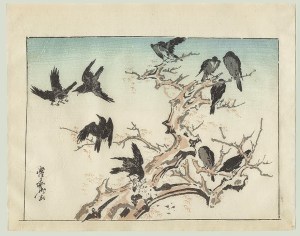
Relax noisy crows,
I mean your babies no harm.
The cat, however …

Such a great view here.
The Cascades are breathtaking.
You’ll need to trust me.

The old crow lingers
on his cold and barren branch
although I draw near.
I Sing Not for Glory
I sing not for glory nor for bread,
Nor for the praise of the credentialed clique.
But for hire more valuable instead,
To touch the honest kindred heart I seek.
I sing for lovers when love is green,
When time stops for a solitary kiss.
When light shines anew as with new eyes seen,
I celebrate your fey and fragile bliss.
I sing for the lonely, lovelorn heart,
When light grows cold and aching will not cease,
When your enchanted world falls all apart,
I offer modest salve to give you peace.
I sing for the pilgrim searching soul
Pursuing the heart’s true cause and treasure.
May heaven’s hound, you hasten to your goal,
And propel you to your proper pleasure.
I sing for the wise who see their end,
And, too, for those who have not yet awoke.
For to a common home we all descend,
With common dirt for all our common cloak.
I sing not for money nor for art,
Nor to amuse curators of our trade.
The simple wages of the simple heart
Will satisfy when my accounts are weighed.
©Bobby Ball 2017
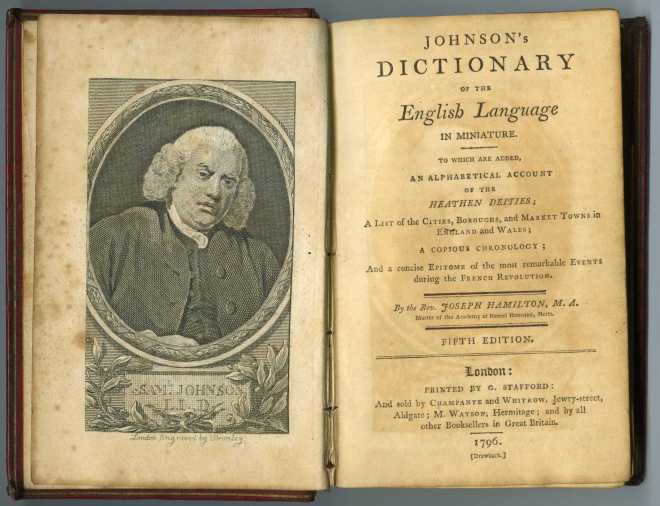
NOTES: Samuel Johnson was a funny guy. If his aphorism is correct, that “no man but a blockhead ever wrote, except for money,” then poets are the biggest blockheads of them all.
A few diligent writers of books and screenplays and advertising copy can manage to make a living scribbling words. But poets need another gig to pay the bills.
Most often, they teach. Gerard Manley Hopkins was a priest and a teacher. Robert Frost famously tried his hand at farming, but he also taught and lectured.
Some poets have conducted quite conventional careers during the day to support their poetry habit at night. Insurance executive Wallace Stevens and physician William Carlos Williams are a couple of well known examples.
Englishman Philip Larkin earned his living as a librarian. American Charles Bukowski was a postal clerk.
Dylan Thomas really couldn’t do much else besides write poems, and so he waged a losing war with poverty until he drank himself to death. He probably would have perished much sooner except for the fact he was able to charm wealthy female admirers into becoming patronesses.
About the only thing I have in common with the aforementioned gentlemen is that while I sometimes commit poetry, I also need another means to make a living.
I started my professional life in the 1970s as an ink-stained wretch of a newspaperman. While chasing deadlines was exhilarating when I was still a young man, there were already storm clouds on the horizon for journalism. Afternoon dailies were going extinct, and cities that had formerly had 2, 3 or more newspapers were seeing them merge or go out of business.
Little did I know that in just a few years, the internet would come along and fatally wound the mainstream media organizations, forcing them to trim their newsrooms and close regional bureaus.
I sensed that there was a disturbing uniformity of political opinion in the newsrooms of my youth. My own political worldview was still evolving, but even back then everybody I worked with seemed to be left-leaning and Reagan-loathing. The lockstep groupthink bothered me.
In my naïve idealism, I thought journalists were supposed to be fiercely objective. I never caucused with any party, and I strove to play my own coverage right down the middle. I’d have coffee with both Democrats and Republicans, and always made sure to pay my own check because I didn’t want to owe anybody anything.
When the owner of one paper tried to pressure me to join the local Rotary Club, I refused because I didn’t want membership to influence my coverage of any organization.
If I had still been a journalist this past year I think my head would have exploded. With news organizations colluding with political campaigns, and sharing debate questions in advance with the favored candidate, it became clear that our creaky old news institutions had jumped the shark.
I would have burned my press card in protest.
I wish I could say I was smart enough to foresee the death of journalism and jump ship intentionally, but it was more random than that. I was about to get married and I needed a job in Minneapolis. The cash-strapped metropolitan dailies weren’t hiring right then, and so I took the first job I could get.
Fortunately I had stumbled my way into direct marketing. That later led me into non-profit fundraising. The bulk of my career since has been helping good causes raise money. Healing the sick, feeding the hungry, caring for widows and orphans, defending the persecuted, visiting those in prison, bringing the good news to those in bondage — that sort of thing.
I began to appreciate what I do a whole lot more when I stopped thinking about it as marketing and started thinking about it as “soul stirring.” When I’m doing it right, I touch the heart to stir people up to good works, and inspire them to be generous.
If you ask me, that’s really just a short step away from poetry. It’s all soul stirring.

That Bleak Season
That bleak season the cold creek ceased to run,
Grey weeds withered beside the roadside ditch,
Flat leaden clouds obscured a sullen sun,
Winds lashed ice-lacquered leaves without a twitch.
Field stalks bowed down to winter’s weary weight,
The world conspired to pile pang upon pang,
Even the crusted snow cried, “Much too late!”
Caged by a skeleton hedge, no bird sang.
That bleak season love went the way of leaves,
Good green seeming, but poised to take the fall,
First frost stunned then assailed by windy thieves,
Some futile few sought stubborn to forestall
The impending end ’til a fell gust cleaves
Asunder with only a scrawny squall.
Notes: If you read enough Gerard Manley Hopkins, it can mess up your iambic pentameter. That’s because he often wrote in what he called “sprung rhythm,” which involved tossing out the sing-song metric rules that so many of his Victorian contemporaries followed.
Sprung rhythm was not free verse. Hopkins followed his own complex set of rules, but he was wildly eccentric for those times.
I do not claim to follow Hopkins or his rules here. This poem is more like “disjointed rhythm” than sprung rhythm. But this seems to me to be very appropriate for the subject matter of a world and a love wrenched all out of joint.
This poem still faintly resembles a sonnet. It still has 10 syllables to each line. It still rhymes in a familiar pattern, close to the English sonnet, but ending in an e-f rhyme instead of g-g.

Falling Leaves Like Lovers
The leaves, the leaves are gone except the oak,
Which cling to trees and rattle needlessly.
The others flame and fall for all to see.
They streak and sizzle, leaving only smoke.
But oak leaves hang as by some unseen yoke,
All browned and curled awaiting sympathy,
Or sap to course and lend vitality–
The leaves cannot perceive the sorry joke.
For spring will end the lie and they will drop,
To drift and rot and turn in time to dust.
As sure as buds will burst to make a crop
Of new, the old will flutter down–they must.
The falling leaves like lovers never stop.
It’s hardly gentle, but ’tis just, ’tis just.
Notes: Some of my favorite poems compare the death that comes in the autumn to the end of a love. Or poems that use the dying natural world when winter approaches as the backdrop for the story.
I think of Robert Frost’s Reluctance, with its heartbreaking line about it being treasonous “to bow and accept the end of a love, or a season.”
Or Thomas Hardy’s Neutral Tones, which uses a frozen landscape as the setting for the realization that a relationship has ended.
Then, there is John Crowe Ransom’s Winter Remembered, with its wonderful image comparing the forsaken lover’s cold fingers to “Ten frozen parsnips hanging in the weather.”
I may never have discovered Ransom had it not been for my 11th grade English teacher, Paul Hagedorn, back in Marshall, Missouri. We spent an inordinate amount of time on poetry that year. The major assignment, as I recall it, was to select an American poet from a lengthy list, and then immerse yourself in the writer’s work, and finally write a paper.
Knowing nothing about most of the choices, I picked John Crowe Ransom solely because I liked the sound of his name. I got lucky, because I discovered I enjoyed his work. Had I chosen Wallace Stevens with his difficult, cerebral verse, I probably would have flunked.
Another assignment was to prepare a notebook of our favorite poems. I remember making daring choices, including song lyrics by such radicals as Paul Simon and Bob Dylan. Now that Dylan as been awarded the Nobel Prize for Literature, I consider myself foresighted.
I was fortunate that Mr. Hagedorn approved of my choices. He was the cool, young teacher back then. He managed to fan the flames of inspiration and love for poetry. They smoldered for years, flaming up now and then, and have finally started burning here in this blog.

EXPERIENCE
I have walked now and then in rain,
Walked until the road gave way to stones.
I have known a thing or two of pain.
I’ve returned home alone at night
To rooms that don’t speak back to me at all.
I have stayed up late without a light.
I have watched the half-moon disappear,
Watched until the frost benumbed my face.
I have seen the seasons of the year.
I have left warm, pleasant rooms for plain,
Left without a word explaining why.
I have known a thing or two of pain.
NOTES: It’s a cold, rainy night in the Pacific Northwest, and I’m stuck miles away from my honey. It seemed like a good occasion to dust off this old poem.
 Poetic Champions