Hot car haiku

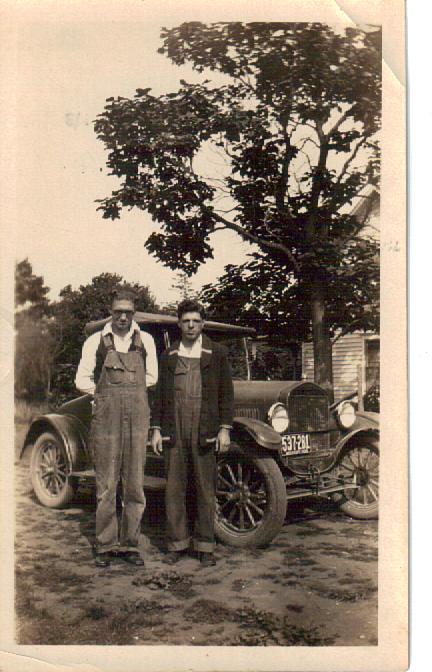
Raymond Ball and Ralph Ball

Strategic brothers,
knew the key to a girl’s heart
involved a hot car.


Notes:

My father  got in on the ground floor of the automobile revolution.  He learned auto  mechanics by hanging around the only garage in his small Missouri farm town.  He cut his teeth fixing Ford Model Ts, and kept learning from there.

Although he spent years trying to make a living as a farmer, and then as a businessman, he ultimately returned to mechanic work.  It was really his true calling.

He could fix things, and make them run. He didn’t buy new cars.  He bought old cars in need of work and fixed them up.

When it became clear to him that he was going to be a mechanic for the rest of his life he went out in his back yard, and proceeded to build himself a proper workspace.  It looked just like a barn, because that is what he had built before during his days on the farm.

But he built it himself from scratch when he was well past 60 years old.  Of course, he used reclaimed lumber scavenged from various tear-downs.

In his later years he ran a mechanic repair business out of his new garage.  He was the only mechanic for miles around who would make house calls.  The farmers all over Saline County knew that he could be depended on to fix their tractor, hay baler, or corn picker.

The photo at the top of this post shows my father, left, and his brother, Ralph, in front of one of the hot cars of the day.

Suburban sonnet

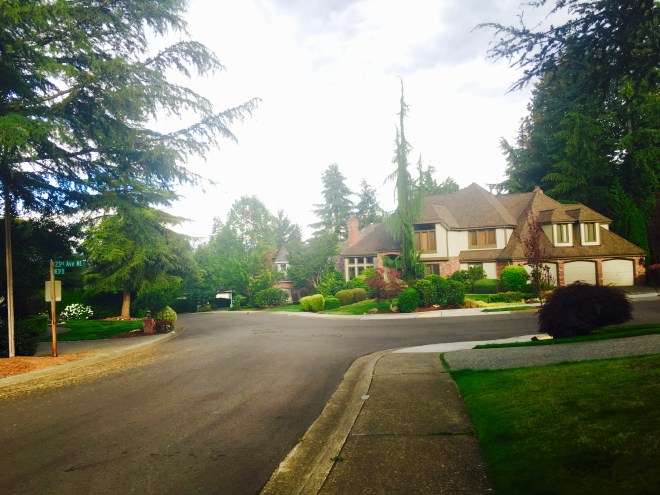
Suburban neighborhood
Our Paradise

Wafting comes the mower’s comforting hum,
Assuring all is just as it should be.
Our gates and fences all are rightly plumb,
We celebrate our capability.

New curbs and gutters sluice away wild rain,
Alarms and locks protect our doors from breach,
Our lives arranged to minimize our pain,
Designed to keep us safely out of reach.

But wreaking roots upheave the sidewalk path,
And worms devour our precious woolen thread,
The black and red mold creep into our bath,
Insomnia disturbs our peace in bed.
Despite our engineering and our math,
Our paradise is something less instead.


Notes:

Don’t get me wrong.  I appreciate material comforts and modern conveniences.  Probably even more than most of my friends and colleagues.

I was born in the middle of the last century, and started out life on a farm that was primitive, even for that time.

How primitive?  Well, we milked our own cow, raised our own chickens for eggs, butchered our own hogs, and raised our own vegetables in the garden.

For special occasions and Sunday dinners, Mother would grab one of the slower chickens, chop off her head, and fry her up.

When we sold our farm to the Amish, they took one look at the house, and commenced on an immediate upgrading and remodeling project.

As for me, I was delighted in my new home in a Missouri farm town of 12 thousand souls.  For the first time in my life I had my own room, central heat, and indoor plumbing.

I could take a bath in something that wasn’t a galvanized wash tub in the middle of the kitchen floor.  In freshly drawn water that hadn’t been previously used by other members of the family.

I thought I’d died and gone to heaven.  I didn’t even notice that we didn’t have air conditioning, even when the Missouri summer visited its triple digit heat and humidity  upon us.

So, I am thankful for many things.  I am so  thankful I can enjoy sardines from Norway and wine from France.

I am grateful for antibiotics, and the miracles of modern medicine.  I missed the polio epidemic, but just barely.  Had I been just a couple of years older, I could have suffered withered limbs or worse, like the older brothers and sisters of some of my friends who were not so fortunate.

All of my ancestors as far back as I can research were dirt farmers.  I am grateful for a professional job in a meaningful enterprise.  (Inside work.  No heavy lifting.)

Many years ago, when I moved out to Seattle, we settled in the suburbs because — even then — the city was too expensive.  We made a serendipitous choice, because our little suburb has become a highly desirable place for Microsoft employees coming here to live from all over the world.

Heck, in one of those specious magazine “Top 15” lists, our little suburb was once ranked the “Most Friendly Town in America.”

Crime is low.  Violent crime is virtually non-existent.  The weather is temperate.  People take care of their property.  Unemployment is not really an issue.  You can walk or jog without fear.

Yet, sometimes it is good to remember that even heaven on earth is not really heaven.


Midsummer Haiku

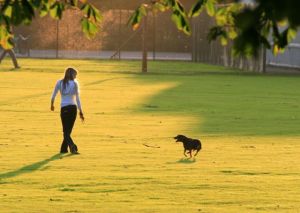
Blonde girl walks a black dog
Ah! Midsummer sun.
Blonde girl walking a black dog.
All downhill from here.


Notes: Something about the light and smell in the air this afternoon made me think of this little poem from last year.

R.I.P. Geoffrey Hill

Geoffrey Hill
Geoffrey Hill (1932-2016)

I just learned a month late that poet Geoffrey Hill has died.

I was paging through an issue of the Economist, and just about to toss it when the story of Hill’s death caught my eye.

“The Discomfort of Words. Geoffrey Hill, an English poet, died on June 30th at 84” the headline read.

The story filled an entire page.

I did not know much about his work, but the first line of the story told me I needed to get to know him.

Hill was given a book of Victorian verse at age 10.

“It was, he said, like falling in love.”

He had the reputation of being different and difficult.  A poet who scorned the modern trend towards confessional poetry, and who tackled age-old moral concerns.

You knew Hill was bound to make a stir from the opening lines of his first book.  In For the Unfallen, he wrote,

Against the burly air I strode,
Crying the miracles of God.

My favorite poem of Hill’s — so far — is In Memory of Jane Fraser. It’s wonderful elegy in just four haunting verses.

I’m looking forward to discovering more of his jewels.

Parable Haiku

Be as gentle as a dove...
Eurasian collared dove. (Photo courtesy of John Marquand.)

Like the gentle dove
I neither hate nor judge. But …
like the snake, I watch.


Notes: My childhood friend and schoolmate, John Marquand, takes some of the most beautiful photographs I’ve ever seen.  He rises early to get the Colorado morning light, and day after day amazes with remarkable nature photos.

He has become somewhat of a bird  whisperer.  I’ve never seen great blue heron photos like John’s.  But he is not limited to birds.  He somehow manages to make even insects look beautiful

John was kind enough to send me this shot of a Eurasian collared dove to illustrate the haiku.

Hippie haiku

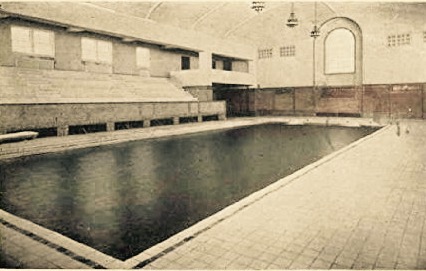
Vintage college swimming pool
“Liberate the pool!”
We presumed naked meant free.
We didn’t know jack.


Notes

The year: 1970.

Location:  A liberal arts college with a reputation for being a little “out there” situated in the upper Midwest.

A delegation of hometown friends make a long journey up to pay a fall break visit to a group of their high school friends who inexplicably all had happened to enroll in the same Liberal Arts College with a Reputation for Being a Little “Out There.”

It’s great to see old friends.  Partying ensues.  Someone (remembering with fondness the skinny-dipping escapades back home in the bucolic farm ponds and rock quarries of west central Missouri) suggests that a group be formed to go “liberate the pool” on campus.

It seemed like such a good idea at the time.

The word goes forth through the hallways of the dormitories of the liberal arts college with a reputation for being a little out there.

A party is formed, and the pool is “liberated.”

The campus police are called, and the liberators are duly cited for their violations of civility.

I’m not saying who was, and who wasn’t actually there.  Or who was a participant, and who was just an observer.  Perhaps, you were not available, but you would have gone had you been available.  Perhaps, you were horrified at the mere suggestion.  Memories get fuzzy when seen through the gauzy veil of so many years.

But, I’ll let the following people explain to their families and descendants just what role they actually played that evening in the notorious Macalester College Skinny-Dipping Affair of 1970:

  • David DuBois
  • John Swisher
  • Marty Swisher
  • Rob Greenslade
  • Robert Lee Van Arsdale
  • Ann Heinzler
  • Sheri Fritz
  • Paul Thompson
  • Alison Williams Coulson
  • George Cossette
  • Becky Roberts Kabella
  • Alan Ballew

John Marquand, I’m pretty sure you were not along on that trip.  But if you had been, I’m also pretty sure you would have been right there with the other liberators.  This is your chance to set the record  straight.


Love poem for the Fourth of July

July 4th fireworks in Minneapolis, Minnesota
INDEPENDENCE DAY

The wind and you played in my hair,
You lambent in the moon,
The night arranged as by design,
Mysteriously boon.

Afresh the breeze and warm our hands,
So lately introduced,
Traced so gently new found lands,
From tyranny aloosed.

While all around with fire and bang
Our freedom was proclaimed,
A nation’s liberty was meant,
To us, two hearts unchained.


Notes

July Fourth holds special meaning for me.  I’m patriotic in the old fashioned way.  I still believe that America is exceptional, and has been an exceptional blessing to the world.

Our founding documents are exceptional in the history of mankind, and the men who wrote them were inspired by truly great ideas.

The big idea: That rights are given by God, and not some king or the government. That’s important, because what government gives, government can take away.  But the genius of the Founding Fathers was to see that our rights are granted by God, and thus “inalienable.”

I still get a lump in the throat when the national anthem is played.

But beyond this, my personal affection for July Fourth goes back to 1982, when a young couple snuck to the roof of the Calhoun Beach Club in Minneapolis to watch the fireworks.  This perch, high above Lake Calhoun, offered a 360 degree view of the entire Twin Cities area.  You could see several fireworks displays from there, both near and far away.

It was rather romantic.

Love poem for July 3rd

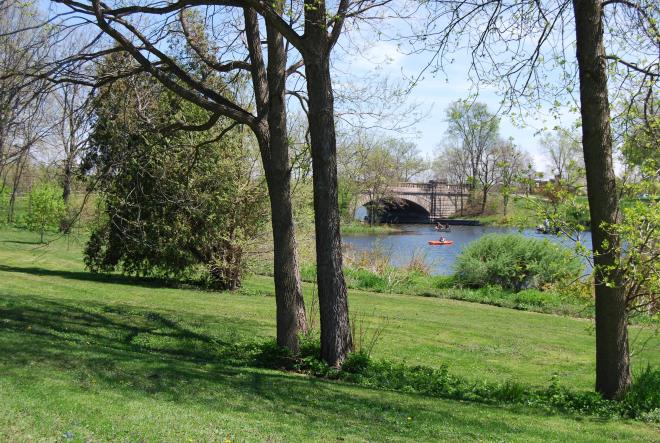
Lake of the Isles, Minneapolis
Lake of the Isles, Minneapolis … long ago

That Day We Lay Upon the Grass

That day we lay upon the grass,
A luminescent green.
The sparks that arced from arm to arm
Across the space between.

Our bodies quickened by the sun,
The willow leaves aflush,
The sunlight sparkling on the lake,
Our blood bestirred to rush.

Up and down the parkway, flowers
Enticing with their blooms,
Our loveless winter ended there,
Emerging from our tombs.

For we had slept as sleepers sleep,
Unmindful of the world,
Astonishingly we awoke,
Much like a rose unfurled.


Notes:

July 3rd — for me — will always be associated with the discovery of enduring love.

When love does not work out, it can painful, and the source of much poetry.  But when it DOES work out, it can inspire as well.

The events in this little poem date back to 1982. I know because I kept a little, old pocket calendar that proves it.

I’ve posted this little love poem before, but here it is again in honor of one of my favorite personal holidays.

A favorite midsummer poem

Robert Frost
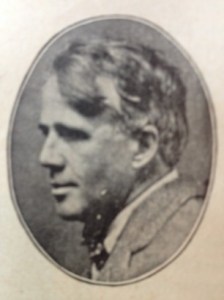
Robert Frost, looking much the poet

I don’t know about you, but I’ve always seen the July 4th holiday as the turning point for summer.

The days have just started to get shorter. The foliage starts to brown, and even though it’s two full months before September, there is a sense that the glorious hurrah of summer will all come to an end all too soon.

The Oven Bird” by Robert Frost says all this and more to me.

It’s just a little sonnet.  Fourteen lines in all.

It’s worth a look to read the whole poem, but several of the lines are little gems that stand alone. Writing about the song of the little oven bird, Frost says:

He says the early petal-fall is past
When pear and cherry bloom went down in showers,

And, just a couple of lines later,

He says the highway dust is over all.

That is a poignant, dusty image, familiar to anyone who has lived in the country. It signals that the spring rains are definitely over, and you’ve entered that long, hot stretch that ends with the on-coming fall.  Time is moving ahead.

The poem wraps up with a wonderful final two lines:

The question that he frames in all but words
Is what to make of a diminished thing.

A good question to ask any time of year, or at any time of life.


Honeymoon sonnet

The happy couple honeymooning in Montreal
Epiphanies

We come now to the winter of our years
(Where did the autumn with its pleasures go?)
Our roof will all too soon be cloaked with snow,
So, come, let’s stoke our fire against the fears.

It seems another life ago, my dear,
That full of grace you pilgrim sat aglow
Enkindled so this prodigal would know
That grace was free and grace was very near.

Midsummer’s eve brought more epiphanies
Of spotless bride adorned, redeemed, in white,
Too ill for customary liberties,
So wan, yet still for these sore eyes a sight.
Then! Over Lake Champlain the full moon sees
A railway sleeper car rock through the night.


Notes:

When love is good and it lasts, it can be tempting to idealize its beginnings.

But, the very first time I saw my wife, she was glowing. I kid you not. Sitting in the second row of a darkened auditorium listening to the Chaplain of the U.S. Senate, there she was —  surrounded by a golden aura.

At the time, I was a reporter for a small suburban weekly paper, and was there on assignment.  I had a camera, but was so befuddled I failed to get the shot. You might argue I was imagining things, but I don’t think so. I’m not given to visions nor hallucinations. I’ve never witnessed anything like it before or since.

I kept my eye on her while I got my story.  But at the end of the program, she went right up to the speaker.  I figured she must be with the group of important people who had accompanied him from Washington, D.C.

So, I put The Glowing Girl out of mind and tried to forget about her.

Fortunately for me, she turned up again a couple of weeks later at church.  She was a friend of a friend, who introduced us and immediately left us alone.  I didn’t let her get away a second time.

I think the whole experience was a special gift for a fellow a bit slow on the uptake, who needed a sign to notice a good thing right under my nose.

That’s my story and I’m sticking to it.

We were married at Midsummer.  She was sick and only made it through the festivities with the help of cold medicine.  The next morning we flew out of town to New York, and the very next night, took an overnight train to Montreal.

I’ve been a fan of railway travel ever since.