
As one who mostly
dwells at or near sea level,
heights make me dizzy.
As one who mostly
dwells at or near sea level,
heights make me dizzy.

Midwinter warm spell,
Evening mist, tree frog calling,
“Cro-cro-cro-crocus!”
NOTES: Took a walk yesterday and heard a tree frog for the first time this winter. It reminded me of this haiku from awhile back.
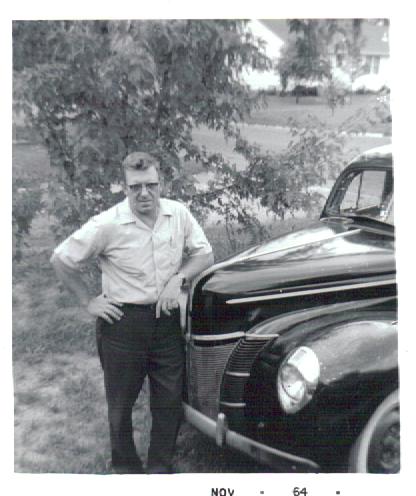
Father, when you spoke
I believed you, for you spoke
with authority.
NOTES: In many ways, my dad was a simple man. Farmer. Mechanic. Forced to drop out of high school to work during the Great Depression, he never had the opportunity go back to school to pick up his education again.
He never travelled to Europe or learned a foreign language. He never made a lot of money, or tasted the luxuries of life.
But he knew what he thought and what he believed. And when he talked about his beliefs, his strength of conviction came through his voice.
Often he was expressing his belief in the products of the Ford Motor Company. He was a confirmed Ford man. He claimed he had seen the insides of enough cars and tractors to know how each one held up, and which ones were made out of cheap materials.
He would just utter a phrase like, “The Ford Model T …” and let it hang there and resonate in the air. He said it with such reverence that those who heard it just knew that the Ford Model T had not only been a great automobile, but a miraculous product of a genius.
He could inspire similar feelings of reverence with exclamations like, “President Abraham Lincoln,” or “Old Thomas Edison.” You just knew these were great men.
We didn’t have pastors or full-time clergy in our tiny little Church of Christ congregation. The leadership was handled by laymen like himself. When he would stand up on Sunday mornings to “wait on the communion table,” he would recite the words by heart from the King James Version of Paul’s first letter to the Corinthians:
“That the Lord Jesus, on the night he was betrayed took bread, And when he had given thanks, he brake it, and said, Take it, eat: this is my body which is broken for you. This do in remembrance of me.”
Hearing him say it, you had no doubt that this was just the way it had happened.
Perhaps the most convincing and poignant expression of his conviction came many years later, as his wife lay in a nursing home, long lost to dementia. “Your mother,” he said, “was the best. I never met another women like your mother. Never.”
And you just knew it was true.
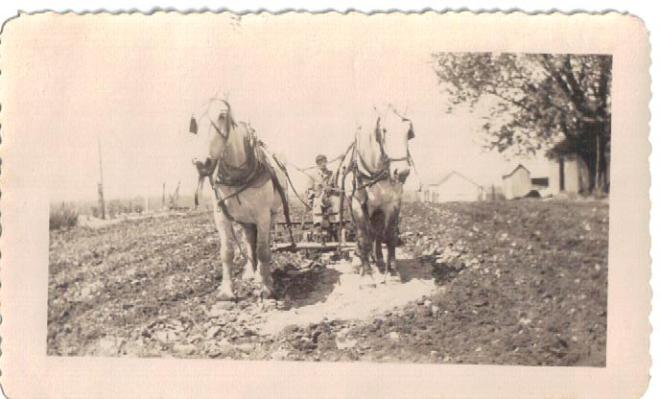
Generations tilled
to eke out a meager life. Now I
scribble in comfort.
Notes: I have to go all the way back to England in the 1600s to find an ancestor who had a desk job. To the best of our family research, my great-great-great (etc.) grandfather was a clergyman back in the old country, who had the poor judgment to raise the ire of the Archbishop of Canterbury.
In those days it didn’t take much to get your head separated from the rest of you. Heretics and troublesome free thinkers could easily meet the same fate.
My forebear wised up in the nick of time and caught one of next boats after the Mayflower to the New World. We are not sure if he stayed in the preaching business in his new surroundings in the Connecticut Colony, but as far as we can tell, all of those who followed him were dirt farmers. (Which probably seemed like a safer line of work back then.)
Several generations later, after my great grandfather Frederick Ball narrowly survived the Civil War, he came back home to find Connecticut getting crowded. So, he headed west for the promise of cheap land and opportunity. He wound up in southern Iowa, got married, acquired some land, and raised a family.
One of his sons was my grandfather, and he, too became a farmer, moving to Missouri to chase opportunity. When my father came along, he showed considerable mechanical aptitude and had hopes of going to school to study engineering. But the Great Depression dashed those dreams. Dad had to drop out of school before he finished high school. To help support the family he became a farmer.
And who knows, except for a twist of fate or two, I might have followed right along and farmed myself.
But my father had a bit of a mid-life crisis in his 40s. When I was in first grade, he sold the farm and went in with his brother-in-law and a neighbor to buy a Ford Tractor dealership. It was his one big entrepreneurial gamble in life. And for a few years, it looked like it might pay off.
But some lean times for farm prices and some skullduggery by the neighbor-turned-business-partner, and the operation went broke. They had to sell out cheap, and Dad was forced to fall back on his mechanical skills to make a living.
What this meant for me was that I spent most of my formative years in the town rather than on the farm. So, while there were centuries of agrarian instincts bred into me, it didn’t take me long to adapt to indoor plumbing, central heating, and really close next-door neighbors.
And I certainly didn’t miss getting up early to gather eggs, milk the cow, or slop the pigs.
Oh sure, I still hoed beans, bucked bales, and detasseled corn as a hired hand in the summer. But that was a job — not a way of life.
Even if my father had never left the farm, odds are I would have eventually left anyway. That was the demographic trend during the whole last half of the last century. The kids went away to school or to a big city for work, and tended never to move back.
It’s been hard on the farming communities. And I know it was hard on the old folks left behind as their kids fanned out across the country.
When I stop to think about how much different my life has been from the generations before I marvel. I have no explanation for why my entire adult career has been all inside work with no heavy lifting.
My father’s body bore the marks of a hard life in harder times. He was kicked in the head by an ornery horse, and had headaches for the rest of his life. His leg was caught between a hay wagon and a wall, and he walked with a limp. He even had a few scars from surviving what he believed to be a mild case of small pox.
If the American Dream involves working hard and ensuring your children have a better life, then my parents and their generation certainly did their part.

Inexplicable.
That the author casts himself
In such a small role.

Far wiser than I,
the crow knows to seek shelter
from cold autumn rain.
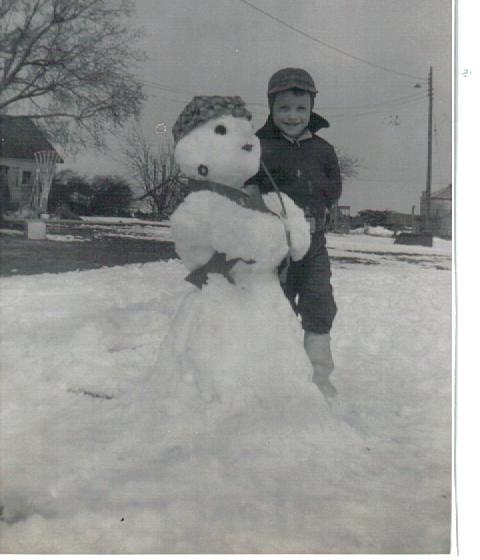
The year’s first snowfall
always makes me feel just like
I’m a kid again.
Notes: Western Washington goes a little crazy over snow, especially when it’s the first one of the season.
I saw a lots of weather posts today from friends and colleagues. I must admit, like Robert Frost, I’m a bit of a sucker for “a dust of snow.”

Crow all you want, cock.
You can’t make the sun pierce through
this late autumn gloom.
Notes: I often stay at a bed & breakfast high on a hill on the Kitsap Peninsula. To the east are the Cascades. To the west are the Olympics. When you can see them, it’s spectacular.
This time of year, however, they are usually hidden by the fog and clouds.
The hosts keep chickens to produce eggs for the breakfast part of the business. This is not a sure thing, however. The coyotes are thick in the woods. We’ve had a bumper crop of rabbits this year, so the coyotes seem to be leaving the chickens alone.
Last year, however, the farmer lost his entire brood to a bald eagle. Our proud national bird is so plentiful out here in the Pacific Northwest that they’ve become a bit of a pest. For a couple of days after the massacre, I saw the eagle perched on a tall tree looming over the henhouse, hoping the farmer would make a quick replacement.
He repopulated the henhouse with baby chicks, and redesigned the pen to be eagle-proof. So far this year, we’ve had a steady supply of eggs.
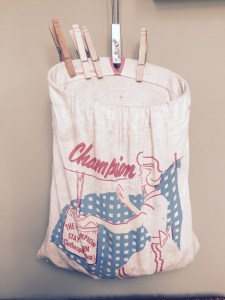
We may have been poor
but we always had clean clothes.
Our mother made sure.
Notes:
I hadn’t seen a clothes pin bag like this is decades. But, recently, in Sonoma of all places, in the laundry room of a little house my family had rented, I found this item from the past. It was identical to the one my mother used all through the 1960s.
It seemed to be just another part of the retro-nostalgia vibe of the décor. It took me back in time. Back to that little house on East Mitchell Street, where a Missouri farm family found their slice of the American Dream.
My mother used to wash our clothes in an electric wringer washing machine that was more wash tub than machine. I’m pretty sure my dad must have proudly ordered it back in the 1950s from the Montgomery Ward catalog to make life easier for his wife, our mother.
The modern feature was the wringer that squeezed the excess water out of the clothes to speed up the line drying.
I suppose it was a big step up from the washboard down by the stream, but it still required considerable manual labor.
One day, my mother absentmindedly fed some clothes through the wringer and got her left hand caught. I remember blood and crying and a bent wedding ring.
But, all in all, that was a minor event in the grand scheme of things. We knew more than one farmer who had lost a whole arm in a disagreement with a stubborn corn picker.
When it became apparent that the first location of the clothesline in the back yard was interfering with the natural layout of the whiffle ball diamond, my dad relocated the clothesline, even though uprooting and transplanting the poles amounted to considerable work.
Is it my imagination, but is there nothing like the smell of clothes dried on the line in the July Missouri sun? It’s a fragrance Proctor & Gamble can only wish they could duplicate.
Bounce just doesn’t cut it.

Let me not forget
my dual citizenship,
and which one will last.
Notes: Pictured is the First Presbyterian Church of Marshall, Missouri. Known as “The Rock Church,” it is the most beautiful church building in my hometown.
 Poetic Champions