Madeleine L’Engle, also a Poet

Madeleine L'Engle and

With the release of the new move, “A Wrinkle in Time,” writer Madeleine L’Engle has come back into the cultural consciousness. Her Newbery award-winning book was first published when I was at an impressionable age, and helped fuel both my imagination and love of reading.

I haven’t seen the movie, but I understand that despite a strong cast headed by Oprah Winfrey, it is not doing particularly well at the box office. As I write this it has a long way to go to earn back the more than $100 million it took to produce.

L’Engle’s book was criticized for its liberal treatment of religious themes back in the 1960s. Ironically, this year’s movie has been criticized for not sticking closely enough to the book and watering it down its Christian references even further.

But I digress.

Today, in one of my used bookstore haunts, I was intrigued to discover a slender book of verse by L’Engle, entitled “The Weather of the Heart.” I hadn’t realized she also had written poetry.

And what a discovery! Chock full of verse about wonder and love and death and faith.

But the one that really jumped out at me was all too human, and startling in its honesty. Written to her husband while they were apart, it recounted an affair averted. It’s hard to say just how close she came, but because the poem is so honest, it results in a reaffirmation and celebration of fidelity.

It helps to understand the poem to know that L’Engle’s husband, Hugh Franklin, was a stage and television actor.

L’Engle’s poem doesn’t seem to be published on the internet, so I will set it down for you here. It is inspiring on many levels.

Lovers Apart

In what, love, does fidelity consist?
I will be true to you of course.
My body’s needs I can resist,
Come back to you without remorse.

And you, behind the footlight’s lure,
Kissing an actress on the stage,
Will leave her presence there, I’m sure,
As I my people on the page.

And yet–I love you, darling, yet
I sat with someone at a table
And gloried in our minds that met
As sometimes stranger’ minds are able

To leap the bounds of times and spaces
And find, in sharing wine and bread
And light in one another’s faces
And in the words that each has said

An intercourse so intimate
It shook me deeply, to the core,
I said good-night, for it was late,
We parted at my hotel door

And I went in, turned down the bed
And took my bath and thought of you
Leaving the theatre with light tread
And going off, as you should do,

To rest, relax, and eat and talk–
And I lie there and wonder who
Will wander with you as you walk
and what you both will say and do …

We may not love in emptiness,
We married in a peopled place;
The vows we made enrich and bless
The smile on every stranger’s face.

And all the years that we have spent
Give the joy that makes me able
To love and laugh with sacrament
Across a strange and distant table.

No matter where I am, you are,
We two are one and bread is broken
And laughter shared both near and far
Deepens the promises once spoken

And strengthens our fidelity
Although I cannot tell you how,
But I rejoice in mystery
And rest upon our marriage vow.

Poetry Month, Continued …

Oyster.shell

As the Oyster Forms the Pearl

As the oyster forms the pearl,
So the poet pens the verse
As balm for the current ache
Born out of the ancient curse.

As the oyster feels compelled
To shellac the sandy grain,
So the poet feels the urge
To transmogrify the pain.

So the pearl grows rich and round
As its luster covers the sand.
So the verse unseen takes form
In its way, designed unplanned.

Sad the pearl that lies unseen
In the depths of the murky sea.
Sad the verse that dies unheard
In the heart clandestinely.

So the diver frees the pearl,
Breaks the stony shell apart.
So the poet frees the verse
Ripped out of his broken heart.


NOTES:  Apparently there is some skepticism about my assertion that April is Poetry Month.

Let this settle the matter once and for all.

Let’s call this one an extended metaphor.

Why Poetry?

A philosophical poet

I Sing Not for Glory

I sing not for glory nor for bread,
Nor for the praise of the credentialed clique.
But for hire more valuable instead,
To touch the honest kindred heart I seek.

I sing for lovers when love is green,
When time stops for a solitary kiss.
When light shines anew as with new eyes seen,
I celebrate your fey and fragile bliss.

I sing for the lonely, lovelorn heart,
When light grows cold and aching will not cease,
When your enchanted world falls all apart,
I offer modest salve to give you peace.

I sing for the pilgrim searching soul
Pursuing the heart’s true cause and treasure.
May heaven’s hound, you hasten to your goal,
And propel you to your proper pleasure.

I sing for the wise who see their end,
And, too, for those who have not yet awoke.
For to a common home we all descend,
With common dirt for all our common cloak.

I sing not for money nor for art,
Nor to amuse curators of our trade.
The simple wages of the simple heart
Will satisfy when my accounts are weighed.


NOTES:  I understand April is Poetry Month.  In keeping with this solemn occasion, here’s a poem about poetry.

Love Haiku

Goofy couple with broken eyeglasses

It’s quite obvious
you complement me so well,
I’m missing some things.

Late Winter Haiku

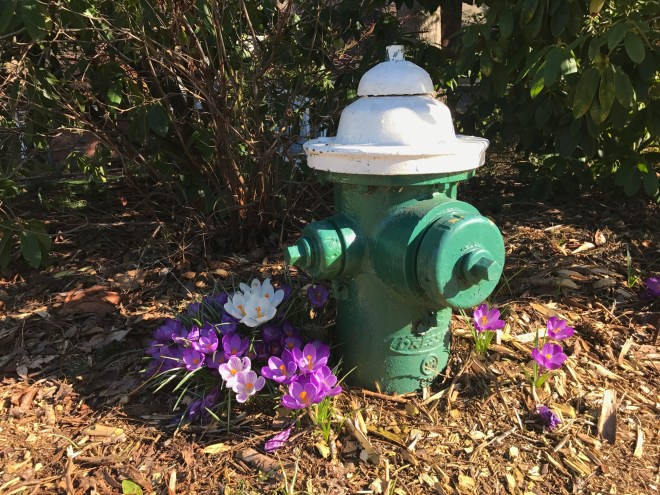
Crocus blooming in late winter

Late winter warm spell,
tree frogs in love calling out
“Cro-cro-cro-crocus!”


NOTES: Unseasonably warm weather this weekend in the Pacific Northwest.  When I went to the mailbox I heard the tree frogs for the first time this year.  They are awake and most certainly in love.

Poem in protest of spring

Late snowfall

COME GENTLE SNOW

Come gentle snow and cloak the ground,
Shroud budding branches all around,
Let not one scent of spring be found,
Make flowers wait.

Come frost and freeze the throbbing juice,
Break March’s short and shaky truce,
No sprout nor songbird yet aloose,
Let spring be late.

Come wind and make the oak leaves hiss,
When they descend no one will miss
Their brittle shade — no artifice
Can bring them back.

Come night and steal the season’s gain;
The verdure will begin to wane
Despite the wealth of easy rain
If it stays black.

Come sleep and shield me from the past,
Help me forget her I loved last,
Wrap safely me in sanctums vast,
Away from pain.


NOTES: We haven’t had that wonderful March snowstorm here in Western Washington yet this year.  So I’ll have to settle for a photo from last year.

We had some snow in late February, but I’m still pulling for a blizzard in March.

You see, I’m allergic to March here — the alder and cedar pollen are not kind to me.

Nearly 40 years ago when I wrote this poem protesting spring, I was an unrequited, tragic romantic. O woe was me!  I thought I’d never be happy again.  Of course, I was wrong.

If I can just make it through March to April, I should be fine.

Memento Mori Free Verse

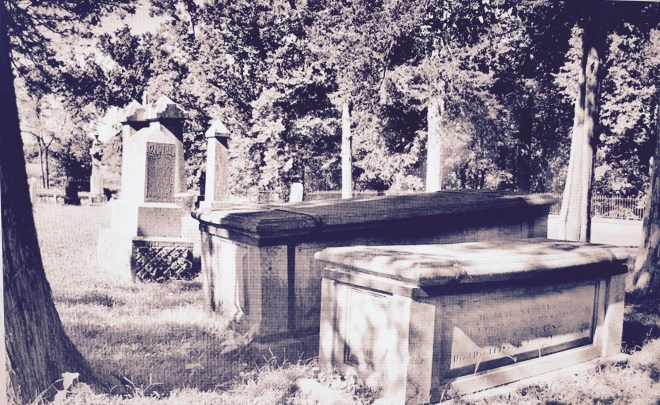
Sappington Cemetery

Old Cemetery

That day we ditched our duties at the music contest,
And drove to the old cemetery out by Arrow Rock,
The one with the mossy tombs above the ground,
Like down in New Orleans.
And it was even better because it was like we were playing hooky,
Only there were no classes,
Just that we’d volunteered to welcome the kids from other schools,
And help them find their rooms.
It was expected that we’d show up and do our civic duty,
But we figured they’d never notice we were missing.
We heard the call of other tunes,
And we had other demands that day to serve.
It was coming down one of those warm spring rains,
The air and everything was wet and willing,
It was the middle of the day but no one would be driving by,
And, even if they had, the old Ford’s windows were so fogged up
That no one could ever see what was going on inside.
In school, we’d learned how the doctor buried there
In the grandest tomb of all had made his fortune and his fame
selling quinine to cure malaria,
Made it possible for pioneers to settle in the boggy bottomlands,
And for America to finish where the French had failed
at digging the Panama Canal,
Opening up a passage that had never before been penetrated.
(In another class, we’d hear it wouldn’t be the last time
We would have to bail out the hapless Frenchmen.)
And though the aging tombs beckoned us to come and learn,
And contemplate the weakness of our flesh,
We’d have to take our teachers’ word for it.
That day we never got out of the car …
++++++it was raining so hard …
And we had other geography to explore,
And history of our own to write.


Notes:  Growing up in my Missouri hometown, I heard stories like this actually happened. This one may or may not be partly true.  Names have been redacted to protect the guilty.

The medieval Christian tradition had an ascetic practice called memento mori, meaning, “Remember that you will die.” The monk might keep some object, such as a skull, to remind him that life is transient, and that death is inevitable. The idea was to focus the soul on things that really mattered.

I’m not sure, but some of the poems I write might serve as my own personal memento mori.

Vanishing Act

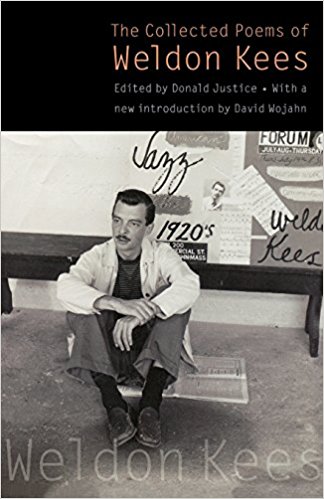
Unjustly overlooked poet Weldon Kees

Made another discovery recently, this one thanks to my old friend and schoolmate, the photographer and artist (and poet) John Marquand.

John turned me on to his favorite poet, Weldon Kees, an important, but overlooked poet from the last century. Kees really hasn’t gotten the attention his fans think he deserves, possibly because his output was small.

He was a modern day Renaissance Man, who in addition to writing poetry, was a novelist, short story writer, painter, literary critic, jazz pianist, and filmmaker.

Kees’ career was cut short when he disappeared in 1955 at age 41, a presumed suicide. His car was found near the approach to the Golden Gate Bridge, but his body was never found.

Kees captured the despair of modern urban life in the 20th Century, and expressed in fresh ways.

Perhaps the best examples of this is his series of four “Robinson” poems about an outwardly successful, but inwardly despairing modern man.

One of these is perhaps his mostly widely known poem, “Aspects of Robinson.” This essay by one of Kees’ champions, the poet Dana Gioia, gives a far better explanation of the poem than I ever could write.

If you’re interested in this sort of thing, it’s worth your time to read the whole essay, but I’ll include a tidbit:

“This poem demonstrates how Kees transformed the alienation and vacuity of contemporary life into lyric poetry. It does not offer readers comfort or escape. Kees did not transcend the problems of his century with a religious or a political faith. He did not elude the vulgarization of public culture by stealing away into an aesthetic realm. What he offered was uncompromising honesty, the transforming shock of recognition.” — Dana Gioia

It would very well be that the Kees’ uncompromising honesty combined with his inability to find redemption amidst a fallen culture finally led to his demise.

Some have speculated that Kees’ anti-hero, Robinson, was named after E.A. Robinson, the earlier American poet, who enjoyed a bit of a revival after Simon and Garfunkle adapted one of his poems into a famous song in the 1960s — “Richard Cory.”

There are certainly similarities between Kees’ Robinson, and Robinson’s Richard Corey.  But Kees’ Robinson is much more of a world-weary man of the mid-century.  Robinson’s Cory was a member of the sated upper class at the turn of the century.

More intriguing is the theory that Kees’ Robinson is really an aspect of the poet himself.


Inspirational Doggerel

False Hawaii missile attack alert

A wise man once opined
That nothing so focuses the mind
Quite as much as knowing
That you’ll be hanged in the morning.

And while that may be true,
That knowledge is not really new.
Another wise man said
Soon or late we all wind up dead.


NOTES:  I can’t imagine what it must have been like in Hawaii Saturday when the alert of an incoming ballistic missile was issued by mistake.  Hopefully, all of the sober reflection that occurred during those tense minutes will bear some positive fruit.


“Brothers, I Loved You All”

Hayden Carruth
Hayden Carruth

One of my literary-minded friends has introduced me to the America poet Hayden Carruth, who lived from 1921 to 2008.

I’m not sure how I could have gone so long and gotten so old without finding him.  (Just another example of the gaping holes in my education, I guess.)

Carruth is growing on me.

Like Robert Frost, he moved to the Vermont countryside and learned to how to farm.  Carruth’s poems about some of his country neighbors are vivid, precise character sketches that remind me of the country folk I knew in my youth.

Like Frost, Carruth did a bit of teaching to help pay the bills.  He was aware of the looming shadow Frost cast over later Vermont poets, and he played with it a bit in some of his poems.

But he seems to be ornerier than Frost.  And more down to earth.  He seems to be a common man.  But a wicked smart, extremely well-read common man.

He dwells at that intersection between classic poets from an earlier age who paid attention to meter and rhyme, and the moderns of the last century, who reveled in the free innovation for the sake of innovation.

His poem, Late Sonnet, written later in his life, is one of his most interesting, I’ve read yet.

LATE SONNET

by Hayden Carruth

For that the sonnet no doubt was my own true
singing and suchlike other song, for that
I gave it up half cold-heartedly to set
my lines in a fashion that proclaimed its virtue
original in young arrogant artificers who
had not my geniality nor voice and yet
their fashionableness was persuasive to me,–what
shame and sorrow I pay!
+++++++++++++++++++++And that I knew
that beautiful hot old man Sidney Bechet
and heard his music often but not what he
was saying, that tone, phrasing, and free play
of feeling mean more than originality,
these being the actual qualities of song.
Nor is it essential to be young.

I read this as the confession of a poet who abandoned the craft he knew in his youth to pursue the fashionable trends of modern style.  He contrasts the pretentiousness of modern poets — the “arrogant artificers” — with the pure horn playing of jazzman Sidney Bechet, who — according to Carruth — emphasized feeling over originality.

Carruth developed this idea more fully in an interview published in Contemporary Authors.

“When I was young and starting to write poetry seriously and to investigate the resources of modern poetry, as we called it then, we still felt beleaguered; modern poetry was still considered outrageous by most of the people in the publishing business and in the reading audience at large.

“We still spoke in terms of the true artists and the philistines. We felt that if we could get enough people to read T. S. Eliot and Wallace Stevens and e. e. cummings and William Carlos Williams and other great poets of that period, then something good would happen in American civilization. We felt a genuine vocation, a calling, to try and make this happen. And we succeeded. Today thousands of people are going to colleges and attending workshops and taking courses in twentieth-century literature.

“Eliot and Stevens are very well known, very well read; and American civilization has sunk steadily, progressively, further and further down until most of the sensible people are in a state of despair. It’s pretty obvious that good writing doesn’t really have very much impact on social events or national events of any kind. We hope that it has individual impact, that readers here and there are made better in some way by reading our work. But it’s a hope; we have no proof.”

Carruth has helped me put my finger on what has bugged me about so much of modern poetry for a long time. I couldn’t quite define it until now. But after reading this, it has come into focus.

In the secular despair of the 20th Century, artists sought to take the place of God, who had been declared dead by the wise men of the age.

As Carruth said, “if we could get enough people to read T. S. Eliot and Wallace Stevens and e. e. cummings and William Carlos Williams and other great poets of that period, then something good would happen in American civilization.”

Cultural restoration through poetry!  Moral improvement through exposure to art.

The divine revelation of the Bible had been debunked courtesy of Darwin and Freud and others, faith had been undermined, and the vacuum that was created was seeking to fill itself with the work of artists and poets.

I would submit that this is much too big an assignment for poetry.

Don’t get me wrong.  I hold a pretty high view of poetry.  It can do a lot.  It can inspire, comfort and bless a soul.  It can express rich and deep feeling in elevated language. But I think the artistes of the last century reached too far.

My hypothesis is that this poetic overreach was responsible for much mischief — and a lot of unreadable poetry in the 20th Century.

Lest  you think I am making this up, Stevens was explicit about his intention to replace God with poetry.

According to Poetry Foundation, Stevens maintained that art was “the new deity in a theologically deficient age. Abstraction is necessary, Stevens declares, because it fosters the sense of mystery necessary to provoke interest and worship from humanity.”

I find Stevens’ abstraction cold and heartless — and frankly boring.

I disagree with his premise and his conclusion.  Just because Stevens didn’t believe in God didn’t mean that God was dead. (Please note: this theory is still under construction.)

If God is not dead, then poetry does not need to strive to be something it is not.  It does not need to replace divine revelation.  Since God is not dead, poetry can slip comfortably back into its proper role.

The poet can cease stop trying to take the place of God and settle back into the role of a human created in the image of God, creating beauty that reflects the beauty of God and his creation.  And also telling the truth about the tragedy of how the creation has fallen.

Feel free to check out the blog for some decidedly un-modern poetry…