Parable Haiku

Be as gentle as a dove...
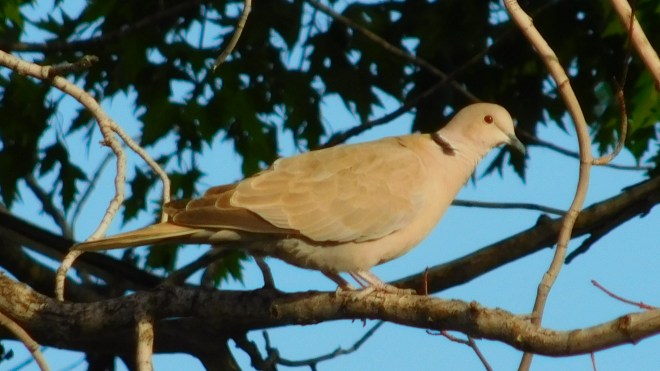
Eurasian collared dove. (Photo courtesy of John Marquand.)

Like the gentle dove
I neither hate nor judge. But …
like the snake, I watch.


Notes: My childhood friend and schoolmate, John Marquand, takes some of the most beautiful photographs I’ve ever seen.  He rises early to get the Colorado morning light, and day after day amazes with remarkable nature photos.

He has become somewhat of a bird  whisperer.  I’ve never seen great blue heron photos like John’s.  But he is not limited to birds.  He somehow manages to make even insects look beautiful

John was kind enough to send me this shot of a Eurasian collared dove to illustrate the haiku.

Hippie haiku

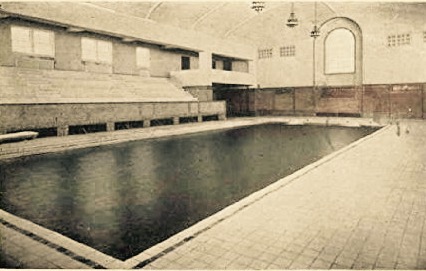
Vintage college swimming pool
“Liberate the pool!”
We presumed naked meant free.
We didn’t know jack.


Notes

The year: 1970.

Location:  A liberal arts college with a reputation for being a little “out there” situated in the upper Midwest.

A delegation of hometown friends make a long journey up to pay a fall break visit to a group of their high school friends who inexplicably all had happened to enroll in the same Liberal Arts College with a Reputation for Being a Little “Out There.”

It’s great to see old friends.  Partying ensues.  Someone (remembering with fondness the skinny-dipping escapades back home in the bucolic farm ponds and rock quarries of west central Missouri) suggests that a group be formed to go “liberate the pool” on campus.

It seemed like such a good idea at the time.

The word goes forth through the hallways of the dormitories of the liberal arts college with a reputation for being a little out there.

A party is formed, and the pool is “liberated.”

The campus police are called, and the liberators are duly cited for their violations of civility.

I’m not saying who was, and who wasn’t actually there.  Or who was a participant, and who was just an observer.  Perhaps, you were not available, but you would have gone had you been available.  Perhaps, you were horrified at the mere suggestion.  Memories get fuzzy when seen through the gauzy veil of so many years.

But, I’ll let the following people explain to their families and descendants just what role they actually played that evening in the notorious Macalester College Skinny-Dipping Affair of 1970:

  • David DuBois
  • John Swisher
  • Marty Swisher
  • Rob Greenslade
  • Robert Lee Van Arsdale
  • Ann Heinzler
  • Sheri Fritz
  • Paul Thompson
  • Alison Williams Coulson
  • George Cossette
  • Becky Roberts Kabella
  • Alan Ballew

John Marquand, I’m pretty sure you were not along on that trip.  But if you had been, I’m also pretty sure you would have been right there with the other liberators.  This is your chance to set the record  straight.


Hometown haiku

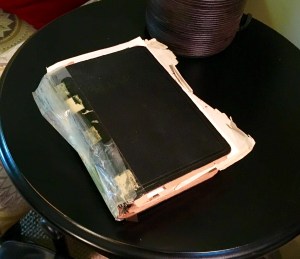
Mother's old Bible
Mother’s old Bible,
Worn out from years of long use.
Much like its owner.

Father’s Day Haiku

The calloused farmer with his son.
The calloused farmer
cradles his newly born son,
awkwardly tender.


Notes:

I’m descended on both sides from dirt farmers.  My father was a brilliant man, who didn’t have the opportunity to finish high school because he had to go to work to survive in the midst of the Great Depression.

I recall him telling stories of working for a dollar a day as a hired farm hand, performing such long-forgotten tasks as stripping bluegrass and threshing grain.

He had to lobby hard with his boss to get Saturday off to get married.  His new father-in-law served the wedding guests watermelon.  Mainly because he was a watermelon farmer and that was what he had on hand.

It was a brief honeymoon over in the nearest town, and then back to work on Monday.

My folks started having kids right away because if God blessed you with children, you were grateful.

This photo is my father with my oldest brother, John, back in May, 1934.

I’m re-blogging this one in honor of Father’s Day.

Father’s Day Haiku

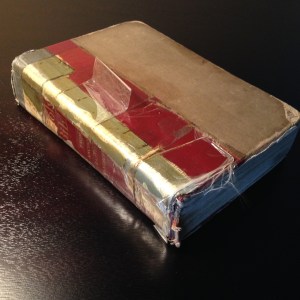
IMG_1601

Father’s old Bible
held together with duct tape.
Now he’s face to face.

Father’s Day Haiku

Raymond Ball outstanding in his garden
How to explain Dad?
Outstanding in his field, he
lived a simple life.

Haiku for my father

Well over sixty, Dad built a barn by himself ...
Well over sixty,
Dad built a barn by himself.
Now it, too, molders.

Father Haiku

My dad making sure I put water into the car's radiator instead of the crankcase.
My dad always had
just the right tool for the job.
I’m just making do.

Haiku for Memorial Day

My great grandfather the Civil War veteran.
Yankee ancestor,
Had Reb been a better shot
I wouldn’t be here.


I’ll pull out an old poem in honor of my last direct ancestor to be wounded fighting to defend our freedom.

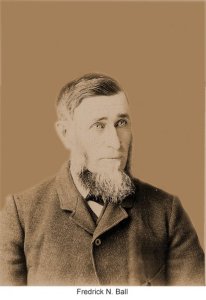
In my case, we must go back a bit.  All the way to the Civil War.  My great grandfather, Frederick N. Ball, was serving in General Sheridan’s Army in the campaign to take the Shenandoah Valley in Virginia.  When the Battle of Cedar Creek broke out, Sheridan was several miles away in Winchester.

As Sheridan was riding furiously back to rally his troops to victory, my ancestor was crawling back to safety after having been shot through the side early in the campaign.

The family story relates that he stuffed a rag in the hole in his side and made it to safety.

Thankfully, he survived.  Otherwise, this blog would be sadly empty today.

Hometown Haiku

The gravestone of Jim the Wonder Dog.

My town’s motto states:
“Smart dog, nice folks ….” Pretty sure
the dog, too, was nice.


The most famous resident of my hometown was a dog

When I moved to the central Missouri town of Marshall in the late 1950s, I was six years old.  My father had literally sold the farm and was setting out on a bold attempt to pursue the American dream by going into the farm implement business. After spending the first six years of my life on a farm in northwest part of the state, Marshall, with its 12,000-plus inhabitants, seemed like a big city to me, full of potential and possibilities. For the first time in my life I had a room of my own and indoor plumbing.

One of the first things I heard about my new hometown was that it was that it had been the home of Jim the Wonder Dog.  It had been just a little over 20 years since Jim’s death, and many of my new neighbors had seen Jim while he was alive.  Someone gave us a book about Jim, which I eagerly devoured.  We were told to be sure and visit Jim’s grave out at the end of Yerby Street at Ridge Park Cemetery.  He was the only animal buried in the human graveyard, we were told, and he deserved to be there more than a lot of the people, one added.  We visited Jim’s grave with my mother, who brought flowers, because that’s what you did when you visited cemeteries in those days.

Everyone we talked to accepted the story of Jim at face value.  To them, Jim had been a true walking miracle.  He was a dog who could understand human speech, and follow instructions to the letter.  But more than that, he knew things that humans could not possibly know.  He was not only highly intelligent.  Jim was also clairvoyant, we were told.  Jim could predict the future.  He could accurately predict the gender of babies before they were born and he knew who would win elections and sporting events.

To a six-year-old boy with an active imagination, this was a fascinating story.  But I grew up and forgot about Jim.  I went away to college, and started a career and a family, and got involved with my life.

Years later, I returned to Marshall, and I discovered that Jim was enjoying a revival of popularity.  The Viking Hotel (formerly the Ruff Hotel) just off the town square, where Jim and his owner had lived, had burned down.  A civic group had raised some money, and convinced the city fathers allow a memorial park to be created on the site.

Jim was becoming a full-fledged tourist attraction.

Then someone (bless their hearts!), persuaded the city to adopt a town motto.  It reads, and I kid you not: “Smart dog, nice folks ….”

I admire the humility and sense of humor that animated that motto.  It is in the same spirit that I wrote this little haiku.