Ancestor haiku

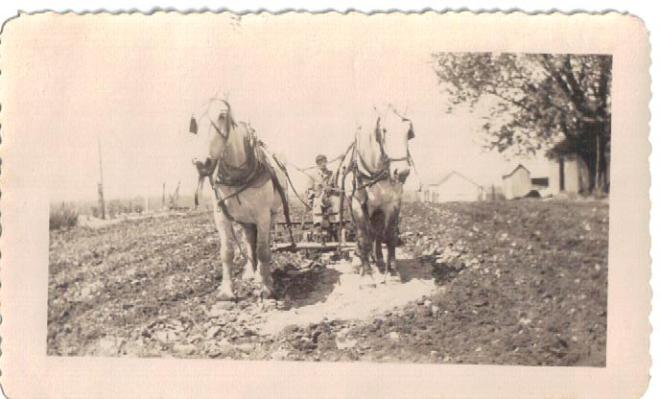
Charlie Barlow and his team

Generations tilled
to eke out a meager life. Now I
scribble in comfort.


Notes:  I have to go all the way back to England in the 1600s to find an ancestor who had a desk job.  To the best of our family research, my great-great-great (etc.) grandfather was a clergyman back in the old country, who had the poor judgment to raise the ire of the Archbishop of Canterbury.

In those days it didn’t take much to get your head separated from the rest of you.  Heretics and troublesome free thinkers could easily meet the same fate.

My forebear wised up in the nick of time and caught one of next boats after the Mayflower to the New World.  We are not sure if he stayed in the preaching business in his new surroundings in the Connecticut Colony, but as far as we can tell, all of those who followed him were dirt farmers.  (Which probably seemed like a safer line of work back then.)

Several generations later, after my great grandfather Frederick Ball narrowly survived the Civil War, he came back  home to find Connecticut getting crowded.  So, he headed west for the promise of cheap land and opportunity.  He wound up in southern Iowa, got married, acquired some land, and raised a family.

One of his sons was my grandfather, and he, too became a farmer, moving to Missouri to chase opportunity.  When my father came along, he showed considerable mechanical aptitude and had hopes of going to school to study engineering.  But the Great Depression dashed those dreams.  Dad had to drop out of school before he finished high school.  To  help support the family he became a farmer.

And  who knows, except for a twist  of fate or two, I might have followed right along and farmed myself.

But  my father had a bit of a mid-life crisis in his 40s.  When I was in first grade, he sold the farm and went in with his brother-in-law and a neighbor to buy a Ford Tractor dealership.  It was his one big entrepreneurial gamble in life.  And for a few years, it looked like it might pay off.

But some lean times for farm prices and some skullduggery by the neighbor-turned-business-partner, and the operation went broke.  They had to sell out cheap, and Dad was forced to fall back on his mechanical skills to make a living.

What this meant for me was that I spent most of my formative years in the town rather than on the farm.  So, while there were centuries of agrarian instincts bred into me, it didn’t take me long to adapt to indoor plumbing, central heating, and really close next-door neighbors.

And I certainly didn’t miss getting up early to gather eggs, milk the cow, or slop the pigs.

Oh sure, I still hoed beans, bucked bales, and detasseled corn as a hired hand in the summer.  But that was a job — not a way of life.

Even if my father had never left the farm, odds are I would have eventually left anyway.  That was the demographic trend during the whole last half of the last century.  The kids went away to school or to a big city for work, and tended never to move back.

It’s been hard on the farming communities.  And I know it was hard on the old folks left behind as their kids fanned out across the country.

When I stop to think about how much different my life has been from the generations before I marvel.  I have no explanation for why my entire adult career has been all inside work with no heavy lifting.

My father’s body bore the marks of a hard life in harder times.  He was kicked in the head by an ornery horse, and had headaches for the rest of his life.  His leg was caught between a hay wagon and a wall, and he walked with a limp.  He even had a few scars from surviving what he believed to be a mild case of small pox.

If the American Dream involves working hard and ensuring your children have a better life, then my parents and their generation certainly did their part.
Civics Haiku

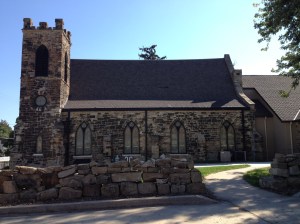
First Presyterian Church, Marshall, MO
Let me not forget
my dual citizenship,
and which one will last.


Notes:  Pictured is the First Presbyterian Church of Marshall, Missouri.  Known as “The Rock Church,” it is the most beautiful church building in my hometown.

Hot car haiku

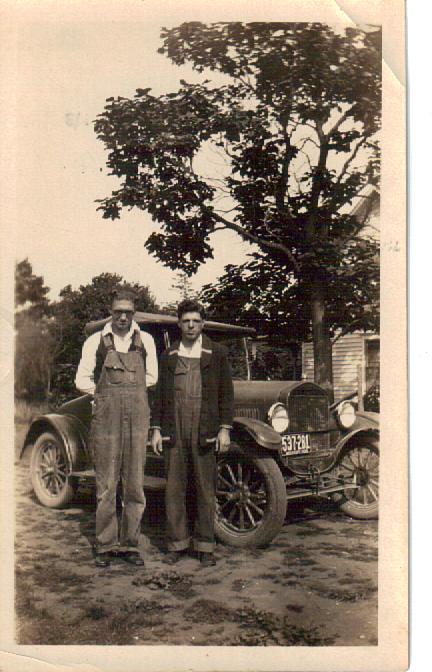
Raymond Ball and Ralph Ball

Strategic brothers,
knew the key to a girl’s heart
involved a hot car.


Notes:

My father  got in on the ground floor of the automobile revolution.  He learned auto  mechanics by hanging around the only garage in his small Missouri farm town.  He cut his teeth fixing Ford Model Ts, and kept learning from there.

Although he spent years trying to make a living as a farmer, and then as a businessman, he ultimately returned to mechanic work.  It was really his true calling.

He could fix things, and make them run. He didn’t buy new cars.  He bought old cars in need of work and fixed them up.

When it became clear to him that he was going to be a mechanic for the rest of his life he went out in his back yard, and proceeded to build himself a proper workspace.  It looked just like a barn, because that is what he had built before during his days on the farm.

But he built it himself from scratch when he was well past 60 years old.  Of course, he used reclaimed lumber scavenged from various tear-downs.

In his later years he ran a mechanic repair business out of his new garage.  He was the only mechanic for miles around who would make house calls.  The farmers all over Saline County knew that he could be depended on to fix their tractor, hay baler, or corn picker.

The photo at the top of this post shows my father, left, and his brother, Ralph, in front of one of the hot cars of the day.

Hometown Haiku


tombstones

Haiku for My Brother

Last time I saw him
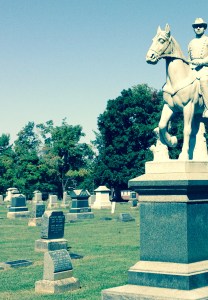
We wandered among tombstones.
Now, he has his own.

Hometown Haiku (continued)

Saline County Courthouse, Marshall, Missouri
Stately old courthouse,
Like a beacon to pilgrims,
Welcoming them home.

Hometown Haiku (continued)

First Presbyterian Church, Marshall, MO
So very grateful,
As one acquainted with sin,
Forgiveness is free.

Hometown haiku

Hometown railroad depot

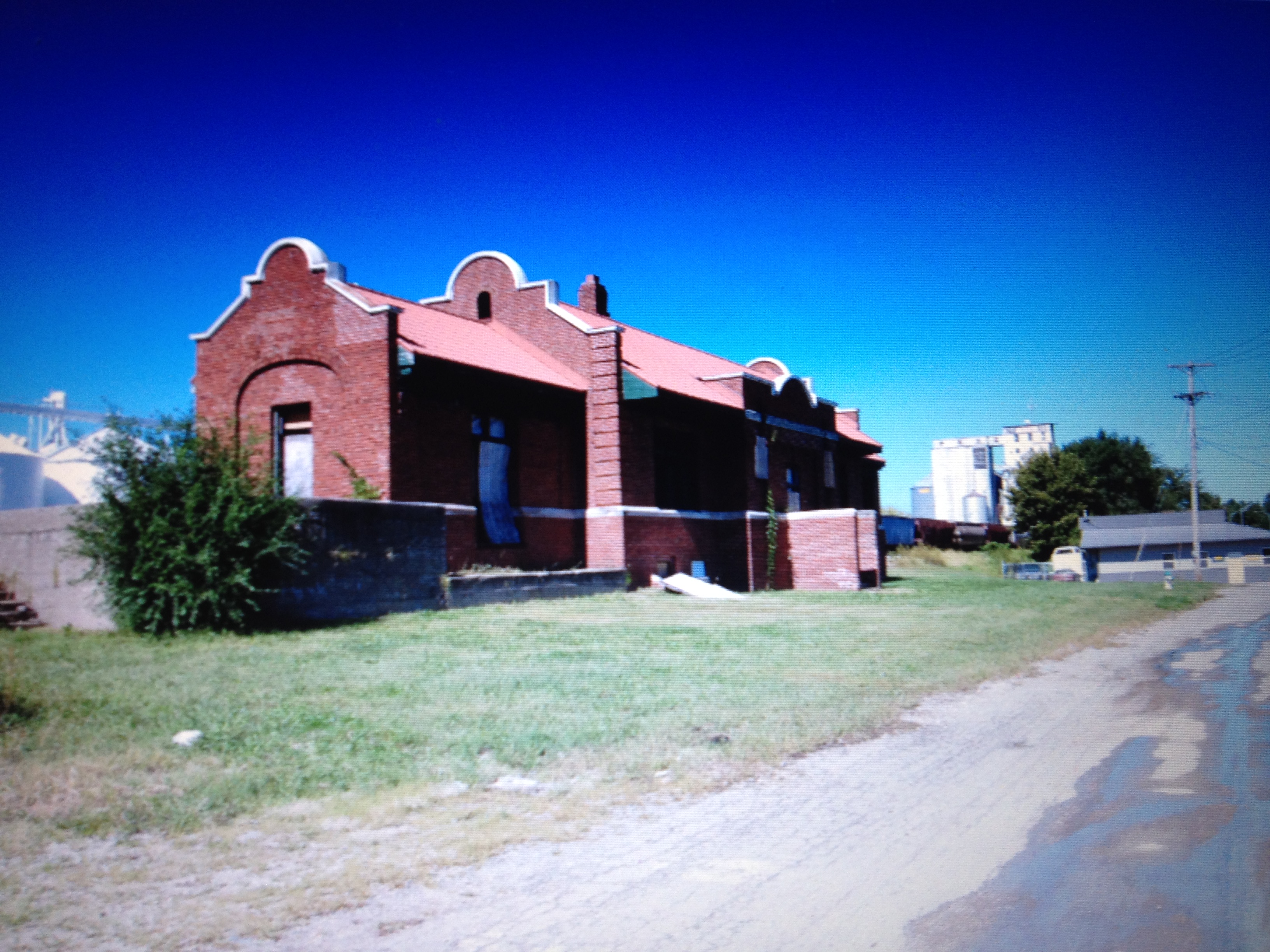
Old streets remind me
I did not know compassion
When I walked them then.

Lilac time

Lilacs
“When lilacs last in the dooryard bloom’d”

I owe some of my enthusiasm for poetry to my 11th grade English teacher back at Marshall High School in Marshall, Missouri–Paul Hagedorn.

He devoted an inordinate amount of time that year to the study of poetry. Our major assignment for the whole year, as I recall, was two-fold. We were to create a poetry notebook in which we copied — and illustrated, if we desired — a good number of poems that spoke to our hearts.

He encouraged us to venture beyond the usual suspects. So, along with poems by Frost and Edward Arlington Robinson, I included lyrics by Paul Simon and Bob Dylan. Then, we were to pick one American poet from a prescribed list of lesser known poets, and write a lengthy term paper on our choice. (I choose John Crowe Ransom because I thought his name was cool. Incidentally, I’m was happy with my choice.)

Mr. Hagedorn passionately believed that Walt Whitman was the greatest poet that had ever lived and he did his best to infect his impressionable students with this enthusiasm. I dutifully bought a paperback copy of “Leaves of Grass,” and read the whole thing.

I failed to completely fall in love with Whitman. Some passages were interesting and hypnotic. I recognized some of the cadence of the King James Bible, which I was raised on. He clearly was making an ambitious attempt to encompass the breadth and depth of all of America in his work. I appreciated that he was attempting to do something had not been done before in American poetry.  But I never could figure out why my teacher was such a Whitman nut.

One poem that did thrill me, however, was “When Lilacs Last in the Dooryard Bloom’d.” I understood it was an elegy to President Abraham Lincoln, who was assassinated on April 14, 1864, just days after the end of the Civil War.

Lilacs were my mother’s favorite flower, and she had passed along that enthusiasm to me. So I was predisposed to be open to any poem about lilacs.

One other factor, just a few years earlier, America had celebrated the Centennial of the Civil War.  I can remember fighting the Civil War during recess in grade school.  Back in my hometown in the heart of “Little Dixie,” there were plenty of kids who had inherited Confederate sympathies from their families.

As the great-grandson of a Yankee soldier, I was clearly a Northern sympathizer.  So, one year, I recall us  dividing up and re-fighting great battles out on the playground.

Lincoln was a revered figure in my family.  So, that made an elegy to him even more interesting.

As I re-read Whitman’s poem today, decades later, it feels a bit overdone.  I had forgotten it was so long.

Just my opinion, but Old Walt could have used a good editor.

But here are those lines that are pure genius, and so beautiful that you think Whitman found them fully formed somewhere:

When lilacs last in the dooryard bloom’d,
And the great star early droop’d in the western sky in the night,
I mourn’d, and yet shall mourn with ever-returning spring.
Ever-returning spring, trinity sure to me you bring,
Lilac blooming perennial and drooping star in the west,
And thought of him I love.

It’s been a tough year for lilacs here in the Northwest.  We had such a warm and early spring that many lilac bushes were tricked into blooming too early.  Our premature spring was interrupted by some cold clear nights that nipped many lilacs in the bud.

Pity, because  there is nothing quite like the heart-shaped leaf and the perfume of the lilac.