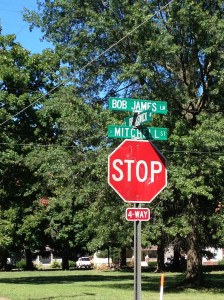
Who would have thought it —
my old neighbor does so well
they rename the street?
Who would have thought it —
my old neighbor does so well
they rename the street?

Before I met you
I thought I was so darned cool.
Clueless, more like it.

My dear old classmates,
so very innocent, and,
so very human.

From an early age
I was taught that modern truth:
The car makes the man.
Wild Geese
I heard them long before I saw them
Like a cacophony of oncoming clown cars.
Rising up out of the valley
And breaking over the Douglas firs.
The biggest formation I’d ever seen,
A magnificent wedge of geese all headed somewhere fast.
There must have been a hundred of them
Flying so low they went by just-like-that
With two hundred wings pumping urgently in unison.
And then they were gone
With just a fading honking echo left behind.
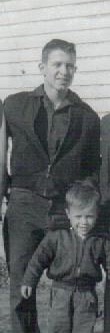
Was it a flock like that, dear brother,
That enticed you to run out of the barn door
That evening so long ago, shotgun in hand,
Thinking you might have a chance at bagging one?
Mom and I were up at the house making cookies,
And I remember hearing eerie wails and noises
Coming from the dark outside
And laughing, thinking it must be some strange animal
Making its strange animal sounds.
But when the cries went on and on
Mom got worried and went to look.
It could have been worse, you know.
You could have blown your head off,
You big klutz.
As it was, you only tripped over the threshold
And broke your elbow, which was bad enough,
So bad you couldn’t wrangle open the barnyard gate,
And so bad it made you moan like a dying beast.
But we drove you all the way to Cameron that night
To find a doctor who could set the bone.
And you got a cast and it healed up mostly,
And though you’d live another 60 years or so,
You never would be able to straighten out that arm.
You did your best to teach me how to hunt
But I never was much for killing things,
Yet … any time I hear wild geese approaching
I still run to where I can get a clear line of sight,
If only to shoot them with my eyes.
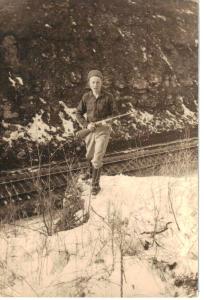
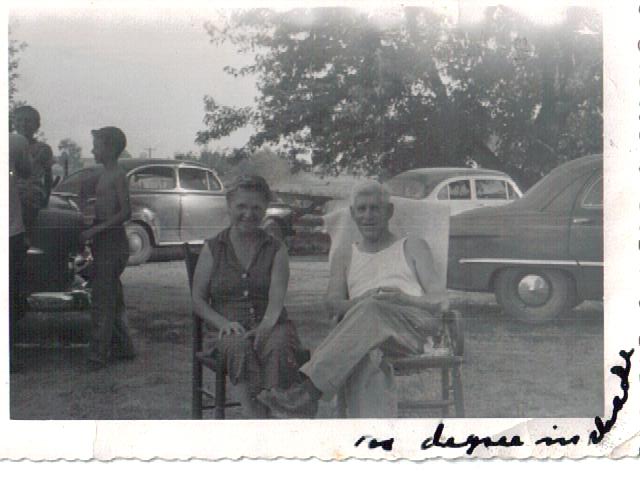
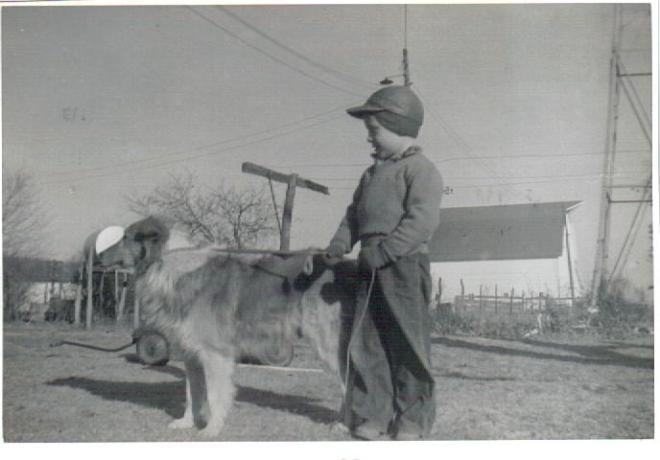
Back in the 1950s on the farm, we didn’t have air conditioning. Shoot, we had just gotten electricity a few years before.
So when the long Missouri summers dragged on and the humidity rose, folks headed outdoors to keep cool. When the nights were really hot, we’d sleep outdoors.
The following poem is about a day pretty much like the one documented in this photo. In fact, the events took place not too many days after this photo was shot.
The Day the Call Came
The day the call came
We had just dished up the ice cream.
A special treat for a Friday farm dinner,
(Not to be confused with supper.)
Mother had made it early that morning in ice cube trays.
“Freezer ice cream,” she called it,
Vanilla, made with Junket tablets to keep it creamy,
Even as it froze.
Not as good as the real, homemade ice cream cranked by hand,
But a whole lot easier.
And America was just starting its long affair with convenience.
The call came over the telephone
Mounted on the farmhouse wall.
With two bells for eyes,
You spoke into its honking, beaklike nose.
The earpiece cradled appropriately
Where the right ear should be,
While a hand crank made a poor excuse
For a drooping left ear.
It was a party line,
So the snoopy widow woman down the road
Knew as soon as we did.
The call came, and the man on the phone
Said Grandpa had just keeled over dead
At the auction over in Poosey.
So, we all got up—Mom, Dad, Big Brother and me,
And climbed into the ’50 Ford sedan
Dad was so proud to own.
The first car he’d ever bought brand new.
By the time we got to the auction –
It was a farm sale, really —
Where the worldly possessions of one farm family
Were being sold off.
One at a time.
By the hypnotically fast-talking auctioneer.
Not as depressing as the foreclosure sales
That were all too common
Just a few years before in the Depression.
This was a voluntary sale,
But a little sad nonetheless.
Some farmer was getting too old to run the place,
And didn’t have kids—or leastwise kids who wanted to farm.
A lot of boys joined the service in those days,
Or headed to Kansas City to find work, and a little excitement,
Rather than stay and try to coax a living
Out of that hilly, rocky dirt.
The man at the auction told us
Grandpa had been standing there in the sun with everybody else.
They were just about to start the bidding on the John Deere hay rake
When he grabbed his chest and fell right over.
Years later, they told me when he was a grown man
Grandpa had gone down to the river,
And been baptized, and filled with the Holy Ghost,
With the evidence of no longer speaking in profane tongues.
For, it was well known Grandpa had been gifted
In the art of colorful language.
“He used to could cuss by note,” was how Mother put it.
But after the washing with water and the Word,
Grandpa was never heard to swear again.
I only knew him as a white-haired old man
With a merry smile, and infinite patience
With Grandma, who required it.
And that was it, really.
Nothing more to say,
Except for the understated condolences
Of the country folk.
Nothing more to do,
Except for my father,
Now lately promoted to the role of the family’s eldest male,
Who assumed the duties and made the necessary arrangements.
Although I didn’t know quite what had happened,
I felt a lurch … as something shifted beneath me …
And I was yanked one more notch forward.
By the time we got back to the house,
The ice cream had long since melted
And now was returning back to solid state,
As it curdled in the September heat.
Hard Times Haiku
I guess we were poor.
Didn’t know what we were missing.
Quite unlike today.

If not for football
Or the women I have loved
I’d hardly know pain.

Pop fixed everything.
Pity that talent wasn’t
hereditary.

No way we could know
at this playful reunion,
it would be our last.
 Poetic Champions