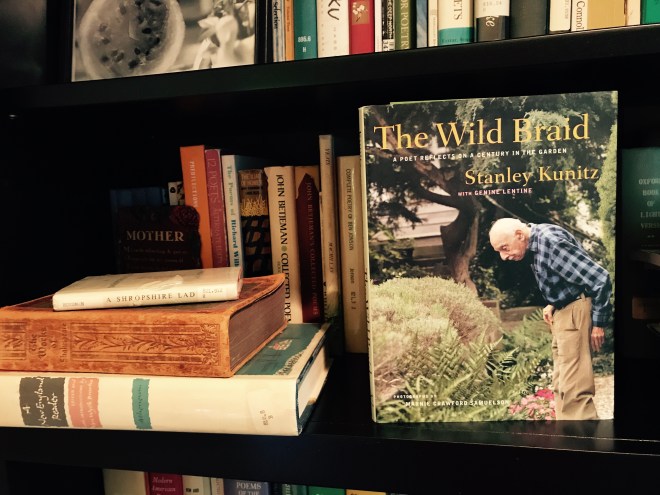
When I came to his poem “Touch Me,” I had to pause. This poem seemed to be hitting some of same notes. Much deeper, but with little glimpses of the same melody.
The two poems are very different on the surface — mine is a sonnet, his is free verse. He makes different observations about nature.
But the season is the same — late summer. And there is something similar in the underlying emotion. Here’s his poem:
Touch Me –Stanley Kunitz
Summer is late, my heart. Words plucked out of the air
some forty years ago
when I was wild with love
and torn almost in two
scatter like leaves this night
of whistling wind and rain.
It is my heart that’s late,
it is my song that’s flown.
Outdoors all afternoon
under a gunmetal sky
staking my garden down,
I kneeled to the crickets trilling
underfoot as if about
to burst from their crusty shells;
and like a child again
marveled to hear so clear
and brave a music pour
from such a small machine.
What makes the engine go?
Desire, desire, desire.
The longing for the dance
stirs in the buried life.
One season only, ++++++++++++++ and it’s done.
So let the battered old willow
thrash against the windowpanes
and the house timbers creak.
Darling, do you remember
the man you married? Touch me,
remind me who I am.
Late summer’s sun has baked the grass to brown.
The days grow shorter with each passing day,
Soon, autumn’s chill will make the leaves fall down.
All of this aching beauty will decay.
And yet I love the shadows’ slanting trace,
The once green grain gone golden in its rows,
And how I love the lines etched in your face.
It’s funny, as love ripens how it grows.
The number of our days we do not know.
No sleeper knows if he will ever wake.
So come, let’s join above, between, below.
My dear, let’s cause our fragile clay to quake.
Let us make love as if it’s our last go.
Let us embrace like dawn will never break.
NOTES: It’s not really late summer yet, but it feels like it. It has been hot and dry, giving us the sense of late August when July hasn’t even ended.
The seasons seen to come and go more quickly of late. Perhaps I’m paying closer attention. Perhaps I realize more summers now lie behind me than still ahead.
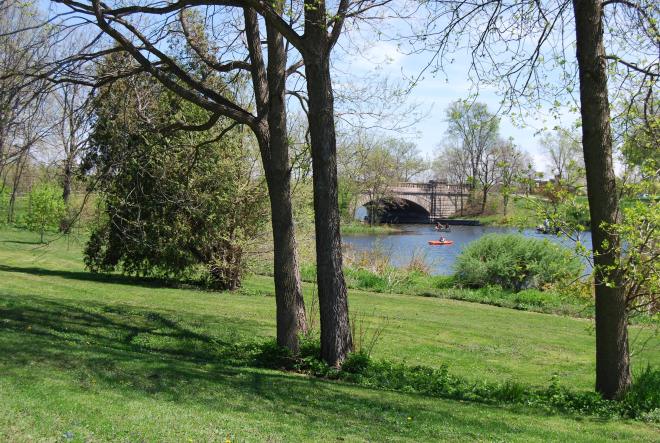
Something in the air caused me to pull this sonnet out of the vault today. I snapped the photo on my late afternoon walk.
Though I am not a bearded man nor burly,
I love you with a lumberjack-type love.
The only axe I take in hand securely,
This meager pen across the page I shove.
Please treat me not so fickle nor so surly,
Don’t shield your limbs below nor lips above.
I aim to fell you skillfully and purely;
Each word’s to chip the bark around your love.
Notes: This one was written 35 years ago, almost to the day.
The wind and you played in my hair,
You lambent in the moon,
The night arranged as by design,
Mysteriously boon.
Afresh the breeze and warm our hands,
So lately introduced,
Traced so gently new found lands,
From tyranny aloosed.
While all around with fire and bang
Our freedom was proclaimed,
A nation’s liberty was meant,
To us, two hearts unchained.
NOTES: I celebrate the Fourth of July as a double holiday. I’m proud and happy to honor our exceptional America and call it home.
And, it also warms my heart to remember the night I discovered my role in an on-going love story.
My personal affection for July Fourth goes back to 1982, when a young couple snuck to the roof of the Calhoun Beach Club in Minneapolis to watch the fireworks. This perch, high above Lake Calhoun, offered a 360 degree view of the entire Twin Cities area. You could see several fireworks displays from there, both near and far away.
That day we lay upon the grass,
A luminescent green.
The sparks that arced from arm to arm
Across the space between.
Our bodies quickened by the sun,
The willow leaves aflush,
The sunlight sparkling on the lake,
Our blood bestirred to rush.
Up and down the parkway, flowers
Enticing with their blooms,
Our loveless winter ended there,
Emerging from our tombs.
For we had slept as sleepers sleep,
Unmindful of the world,
Astonishingly we awoke,
Much like a rose unfurled.
Notes: I have a theory that memorializing milestones in a relationship will fortify it to help it withstand the inevitable stresses and storms of life. Remembering and celebrating events in the early, first phase of a love story are especially powerful.
On July 3, 1982 I took a walk with a beautiful woman around that most beautiful of the Minneapolis lakes, Lake of the Isles. We had known each other less than two months. We sat down in the grass by the lagoon. And then this happened.
July 3 has been my own personal holiday ever since.
I choose to walk the old familiar ways,
To wend ways where I’ve put my foot before,
To gaze anew on views seen other days,
Which, though familiar, never seem to bore.
The changing light and seasons have their ways
Of making old things new: The light-laced hoar,
The first-flush, green-glow, bursting-forth spring days,
The growing tinge of gold we can’t ignore.
Each day, my dear, I choose afresh our trail,
The one we blazed so many years ago,
Eschewing other routes that might avail,
And hewing to the well-worn way we know.
Forsaking novelty need be no jail
With your face bathed in sunset’s golden glow.
NOTES: Thirty-two years of marriage and never a dull moment.
When May bursts forth all moisture and mirth,
And birds bestir while you are still abed,
With everything bent on fostering birth,
And balmy blossoms like a banquet spread
Call to the wanderer weary and wan,
“Close your eyes and breathe and remember nights
When you lay upon the redolent lawn,
And took your bashful taste of love’s delights.”
For though that time is but a glimmer now,
And keenness of the night is now subdued,
A fragrant echo still awakes somehow,
And stirs again a near forgotten mood.
One kiss with wonder could the world endow.
In one embrace you found all you pursued.
NOTES: Love when you are young and young love at any age share a common quality. My favorite month of May reminds me of that.
When I was very young and in love for the first time, I ran across a short little Robert Browning poem called Summum Bonum, which spoke to me quite vividly. Many years and many miles later, I discovered — thankfully — that you did not have to be young to fall in love again.
There just may be a whisper of an echo from that poem in here.
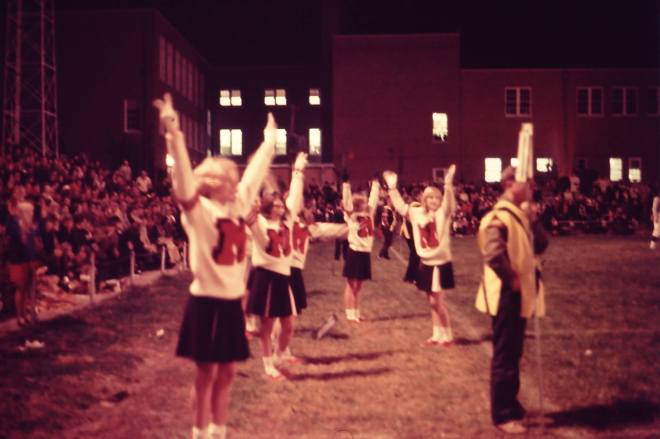
Unattainable,
cheerleaders stirred crowds and our
imaginations
NOTES: Here’s another invaluable photograph from my friend, Susumu. This must have been taken in the fall of 1968, amidst an exciting small town high school football season.
It most certainly was an away game. The home games of the Marshall High School Owls were played at Missouri Valley College’s Gregg-Mitchell Field, and this setting does not look familiar. I’m guessing it might have been the away game that year at the home field of our most hated rival, the Excelsior Springs Tigers.
Marshall had been playing second fiddle to the Tigers for several years, just unable to put together enough power to overcome dislodge them from the top of the Missouri River Valley Conference.
The year before, we had endured a humiliating defeat as the Tigers came into our stadium and beat us on a frigid night in Marshall. Those old aluminum benches had never felt so cold.
This year turned out much better. Coach Cecil Naylor had us worked into such a frenzy that we could have taken on a band of Viking berserkers. We travelled into the Tigers’ home turf, took care of business, and vanquished them 20 to 0.
But I digress.
The topic is cheerleaders. What is with their mystique? And why couldn’t they get a date with their own classmates?
I could be misremembering, but it seemed that very few cheerleaders ever dated guys in their own class. Older guys might work up the confidence to “date down” with a cheerleader from lower grade. But mating between cheerleaders and a classmate was scare and rare.
One of life’s great mysteries. The Cheerleader Paradox.
Mysterious even when you factor in the fact that in our little town, many of us had attended school together since first grade, and the rest of us had been together in the same building since 7th grade.
The long history and close familiarity meant that most of your classmates were like family. That contributed to sense that the cute girl in chemistry class seemed more like your sister or your cousin than girlfriend material.
I mean, you’d grown up together! You’d seen each other on good days and bad days. Good hair days and bad. You’d fought on the playground in grade school, and competed for teachers’ attention. Not much mystery left.
But even that doesn’t explain the Cheerleader Paradox.
Dr. Freud, call your office. I’m open to hypotheses.
Come gentle snow and cloak the ground,
Shroud budding branches all around,
Let not one scent of spring be found,
Make flowers wait.
Come frost and freeze the throbbing juice,
Break March’s short and shaky truce,
No sprout nor songbird yet aloose,
Let spring be late.
Come wind and make the oak leaves hiss,
When they descend no one will miss
Their brittle shade — no artifice
Can bring them back.
Come night and steal the season’s gain;
The verdure will begin to wane
Despite the wealth of easy rain
If it stays black.
Come sleep and shield me from the past,
Help me forget her I loved last,
Wrap safely me in sanctums vast,
Away from pain.
NOTES: We had one of those late snowfalls last week. This time of year in Western Washington, there are already signs of spring. Those signs were utterly–but temporarily–obscured by the snow.
Nearly 40 years ago when I wrote this poem protesting spring, I was an unrequited, tragic romantic. O woe was me! I thought I’d never be happy again. Of course, I was wrong.
Today, I still dread the onset of spring, but for different reasons. When March comes, the alder tree pollen starts to bloom. And that’s when I start sneezing.
If I can just make it through March to April I should be fine.
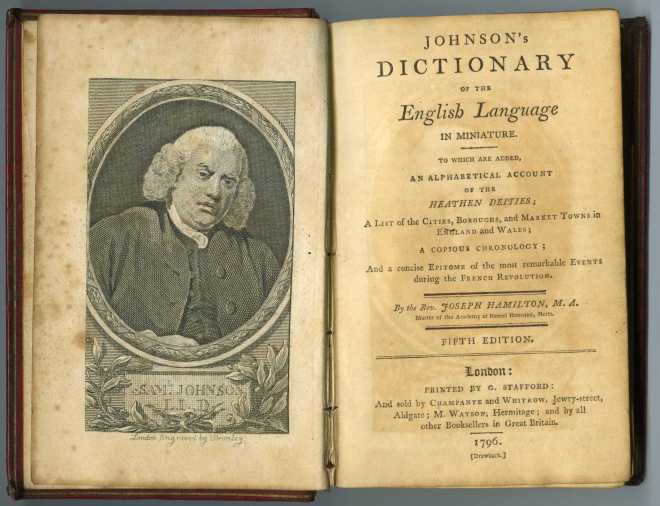
“No man but a blockhead ever wrote, except for money.” — Samuel Johnson
I Sing Not for Glory
I sing not for glory nor for bread,
Nor for the praise of the credentialed clique.
But for hire more valuable instead,
To touch the honest kindred heart I seek.
I sing for lovers when love is green,
When time stops for a solitary kiss.
When light shines anew as with new eyes seen,
I celebrate your fey and fragile bliss.
I sing for the lonely, lovelorn heart,
When light grows cold and aching will not cease,
When your enchanted world falls all apart,
I offer modest salve to give you peace.
I sing for the pilgrim searching soul
Pursuing the heart’s true cause and treasure.
May heaven’s hound, you hasten to your goal,
And propel you to your proper pleasure.
I sing for the wise who see their end,
And, too, for those who have not yet awoke.
For to a common home we all descend,
With common dirt for all our common cloak.
I sing not for money nor for art,
Nor to amuse curators of our trade.
The simple wages of the simple heart
Will satisfy when my accounts are weighed.
NOTES: Samuel Johnson was a funny guy. If his aphorism is correct, that “no man but a blockhead ever wrote, except for money,” then poets are the biggest blockheads of them all.
A few diligent writers of books and screenplays and advertising copy can manage to make a living scribbling words. But poets need another gig to pay the bills.
Most often, they teach. Gerard Manley Hopkins was a priest and a teacher. Robert Frost famously tried his hand at farming, but he also taught and lectured.
Some poets have conducted quite conventional careers during the day to support their poetry habit at night. Insurance executive Wallace Stevens and physician William Carlos Williams are a couple of well known examples.
Dylan Thomas really couldn’t do much else besides write poems, and so he waged a losing war with poverty until he drank himself to death. He probably would have perished much sooner except for the fact he was able to charm wealthy female admirers into becoming patronesses.
About the only thing I have in common with the aforementioned gentlemen is that while I sometimes commit poetry, I also need another means to make a living.
I started my professional life in the 1970s as an ink-stained wretch of a newspaperman. While chasing deadlines was exhilarating when I was still a young man, there were already storm clouds on the horizon for journalism. Afternoon dailies were going extinct, and cities that had formerly had 2, 3 or more newspapers were seeing them merge or go out of business.
Little did I know that in just a few years, the internet would come along and fatally wound the mainstream media organizations, forcing them to trim their newsrooms and close regional bureaus.
I sensed that there was a disturbing uniformity of political opinion in the newsrooms of my youth. My own political worldview was still evolving, but even back then everybody I worked with seemed to be left-leaning and Reagan-loathing. The lockstep groupthink bothered me.
In my naïve idealism, I thought journalists were supposed to be fiercely objective. I never caucused with any party, and I strove to play my own coverage right down the middle. I’d have coffee with both Democrats and Republicans, and always made sure to pay my own check because I didn’t want to owe anybody anything.
When the owner of one paper tried to pressure me to join the local Rotary Club, I refused because I didn’t want membership to influence my coverage of any organization.
If I had still been a journalist this past year I think my head would have exploded. With news organizations colluding with political campaigns, and sharing debate questions in advance with the favored candidate, it became clear that our creaky old news institutions had jumped the shark.
I would have burned my press card in protest.
I wish I could say I was smart enough to foresee the death of journalism and jump ship intentionally, but it was more random than that. I was about to get married and I needed a job in Minneapolis. The cash-strapped metropolitan dailies weren’t hiring right then, and so I took the first job I could get.
Fortunately I had stumbled my way into direct marketing. That later led me into non-profit fundraising. The bulk of my career since has been helping good causes raise money. Healing the sick, feeding the hungry, caring for widows and orphans, defending the persecuted, visiting those in prison, bringing the good news to those in bondage — that sort of thing.
I began to appreciate what I do a whole lot more when I stopped thinking about it as marketing and started thinking about it as “soul stirring.” When I’m doing it right, I touch the heart to stir people up to good works, and inspire them to be generous.
If you ask me, that’s really just a short step away from poetry. It’s all soul stirring.




 Poetic Champions