Hometown haiku

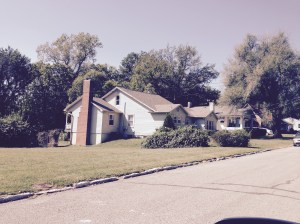
House on East Porter Street, Marshall, Missouri
The old hometown seems
smaller than I remember.
Once, it was magic.


Notes:

For Van Morrison, it was Cyprus Avenue in his hometown of Belfast. The fancy, tree-lined street where the upper class lived.  Where a working-class boy went to dream and catch glimpses of aspirational girlfriends.

In my hometown, that street was Eastwood.  It was a shady, tree-lined street with what passed for mansions in my little Missouri farm town of Marshall.  And there here were even a couple honest-to-Pete mansions among them.  Reminders of old money abounded.

To a Johnny-come-lately, working-class kid like myself, it seemed like the coolest place on earth.  I lived on the other side of town.  Not in the poorest section, but definitely in a different layer.  My house was brand new, but it was a plain 1950s ranch house.  Utilitarian and homely.  Decorated in the finest Late Depression.

At first I didn’t have any friends among the Eastwood society.  Unattainable, I thought.  But when all of the grade school kids graduated to junior high, we were suddenly thrown together.

I became buddies with an Eastwood kid, Clyde, who, while he didn’t live right on Eastwood, lived close enough — a long block off of it.

His home was a demonstration of exquisite interior decorating, and his family a wonder of graciousness and hospitality.  I felt lucky to have such a cool friend.

We played football, we raced slot cars, and talked about our growing interest in girls.  I heard Sgt. Pepper’s for the first time in his basement.

When my cat didn’t come home and was eventually found struck to death by a car, I went to Clyde’s to play basketball.  I played so furiously that I eventually egged him into our only physical fight.

Because that’s how 12 year old boys grieve.

In those days of flower power and Vietnam, we did find ways to wage a few political protests, and fight against what we saw was hidebound traditions at our high school.

We eventually began to drift our separate ways, spending more time with girls than with our old guy friends.

One evening, late in our high school years, we sat around a campfire out at the park, vaguely aware that our sheltered years in our old hometown were drawing to a close.  Our oh-so-enlightened conversation including a one-through-10 ranking of our female classmates.

If I remember, we did try to maintain a sense of irony about it.

The photo atop this little poem is a recent shot of Clyde’s old house.

Hometown sonnet

Arrow Street, leading into the square of Marshall, Missouri
Hometown Sonnet

The old hometown is aging, as am I,
The once wide streets grow narrow with the years,
As night descends, you all but hear a sigh,
For what once was has gone, and twilight nears.

Now friends and kinsmen number fewer, too,
And memories fade like the painted sign
Proclaiming that the city “Welcomes You!”
Strange how one’s soul and place so intertwine.

Life used to bustle round our stately square
‘Til commerce shifted to the edge of town.
The grand facades are now much worse for wear,
Some landmarks have been torn completely down.
The business of my life took me elsewhere,
Cracks grew in walkways of both man and town.


Notes:

Thomas Wolfe wrote “You Can’t Go Home Again,” but last year I made a couple of trips back to my childhood hometown. My high school class held a reunion, and there was the lingering matter of tidying up my late parents’ estate, which seemed like it would never get resolved.

I thoroughly enjoyed seeing my old classmates, and re-igniting long dormant memories. But, not all my classmates are doing well.  Not all of them made it back.  Not all are still alive.

The visits led to reflection, and that led to poetry.


Father’s Day Haiku

IMG_1601

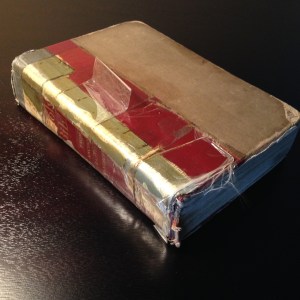
Father’s old Bible
held together with duct tape.
Now he’s face to face.

Father’s Day Haiku

Raymond Ball outstanding in his garden
How to explain Dad?
Outstanding in his field, he
lived a simple life.

When spring starts to fade

"When the dizzy petal peak is past"

PASSION LIKE A FLOWER

Passion like a flower must expire.
Nothing can be rigged to spare desire
From life’s rigors — magic nor petitions.
Petals fall to various conditions.

When the dizzy petal-peak is past,
Some folks act as if the bloom could last,
Pick some wilting lilacs for their table,
Haul them homeward just to show they’re able,

Plunk them in a fruit jar lately washed
Clean of last fall’s bounty, cooked and squashed —
Like they thought the glass itself had power
To delay the spoiling of the flower.

It may work a day, two days, or so,
Then the smell and color start to go.
Nothing glassy can preserve desire;
Passion like a flower must expire.


Spring comes early in the Northwest.  By this time, many flowering trees are spent.  the blooms that were so intense in late March and April are brown and gone.

As I walked through town tonight, I couldn’t miss the signs of the season moving on.  Trees that a week or two before were full and fragrant were now brown and empty.  Flower petals were scattered across the grass.  The heady first-flush of spring was long gone.

Here’s an old poem that seemed right for the season.


Spring Poem

Phili; Larkin wrote a beautiful spring poem, "The Trees."

As spring comes into its full, glorious own here in the Pacific Northwest, I discovered a wonderful spring poem I had never read before.

Mary Karr posted a short poem by Philip Larkin last week on her Facebook page. In one of those interesting coincidences, I had just been encouraged to look into Larkin by my literary friend and colleague, Mark Neigh.

(You know how you discover a new word one day, and then you see it and hear it all around you the next?  It was sort of like I was surrounded by Larkin all of a sudden.)

I already had Larkin’s “Collected Poems” on my bookshelf, but hadn’t read much in it. I’d never been much impressed by what little I had read of Larkin, but his spring poem really hit home. I must never have given him a proper chance. Or the timing wasn’t right.

Here it is, just 12 short, beautiful lines:


The Trees
by Philip Larkin

The trees are coming into leaf
Like something almost being said;
The recent buds relax and spread,
Their greenness is a kind of grief.

Is it that they are born again
And we grow old? No, they die too.
Their yearly trick of looking new
Is written down in rings of grain.

Yet still the unresting castles thresh
In fullgrown thickness every May.
Last year is dead, they seem to say,
Begin afresh, afresh, afresh.


You can listen to Larkin read this poem here.  (It just sounds better when he reads it.)  This small gem gives me hope that I’ll find other poems that speak to me in Larkin’s work.

Florida Haiku

The flatness of Florida

How do I explain
the flatness of Florida?
In so many ways.

Old San Juan Haiku

Statue outside of Ponce de Leon's home in Old San Juan, Puerto Rico.

Ponce de Leon
searched for the fountain of youth.
He now, too, is dead.

Vieques Haiku

Cockleburr on Vieques island, Puerto Rico

Yes, in paradise
lest you forget suffering,
a thorn in the flesh.

Hometown haiku

The calloused farmer with his son.

The calloused farmer
cradles his newly born son,
awkwardly tender.