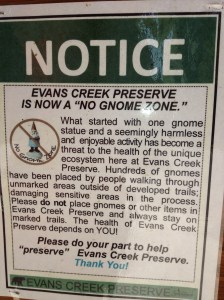
They came for the gnomes.
I didn’t speak — I wasn’t a gnome.
So it starts like this.
They came for the gnomes.
I didn’t speak — I wasn’t a gnome.
So it starts like this.

Haiku about poetry and life
We’re playing a game,
calling out “Marco!” “Marco!”
just to hear “Polo!”

~ Martin Luther King Day Haiku ~
If only they hadn’t
shot Martin down, you think things
would be different?
~ Crow Haiku ~
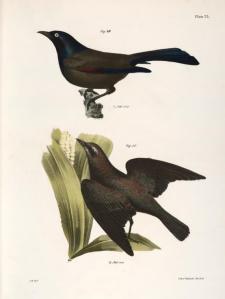
Slanting winter sun
Catches crows gliding above
Gilding black wings white.
~ Haiku for My Parents ~
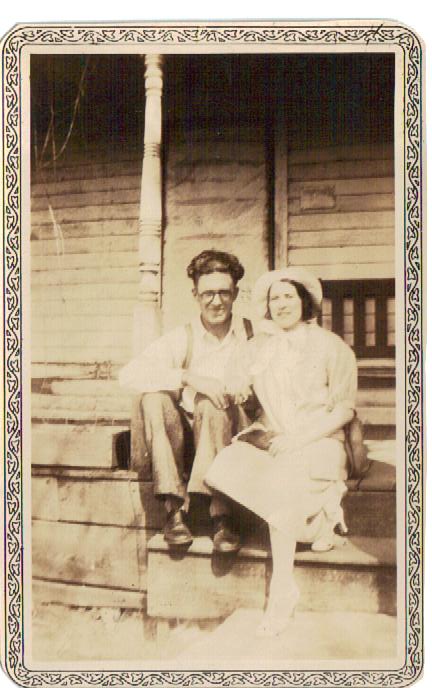
Depression couple,
Never quite got the memo
That it was over.
Haiku for My Brother
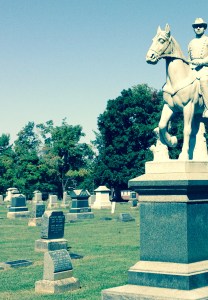
Last time I saw him
We wandered among tombstones.
Now, he has his own.
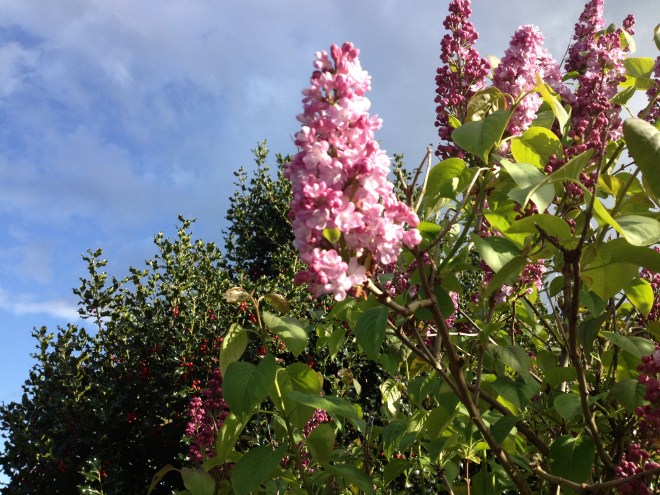
Flower Time
I saw you first in jonquil time,
When you were bathed in grace.
You sat aglow with fire sublime,
And golden shone your face.
I loved you first in lilac time.
A bloom I plucked for you.
I wrote you verse with song and rhyme.
I hoped you loved me too.
I kissed you first in tulip time,
It must have been a sign.
The buds and we were in our prime
When your two lips met mine.
I married you in daisy time
On summer’s longest day.
We traded rings and heard bells chime.
We pledged always to stay.
Too soon we’ve come to aster time.
The days are shorter now.
Would stealing some be such a crime?
We’ll make it right somehow.
Should we endure ’til wintertime,
The time when flowers sleep,
Dreams we’ll share of a gentler clime
Where we no more shall weep.

Christmas Haiku
Inexplicable.
That the author casts himself
In such a small role.

Usually, I have a pretty good sense about when I’m done writing a poem.
But, after I posted that last poem–the one about writing poetry–I wasn’t satisfied. It just didn’t feel finished to me.
I didn’t like the ending. I didn’t really like the photo I had taken to illustrate it. It just wasn’t right.
So, I went down to the beach of Liberty Bay on the Puget Sound, and found an oyster shell. It inspired me to write a final stanza for the poem.
I feel much better about it now.
As the Oyster Forms the Pearl
As the oyster forms the pearl,
So the poet pens the verse
As balm for the current ache
Born out of the ancient curse.
As the oyster feels compelled
To shellac the sandy grain,
So the poet feels the urge
To transmogrify the pain.
So the pearl grows rich and round
As its luster covers the sand.
So the verse unseen takes form
In its way, designed unplanned.
Sad the pearl that lies unseen
In the depths of the murky sea.
Sad the verse that dies unheard
In the heart clandestinely.
So the diver frees the pearl,
Breaks the stony shell apart.
So the poet frees the verse
Ripped out of his broken heart.

It seems like, eventually, every poet writes about writing poetry.
One of my favorites is Raymond Carver’s “Reaching”:
Reaching
He knew he was
in trouble when,
in the middle
of the poem,
he found himself
reaching
for his thesaurus
and then Webster’s
in that order.
What writer hasn’t found themselves in just that situation?
Billy Collins, writing more about poetry students than poetry, wrote this in his Introduction to Poetry:
I want them to waterski
across the surface of a poem
waving at the author’s name on the shore.But all they want to do
is tie the poem to a chair with rope
and torture a confession out of it.They begin beating it with a hose
to find out what it really means.
Isn’t that just like students — so desperate to capture “what it really means,” that they beat a poem to death?
This is my contribution to the vein of poems about poetry. Just a bit of a drawn out metaphor, really.
As the Oyster Forms the Pearl
As the oyster forms the pearl,
So the poet pens the verse
As balm for the current ache
Born out of the ancient curse.As the oyster feels compelled
To shellac the sandy grain,
So the poet senses the urge
To transmogrify the pain.So the pearl grows rich and round
As its luster covers the sand.
So the verse unseen takes form
In its way, designed unplanned.Sad the pearl that lies unseen
In the depths of the murky sea.
Sad the verse that dies unheard
In the heart clandestinely.
 Poetic Champions