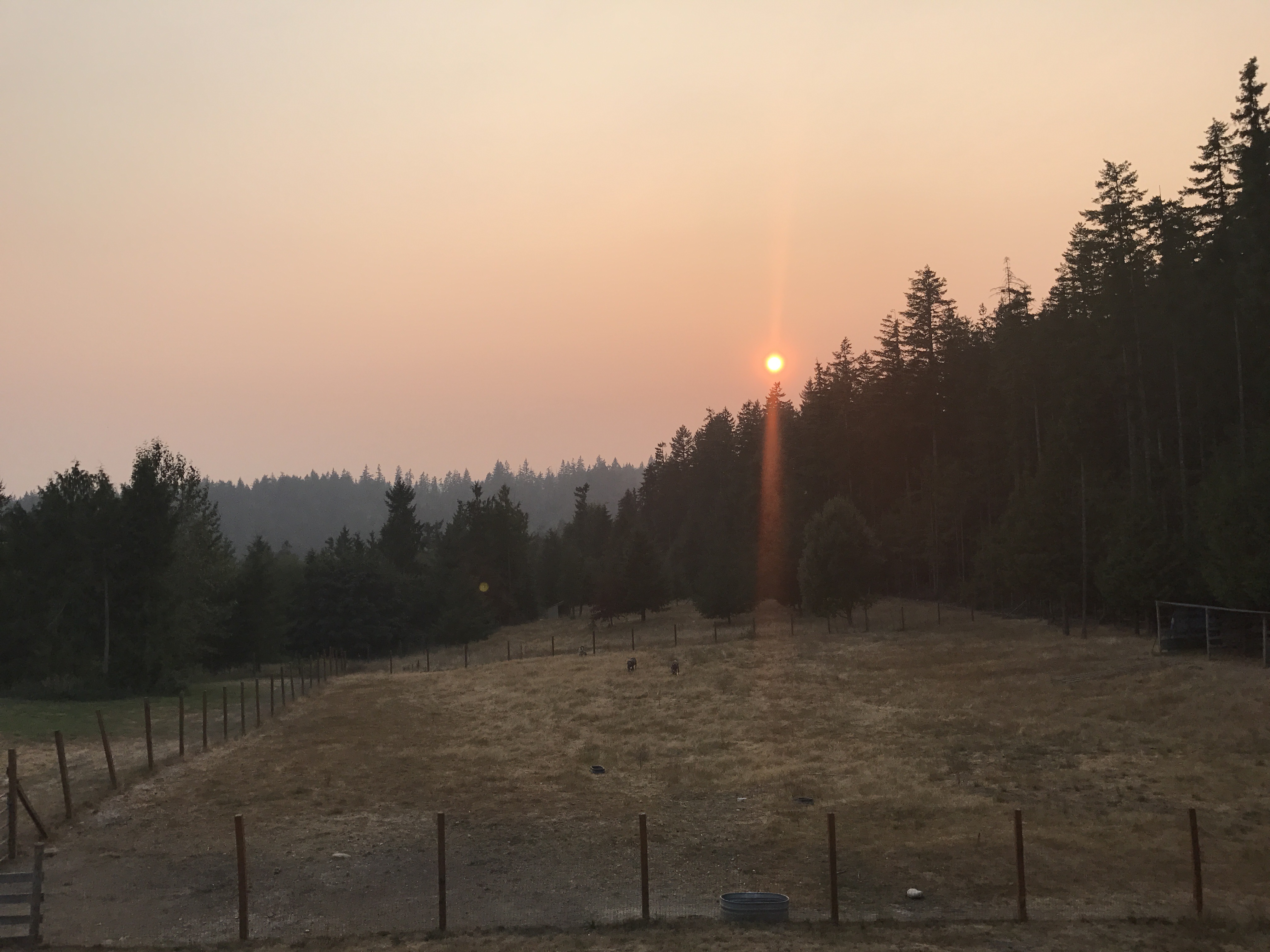
Late summer's sun has baked the grass to brown. The days grow shorter with each passing day, Soon, autumn's chill will make the leaves fall down. All of this aching beauty will decay.
And yet I love the shadow's slanting trace. The once green grain gone golden in its rows. And how I love the lines etched in your face. It's funny, as love ripens how it grows.
The number of our days we do not know. No sleeper knows if he will ever wake. So come, let's join above, between, below. My dear, let's cause our fragile clay to quake. Let us make love as if it's our last go. Let us embrace like dawn will never break.
Living in Florida has discombobulated my internal calendar. With none of the old familiar clues, autumn snuck up on me this year. I’ve resorted to flipping through old photos to get a sense of what fall feels like. Here’s a little sonnet from 2015 written when I was spending a lot of time away from home for work, and obviously missing my wife.
P.S.: Psychology Today says that our master circadian clock — the one that keeps track of the seasons is called the Suprachiasmatic Nucleus, which contains about 20,000 nerve cells and is located in the hypothalamus. Gonna have to take their word for it.
The wind and you played in my hair, You lambent in the moon. The night arranged as by design, Mysteriously boon.
Afresh the breeze and warm our hands, So lately introduced, Traced so gently new found lands, From tyranny aloosed.
While all around with fire and bang Our freedom was proclaimed. A nation's liberty was meant, To us, two hearts unchained.
(1982) To continue the story from yesterday, some 24 hours after that first kiss, my new love and I made a plan to watch the Fourth of July fireworks.
It was really more her plan than mine. My default tendency is to be a rule-follower. Hers is to make everything an adventure, get the best seat possible, and just go for it. If she had a motto, it could well have been, “All things are permitted unless expressly forbidden.”
She lived across the street from Minneapolis’s Calhoun Beach Club, which in those days before high-rise condos sprung up, had a 360-degree view of the city. She had already explored the building and discovered how to get on the roof. (I mean, no one had told her she couldn’t!)
You walk through the lobby, take the elevator as far as it would go, locate the door to the stairway, and then ascend the final story by way of a metal ladder.
I was skeptical about getting away with it. But from the beginning, she had a way of drawing me outside of my comfort zone. (Maybe that’s what love is all about. Opening yourself up to possibilities of connection, hoping against hope you’ll be met with openness, despite the danger of having your heart broken.)
At any rate, love can make you do crazy things, so we set out, hauling a big pack with our picnic provisions, and two lawn chairs.
Fortunately, those were earlier, more trusting times. No guard in the lobby, no code needed for the elevator, and no lock on the door to the roof. The hardest part was climbing the ladder with all our stuff.
But when we walked out onto the roof in the slanting light of late afternoon, the view was marvelous — lakes and trees and parkways arrayed out below us. In the distance we had an unobstructed view of the tall buildings of downtown.
But the real show began when it got dark and the fireworks started. We could see fireworks in every direction. Some near, and some more distant. It seemed every municipality in the Twin Cities was putting on a show. We surely had the best seats in town.
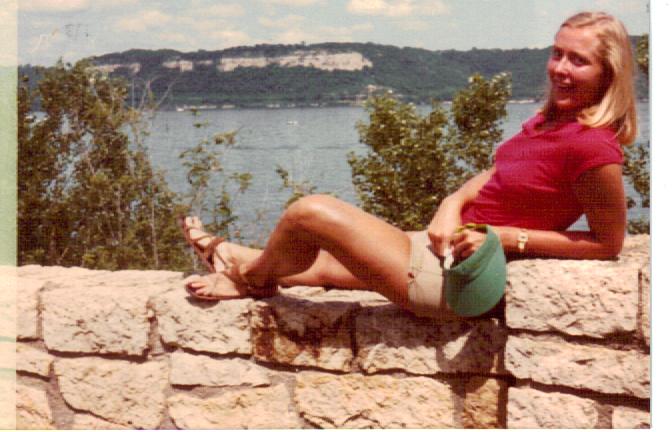
There are no photos from that night. This was before we all had cell phones and we tended to experience things firsthand, rather than through the lens of a camera. So it’s for the best. The one photo I have from that month is attached to this post. You can see why I was smitten.
Forty-two years later with that woman, and there’s never been a dull moment.
Note for poetry nerds: For years I’ve been a little troubled by departing from the rhyme pattern in the last verse. But I’ve resolved that it’s better to use exactly the right word rather than rigidly follow the rules and use almost the right word.
That day we lay upon the grass, A luminescent green. The sparks that arced from arm to arm Across the space between.
Our bodies quickened by the sun, The willow leaves aflush. The sunlight sparkling on the lake, Our blood bestirred to rush.
Up and down the parkway, flowers Enticing with their blooms. Our loveless winter ended there, Emerging from our tombs.
For we had slept as sleepers slept, Unmindful of the world. Astonishingly we awoke, Much like a rose unfurled.
(2015)
Some 42 years ago I worked as a journalist for a community newspaper in the suburbs of Minneapolis. I still have my pocket appointment calendar from that time. Along with recording the times and dates of city council meetings, photo ops, and interviews, it documents the progress of an uncanny romance.
We were two weary pilgrims, up to that point unlucky at love, but brought together by providence.
The calendar entry for Saturday, July 3, 1982: “Bike ride, sunning.” And then, emphatically, “1ST KISS.”
I’m a big fan of July 4th, but July 3rd is my own personal holiday.
The wind and you played in my hair, +++You lambent in the moon,
The night arranged as by design, +++Mysteriously boon.
Afresh the breeze and warm our hands, +++So lately introduced,
Traced so gently new found lands, +++From tyranny aloosed.
While all around with fire and bang +++Our freedom was proclaimed,
A nation’s liberty was meant, +++To us, two hearts unchained.
(1982)
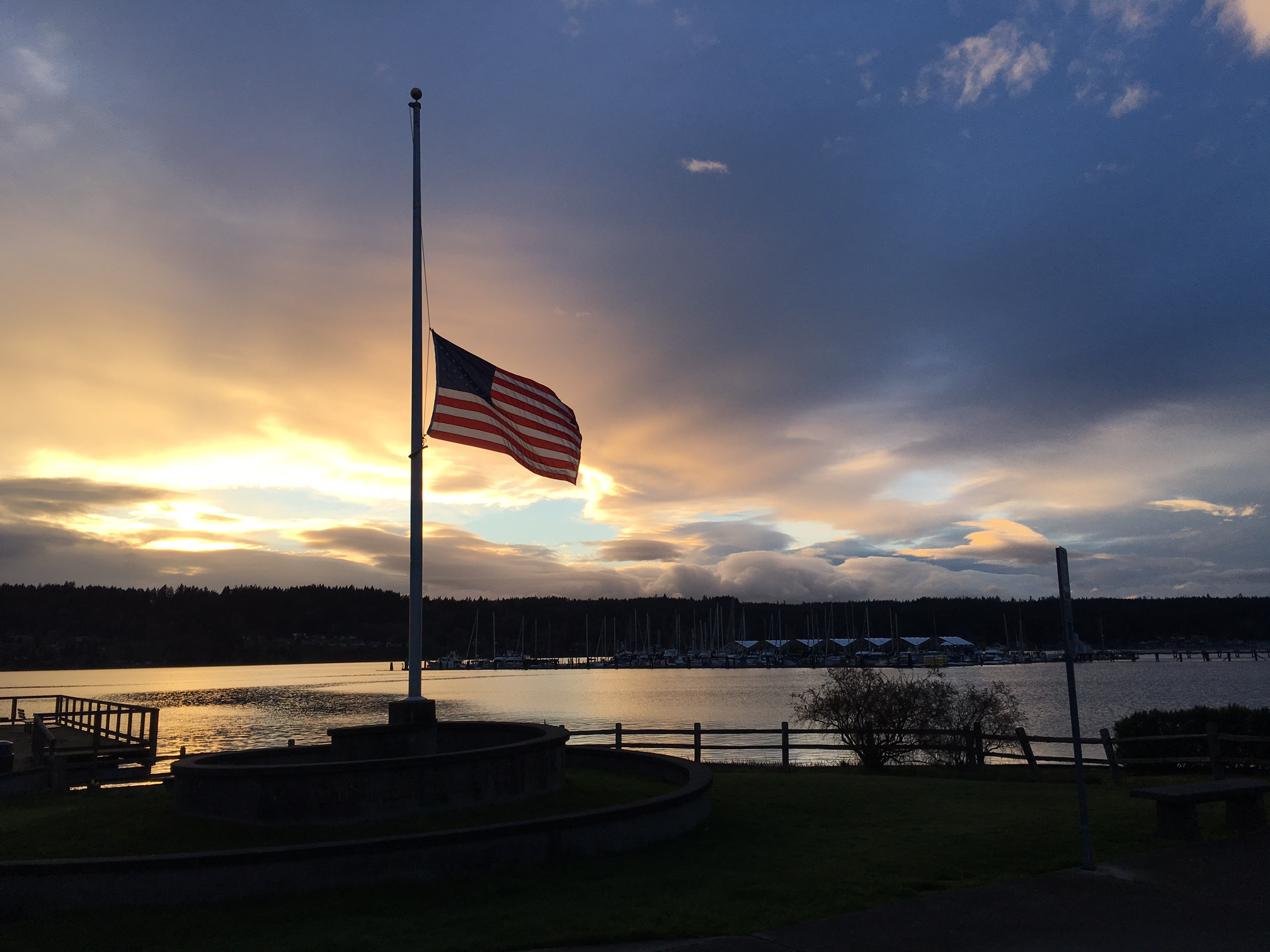
As we reflect on our nation’s past, I’m reminded of a bit of personal history. Some 38 years ago, a couple of crazy kids snuck up to the roof of the Calhoun Beach Club in Minneapolis to watch fireworks.
They didn’t quite realize it yet, but they were falling in love. Like our country, they were not perfect. But, like our country, they had tasted the mercy of Jesus and dreamed of a more perfect union.
When May bursts forth all moisture and mirth,
And birds bestir while you are still abed,
With everything bent on fostering birth,
And balmy blossoms like a banquet spread
Call to the wanderer weary and wan, “Close your eyes and breathe and remember nights When you lay upon the redolent lawn, And took your bashful taste of love’s delights.”
For though that time is but a glimmer now,
And keenness of the night is now subdued,
A fragrant echo still awakes somehow,
And stirs again a near forgotten mood.
One kiss with wonder could the world endow.
In one embrace you found all you pursued.
(2017)
Tennyson said, “In the spring a young man’s fancy turns to love.” Robert Frost said that the beginning of every poem is a certain mood.
And there you have it.
A mood, a memory in springtime, and even an old man’s fancy can be stirred a bit.
A simple story that I yearned to tell,
Just two, a boy and orange butterfly,
Enchanted by the lavish summer flush
Of lark and lilac, hollyhock and thrush. +++He did not really know just why he wept.
At first it seemed a game of innocence
To chase the dainty kite around the yard.
Its random flight impossible to track,
Just as it drew in range it fluttered back. +++He laughed as if this day would never end.
In time the butterfly would come to rest
Upon the sweet and fragrant purple bloom.
The boy would seize at last that prize he sought,
But saw at once he’d ruined what he had caught. +++Tears dropped upon an orange, broken wing.
You brought, dear friend, all this to life on film,
The first production of your long career.
Quite primitive, for sure, it was, and raw.
We were not ones to dwell on any flaw. +++For we were making art and we were glad.
We ventured forth for beauty, truth and love.
We vowed we’d float the Mississippi’s length.
We’d plumb our nation’s soul and sing its song.
We were so young and casual and strong. +++And confident our time was all our own.
But life’s vicissitudes drew us apart.
There’d be no sequel to our maiden work.
We’d never float that river on a raft,
Nor join to sharpen one another’s craft. +++No use to wonder now what might have been.
For time has caught up with your mind too soon.
The wings on which you soared are broken now.
Your free and fancy flight has turned to stone.
You’ve gone and left us lonesome and alone. +++Too late I realized just why I wept.
NOTES: In 1968, my friend and classmate Gene Marksbury played his new album for me, Bookends by Simon and Garfunkel. The duo’s album Sounds of Silence had been my very first record purchase a couple of years earlier. I was already a fan.
There had always been heartache, poignancy and disappointment in their music, but this new album took it further. It seemed to cover the whole span of life. Youth and young love, breakdowns of relationships, and — finally — the losses that come with old age.
The album ended with the admonition that has haunted me ever since:
Time it was, and what a time it was, it was A time of innocence. A time of confidences Long ago, it must be, I have a photograph Preserve your memories; They’re all that’s left you.
I have a photograph from that era long ago:
From left to right: Gene Marksbury, me, and Clyde Smith
The shot shows us as we prepared for a camping trip on the banks of the Missouri River a few miles from our home. Gene is the one on the left and our friend Clyde Smith is on the right holding the rifle. Years before, we were members of the same slot car racing club and spent a lot of time together. In the insanity of adolescence, we had once tried to hold our own 24-hour Le Mans slot car race.
But by time of this photo we were all probably about 16 or 17, and primed for more challenging adventures. It was also about this time that Clyde somehow got access to a movie camera. He was already a talented photographer and he was eager to make a movie.
I had written a very short story for an English class and he decided that this would be the basis for his first film. The story was about a boy chasing a butterfly, catching it and then instantly regretting that he had damaged it beyond repair. I had called the story “End of a Monarchy.”
It was the most basic of plots, but Clyde recruited a younger friend to be the star and somehow wrangled an unfortunate butterfly to play the supporting role. And, to his credit, Clyde made it happen. It was shot on primitive, grainy, 8mm film, but when he was finished, he had himself a movie.
I was delighted, of course.
After high school graduation, Clyde and I came very close to going to the same college. We dreamed big about a future of artistic collaboration. But I received a scholarship from a different school with an offer I couldn’t refuse, and we went our separate directions.
I emerged from college a few years later armed with a B.A in philosophy and classics, and no serious plan for the future. What followed was a checkered career. Bouncing from fry cook to restaurant manager to salesman to journalist to copy writer to creative director … most of the time earning a living to support my family and my poetry habit.
Gene’s life took a circuitous route, but he ended up teaching college back in our hometown for a few years. He now owns a winery and operates a tasting room in nearby Glasgow, MO, overlooking the Missouri River. His Bushwhacker Bend Norton Dry Red is pretty tasty.
Clyde and I had not seen each other for decades. But three years ago my wife and I were in Los Angeles and I made a point of reconnecting with him. We spend a delightful lunch with him and had a wonderful time making up for lost time. We reminisced for more than two hours, and he reminded me of details about our youthful escapades that I had forgotten.
I did notice that Clyde repeated a couple of stories during the course of our conversation but didn’t think too much of it.
After we returned home, Clyde and I exchanged a few messages. But he soon stopped replying and I got busy. Sometime later I realized I hadn’t heard from him for quite some time. I remembered his seemingly insignificant forgetfulness during out lunch and began to worry.
Late last year I went to his Facebook page and my fears were confirmed. From information posted there, I learned that Clyde was suffering from Alzheimer’s and had declined rapidly. He was already in the later stages and had reached the point where his wife was no longer able to care for him at home and keep him safe.
Since then she has been able to move him into a care facility that specializes in such patients, but she reports that he no longer recognizes her, their daughter, their dog, or anyone elseIn 1968, my friend and classmate Gene Marksbury played his new album for me, Bookends by Simon and Garfunkel. The duo’s album Sounds of Silence had been my very first record purchase a couple of years earlier. I was already a fan.
There had always been heartache, poignancy and disappointment in their music, but this new album took it further. It seemed to cover the whole span of life. Youth and young love, breakdowns of relationships, and — finally — the losses that come with old age.
The album ended with the admonition that has haunted me ever since:
Time it was, and what a time it was, it was
A time of innocence. A time of confidences
Long ago, it must be, I have a photograph
Preserve your memories; They’re all that’s left you.
I have a photograph from that era long ago:.
I lost my mother to dementia many years ago, and this news about my friend has dredged up all sorts of grief and regret. I’ve been thinking of all the questions I wish I could have asked my mother when she still was able to answer.
I’ve been wishing that Clyde and I had stayed in closer touch since we left our Missouri hometown. I’ve been wishing we had had the opportunity to work together again.
I’ve been thinking of my past, my family, my friends, trying to preserve as many many memories as I possibly can.
I’ve been repeating Paul Simon’s lyrics in my head and wondering, when you lose your memories, what do you have left?
I choose to walk the old familiar ways,
To wend ways where I’ve put my foot before,
To gaze anew on views seen other days,
Which, though familiar, never seem to bore.
The changing light and seasons have their ways
Of making old things new: The light-laced hoar,
The first-flush, green-glow, bursting-forth spring days,
The growing tinge of gold we can’t ignore.
Each day, my dear, I choose afresh our trail,
The one we blazed so many years ago,
Eschewing other routes that might avail,
And hewing to the well-worn way we know.
Forsaking novelty need be no jail
With your face bathed in sunset’s golden glow.
(2016)
NOTES: March is arguable the most beautiful time in the Pacific Northwest. The days are growing longer. Yellow daffodils are rampant. And the ornamental plum and pear and cherry trees are exploding with pink blossoms.
In normal times, my only quibble with March is that it also brings on the dusting of alder pollen, which makes me sneeze. (Has anyone ever established a good reason for alder trees to have been created? I am skeptical.)
But these are not normal times. As with the rest of America and most of the world, we are in the grip of the global coronavirus pandemic. As a result, most of us have been largely confined to our homes, venturing out on only the most urgent matters. We are taking shelter in our homes like characters in some post-apocalyptic movie, waiting for the worst to pass.
We can still get out and take walks (as long as we observe the proper “social distancing” by moving 10 feet away when we meet passers-by.) Given our current semi-quarantined status, I don’t care how high the pollen count. I’m going for a walk to look at the scenery!
As I walk, I almost always take the same routes through our semi-rural suburban neighborhood making sure to include as many hills as possible. I’ve been walking it for years but it never gets boring.
In times like this, you take stock of what’s really important.
Late summer’s sun has baked the grass to brown.
The days grow shorter with each passing day,
Soon, autumn’s chill will make the leaves fall down.
All of this aching beauty will decay.
And yet I love the shadows’ slanting trace,
The once green grain gone golden in its rows,
And how I love the lines etched in your face.
It’s funny, as love ripens how it grows.
The number of our days we do not know.
No sleeper knows if he will ever wake.
So come, let’s join above, between, below.
My dear, let’s cause our fragile clay to quake.
Let us make love as if it’s our last go.
Let us embrace like dawn will never break.
(2015)
Notes: T.S. Eliot said April was the cruelest month. I disagree. I think it’s August. The ground is parched, the foliage is showing its mortality, and it’s clear that we’ve passed high summer and we’re on the downhill slide. Nothing gold can stay and the highway dust is over all.
Extra credit to any poetry geek who can spot the homage to John Donne in this poem.
I saw you first in jonquil time,
When you were bathed in grace.
You sat aglow with fire sublime,
And golden shone your face.
I loved you first in lilac time.
A bloom I plucked for you.
I wrote you verse with song and rhyme.
I hoped you loved me too.
I kissed you first in tulip time,
It must have been a sign.
The buds and we were in our prime
When your two lips met mine.
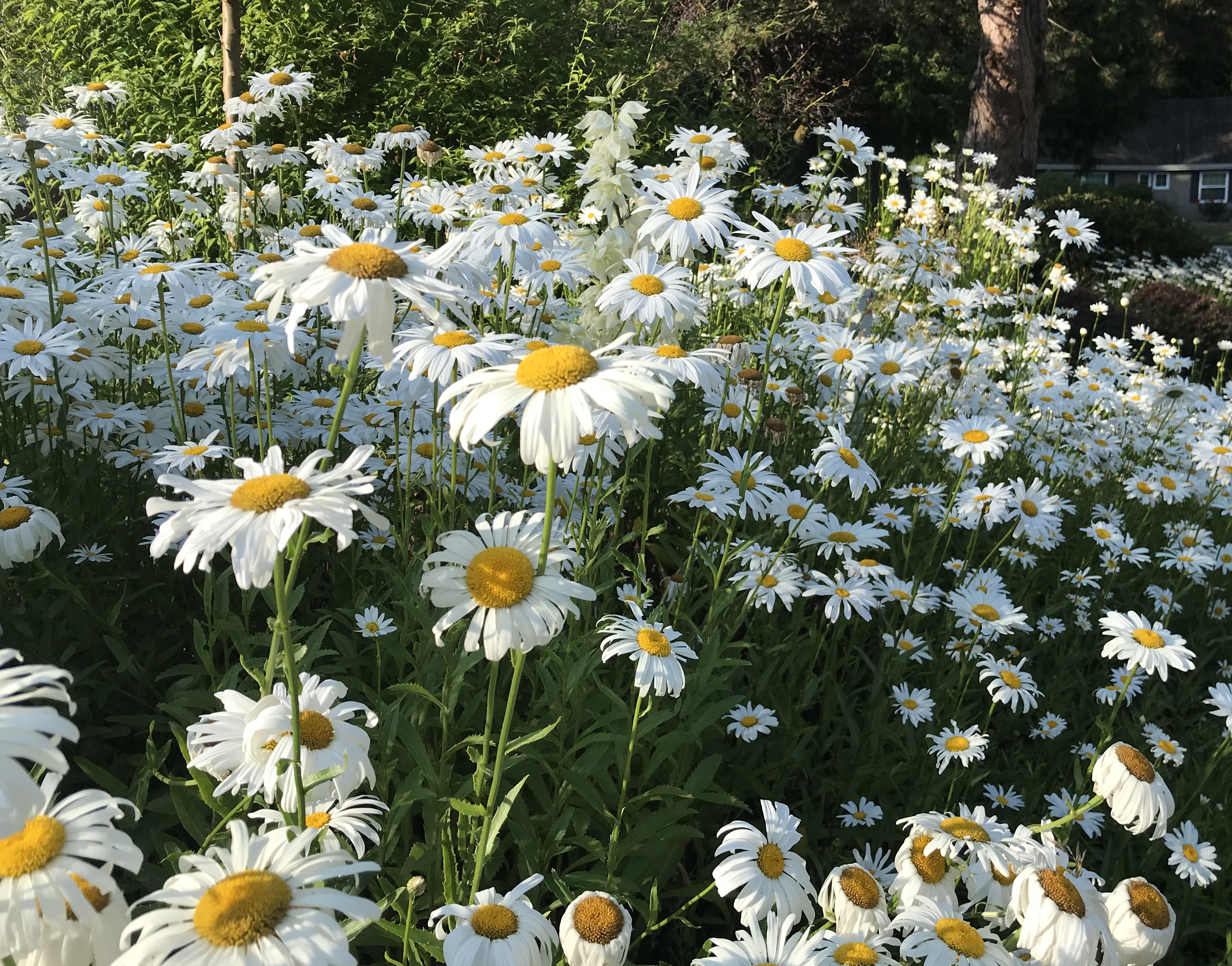
I married you in daisy time
On summer’s longest day.
We traded rings and heard bells chime.
We pledged always to stay.
Too soon we’ve come to aster time.
The days are shorter now.
Would stealing some be such a crime?
We’ll make it right somehow.
Should we endure ’til wintertime,
The time when flowers sleep,
Dreams we’ll share of a gentler clime
Where we no more shall weep.
(2016)
NOTES: I’ve been meaning to repost this one since spring. But on a recent walk I noticed daisies beginning to peak. Before daisy season slips completely away, I thought I’d better get on it.



 Poetic Champions