Haiku for Memorial Day

My great grandfather the Civil War veteran.
Yankee ancestor,
Had Reb been a better shot
I wouldn’t be here.


I’ll pull out an old poem in honor of my last direct ancestor to be wounded fighting to defend our freedom.

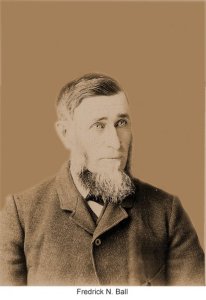
In my case, we must go back a bit.  All the way to the Civil War.  My great grandfather, Frederick N. Ball, was serving in General Sheridan’s Army in the campaign to take the Shenandoah Valley in Virginia.  When the Battle of Cedar Creek broke out, Sheridan was several miles away in Winchester.

As Sheridan was riding furiously back to rally his troops to victory, my ancestor was crawling back to safety after having been shot through the side early in the campaign.

The family story relates that he stuffed a rag in the hole in his side and made it to safety.

Thankfully, he survived.  Otherwise, this blog would be sadly empty today.

What good is poetry?

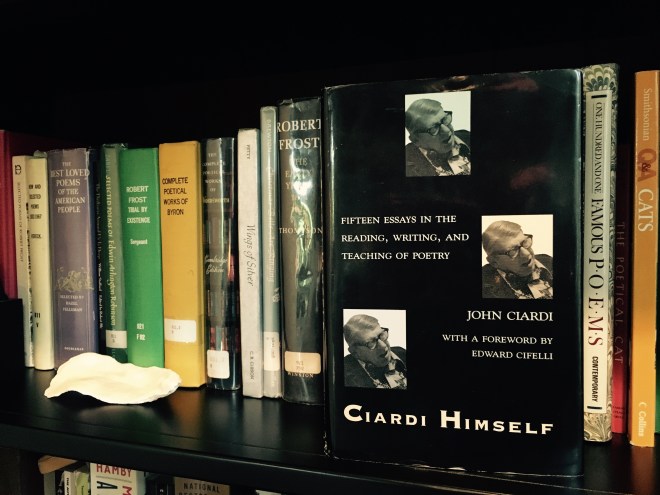
"Ciardi Himself," a collection of essays on poetry by John Ciardi
“Whenever we have let great language into our heads, we have been richer for it.”

I stumbled upon a great find while wasting away time in a used bookstore recently.

America poet John Ciardi published a collection of essays on poetry back in 1989.

Finding this book coincided with a discussion I’ve been having with a colleague who has expressed a desire to better appreciate poetry. I had been coming up short with a simple and direct explanation for what I knew in my heart to be true.

This one passage was worth far more than the 4 bucks and change I spent on Ciardi’s book:

“Because it is an act of language, a good poem is deeply connected with everything are and do. For language is one of the most fundamental activities in which human beings engage. Take away language, and you take away most of our ability to think and to experience. Enrich language, and you cannot fail to enrich our experience. Whenever we have let great language into our heads, we have been richer for it.”


When spring starts to fade

"When the dizzy petal peak is past"

PASSION LIKE A FLOWER

Passion like a flower must expire.
Nothing can be rigged to spare desire
From life’s rigors — magic nor petitions.
Petals fall to various conditions.

When the dizzy petal-peak is past,
Some folks act as if the bloom could last,
Pick some wilting lilacs for their table,
Haul them homeward just to show they’re able,

Plunk them in a fruit jar lately washed
Clean of last fall’s bounty, cooked and squashed —
Like they thought the glass itself had power
To delay the spoiling of the flower.

It may work a day, two days, or so,
Then the smell and color start to go.
Nothing glassy can preserve desire;
Passion like a flower must expire.


Spring comes early in the Northwest.  By this time, many flowering trees are spent.  the blooms that were so intense in late March and April are brown and gone.

As I walked through town tonight, I couldn’t miss the signs of the season moving on.  Trees that a week or two before were full and fragrant were now brown and empty.  Flower petals were scattered across the grass.  The heady first-flush of spring was long gone.

Here’s an old poem that seemed right for the season.


Hometown Haiku

The gravestone of Jim the Wonder Dog.

My town’s motto states:
“Smart dog, nice folks ….” Pretty sure
the dog, too, was nice.


The most famous resident of my hometown was a dog

When I moved to the central Missouri town of Marshall in the late 1950s, I was six years old.  My father had literally sold the farm and was setting out on a bold attempt to pursue the American dream by going into the farm implement business. After spending the first six years of my life on a farm in northwest part of the state, Marshall, with its 12,000-plus inhabitants, seemed like a big city to me, full of potential and possibilities. For the first time in my life I had a room of my own and indoor plumbing.

One of the first things I heard about my new hometown was that it was that it had been the home of Jim the Wonder Dog.  It had been just a little over 20 years since Jim’s death, and many of my new neighbors had seen Jim while he was alive.  Someone gave us a book about Jim, which I eagerly devoured.  We were told to be sure and visit Jim’s grave out at the end of Yerby Street at Ridge Park Cemetery.  He was the only animal buried in the human graveyard, we were told, and he deserved to be there more than a lot of the people, one added.  We visited Jim’s grave with my mother, who brought flowers, because that’s what you did when you visited cemeteries in those days.

Everyone we talked to accepted the story of Jim at face value.  To them, Jim had been a true walking miracle.  He was a dog who could understand human speech, and follow instructions to the letter.  But more than that, he knew things that humans could not possibly know.  He was not only highly intelligent.  Jim was also clairvoyant, we were told.  Jim could predict the future.  He could accurately predict the gender of babies before they were born and he knew who would win elections and sporting events.

To a six-year-old boy with an active imagination, this was a fascinating story.  But I grew up and forgot about Jim.  I went away to college, and started a career and a family, and got involved with my life.

Years later, I returned to Marshall, and I discovered that Jim was enjoying a revival of popularity.  The Viking Hotel (formerly the Ruff Hotel) just off the town square, where Jim and his owner had lived, had burned down.  A civic group had raised some money, and convinced the city fathers allow a memorial park to be created on the site.

Jim was becoming a full-fledged tourist attraction.

Then someone (bless their hearts!), persuaded the city to adopt a town motto.  It reads, and I kid you not: “Smart dog, nice folks ….”

I admire the humility and sense of humor that animated that motto.  It is in the same spirit that I wrote this little haiku.
Spring Poem

Phili; Larkin wrote a beautiful spring poem, "The Trees."

As spring comes into its full, glorious own here in the Pacific Northwest, I discovered a wonderful spring poem I had never read before.

Mary Karr posted a short poem by Philip Larkin last week on her Facebook page. In one of those interesting coincidences, I had just been encouraged to look into Larkin by my literary friend and colleague, Mark Neigh.

(You know how you discover a new word one day, and then you see it and hear it all around you the next?  It was sort of like I was surrounded by Larkin all of a sudden.)

I already had Larkin’s “Collected Poems” on my bookshelf, but hadn’t read much in it. I’d never been much impressed by what little I had read of Larkin, but his spring poem really hit home. I must never have given him a proper chance. Or the timing wasn’t right.

Here it is, just 12 short, beautiful lines:


The Trees
by Philip Larkin

The trees are coming into leaf
Like something almost being said;
The recent buds relax and spread,
Their greenness is a kind of grief.

Is it that they are born again
And we grow old? No, they die too.
Their yearly trick of looking new
Is written down in rings of grain.

Yet still the unresting castles thresh
In fullgrown thickness every May.
Last year is dead, they seem to say,
Begin afresh, afresh, afresh.


You can listen to Larkin read this poem here.  (It just sounds better when he reads it.)  This small gem gives me hope that I’ll find other poems that speak to me in Larkin’s work.

Florida Haiku

The flatness of Florida

How do I explain
the flatness of Florida?
In so many ways.

Love Haiku

Your pillow

While you are away
thank God I have your pillow …
your fragrance lingers.

Florida Haiku

Poolside scene in a Florida community

For a place rumored
to hold the Fountain of Youth,
folks are quite old here.

Respect for Elders: A Tanka

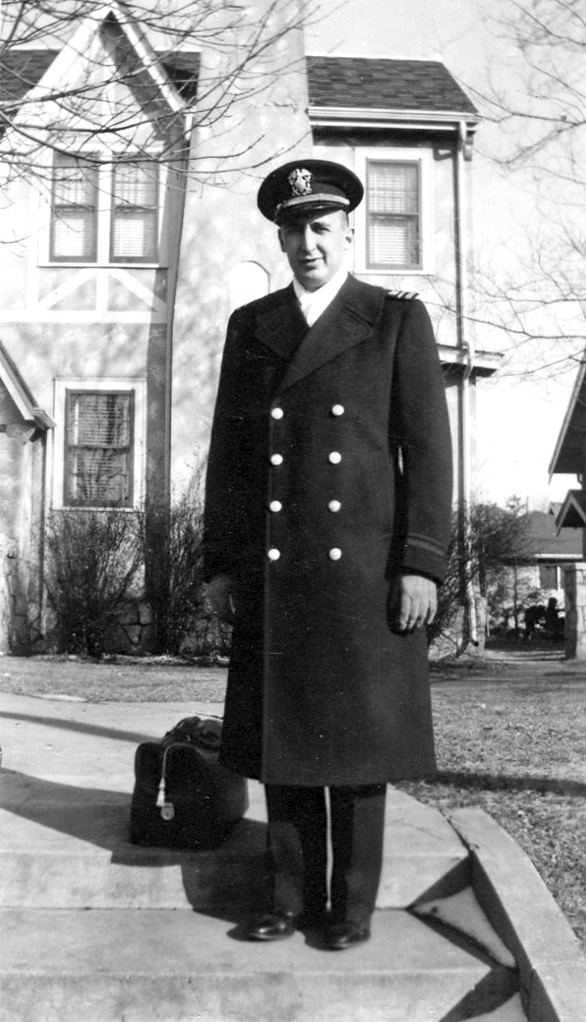
Cliff Solum heading off to serve in World War II

Made strong by hard times,
they stood up to tyrants,
and laid down their lives.

So sorely missed by us now,
the Greatest Generation.

Old San Juan Haiku

Statue outside of Ponce de Leon's home in Old San Juan, Puerto Rico.

Ponce de Leon
searched for the fountain of youth.
He now, too, is dead.