Whenever I go to Hawaii, I fall into a haiku mood.
Not sure if it is the Japanese influences there, or if it’s all in my head, but I start thinking in short bursts.
Frankly, between the sun and the water and the tropical drinks, it’s a wonder I write anything at all. Maybe 5-7-5 is all I can muster in such taxing conditions.
Here are a few from my recent trip to Maui:
Hawaii Haiku
At Haiku Marketplace, Maui
Tried to buy poems
But they weren’t selling any.
False advertising.
Torpid Maui days
Lazy, languorous, and slow.
Kiss writing good-bye.
Give Maui credit
As for my wife, I must say,
She looks younger here.
Kapu is kaput,
The old gods are long banished.
You wonder who lurks.
So long Hawaii
Sure hate to leave your warm sun.
I have things to do.
Not that this is a category with a lot of tough competition. I cannot say I can remember anything from any commencement address I’ve ever heard.
One exception: Sen. Thomas Eagleton spoke at my high school graduation and told us impatient about-to-be-hippies-and-rebels to “work for change, but work within the system.” Advice we promptly went out and ignored.
Likely the only reason I remembered this: a couple of years later George McGovern picked Eagleton to be his vice presidential running mate in the 1972 election.
When the press dredged up records that Eagleton had been treated for depression McGovern declared he stood behind his running mate “1000 percent.” But a couple of days later Democrat party leaders got to McGovern and convinced him that Eagleton was a big liability, the idealistic McGovern dropped him.
Working within the system didn’t really wok out for Eagleton all that well. Or for McGovern. He went on to get trounced by Richard Nixon in one of the most lopsided presidential elections in American history.
Commencement speeches are notorious for bland bomfoggery and inane clichés.
I can’t even remember who spoke at my college commencement. Likewise for any other graduations I’ve attended as a guest.
But I’ll wager that the Syracuse class of 2015 and their loved ones will long remember Mary’s little talk.
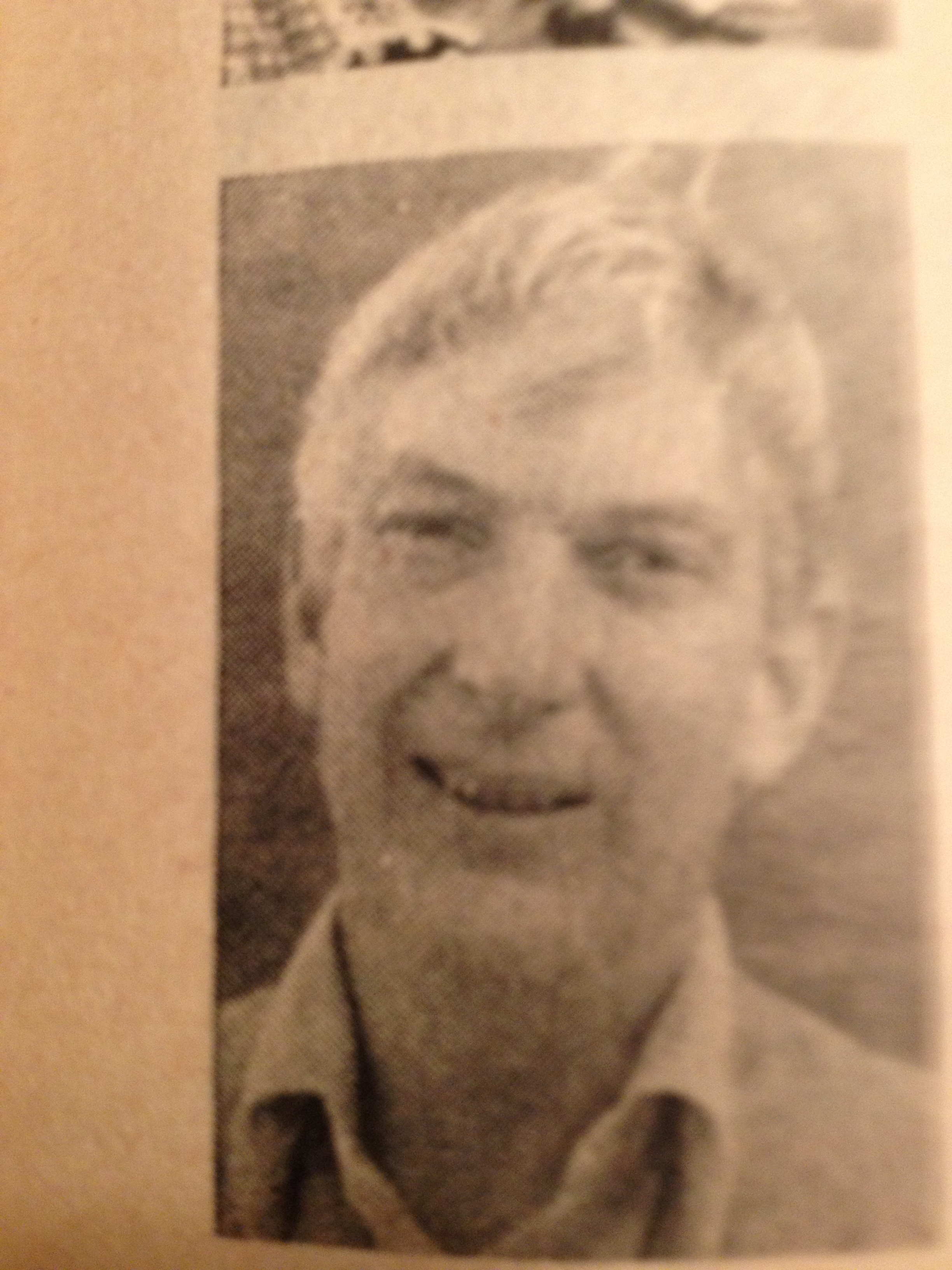
She ends her speech with a tribute to her mentor and benefactor from her own undergraduate days, Professor Walter Mink, of Macalester College. She says he inspired her to teach college. But he did much more. A generous and wise man, Mink could see into the souls of his students and give them what they needed.
Professor Walter Mink
In Mary’s case, Mink and his wife gave her understanding and encouragement until she began to find her way. (In Mary’s third installment of her memoir series, Lit, she details the many remarkable kindnesses lavished on her by the Minks, ranging from outfitting this poor Texas girl with warm clothes to withstand the bitter Minnesota winters to persuading her to get counseling.)
In the speech, Mary tells an interesting anecdote about a physiological psychology class taught by Mink. During my time at Mac, which overlapped with Mary’s I took that same class. Professor Mink was a wonderful teacher and a compassionate man.
(He was so beloved that three of his students formed a punk rock band and named their group “Walt Mink.” He was that inspiring.)
One of our major lab assignments that semester was to implant electrodes in the brain of a lab rat. The plan was to stimulate various parts of the brain with electric current and record the behavior.
Each team of students was given a rat. I named mine Sparky. We had to do all of the prep on the rat ourselves, which meant giving the rat a shot to anesthetize it. (I’m deathly afraid of needles.) When the rat was safely numb and groggy, we were to secure its head in a device that closely resembled a toy vise grip.
Then came the fun part.
We were to use a scalpel to slice open the rat’s scalp, pry back the skin, and then drill tiny holes through the skull to create access points for the electrodes. I didn’t realize that the skull of a rat is only about as thick as an egg shell.
So, as I was drilling away, the bit broke through the skull and sank deep into the poor creature’s brain. Poor Sparky. His brain certainly got stimulated!
As his little arms and legs were jerking back and forth in a seizure, Dr. Mink rushed over assuring me that the rat could not feel a thing and that he would be okay. He extracted the drill and helped me patch up Sparky and get the electrodes properly implanted, the mounting glued to the skull, and the scalp sewn up around the mount.
But poor Sparky never was quite right. Our brain experiments on him produced some very strange results that semester.
Let’s just say I quickly discovered I was not created to do anything remotely medical, or anything requiring fine motor skills.
But I want to make it very clear: I was NOT Mary Karr’s lab partner. If you read her speech, you’ll understand why I emphasize this point.
I’m sure you’ll agree that when it comes to selecting a commencement speaker, this speech makes a strong argument for considering hiring a poet to do the job.
I’ve been getting a lot of suggestions about poems and poets to feature in this blog. Thank you all. I’ve discovered some great poetry and rediscovered some that I had failed to appreciate earlier.
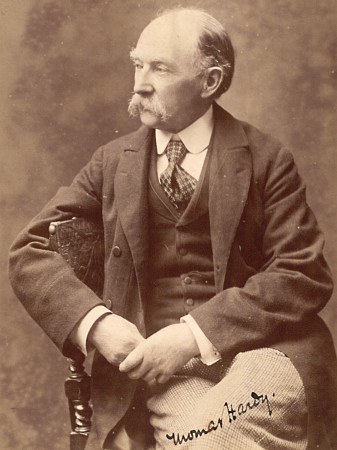
The latest is “Neutral Tones” by Thomas Hardy. This recommendation comes from someone who seems to be somewhat of a Hardy fan. You know who you are.
“Neutral Tones” is definitely well crafted, but is it ever a sad and depressing poem!
Hardy is writing about a remembered meeting of lovers that spelled the imminent end of their relationship. As the couple stands by a pond in winter, it becomes increasingly certain that the love is dead. It is as if the whole world, the pond, the trees, the fallen leaves, and even the sun confirm that it’s over.
The leaves “had fallen from an ash, and were grey.”
The woman looks at the writer of the poem, but he feels her eyes on him are “as eyes that rove over tedious riddles of years ago.
Even the woman’s smile is described as “the deadest thing,” and compared to an “ominous bird a-wing” passing by.
All pretty grim, dismal stuff. No color. No warmth. No sign of hope, and no relief.
The only comfort — and it is cold comfort — is that the man has gained the knowledge that “loves deceives.”
Hardy wrote “Neutral Tones” in 1867, when he was 27. One theory is that this poem was written about his cousin, Tryphena Sparks, with whom he had a tempestuous love affair. Not long afterwards, he fell in love with Emma Gifford, whom he later married.
Others have written extensively about how Hardy uses the poet’s craft to establish the heartbreaking atmosphere of the poem. So I won’t go into detail here.
But Hardy knows what he is doing and uses language, meter and metaphor to create an aching sense of loneliness and despair.
Raymond Carver wrote “Hummingbird” for his wife, Tess Gallagher.
Raymond Carver wrote a lot about his difficult youth, about his battle with drink, and about fishing.
But he also wrote about love. Early on in my reading of Carver, I would skip over a lot of his poems because I detected early on the subject matter just didn’t grab me.
But I stuck with it and started finding gems. Like this one written to his second wife, the poet Tess Gallagher. I believe it was written late in his life when he knew he was dying.
Hummingbird (for Tess)
Suppose I say summer,
write the word “hummingbird,”
put it in an envelope,
take it down the hill
to the box. When you open
my letter you will recall
those days and how much,
just how much, I love you.
I’m not sure it this is Carver’s best poem because I haven’t read them all yet. But, it’s a contender, in my book.
“I’ll eat fried chicken and biscuits smothered in bacon gravy …”
I had a friend who once made a random observation.
He said, “You know, there comes a point when old people just stop buying clothes.” I had never thought about it before, but he had a point. I thought about that single strand of insight.
One thing led to another and it eventually led to this poem. Yet another experiment with free verse.
There’ll come a day …
There’ll come a day when I shall no longer buy clothes.
I’ll eat fried chicken and biscuits smothered in bacon gravy
And wash it down with bourbon, and smoke a cigar.
And I’ll tell the waitress a joke and she’ll blush and she’ll scold.
And it will be alright.
And on that day, I’ll cancel the newspaper,
Or maybe just stop sending them my money,
Unless they beat me to it and go out of business first.
I’ll drink strong coffee and stir in heavy cream
And if I want, I’ll stay up late and sleep ’til noon
And I’ll go outside without a hat and walk on the grass
And turn my face to feel the sun
And I’ll give my cash to bums and beggars,
And make a trip to Goodwill,
And bring my college books,
And the suits I wore for business.
But I will keep my poetry,
And my old Bible.
And my photographs of you.
To remind me of all I know,
Or ever need to know,
Of truth, of beauty, and of love.
Wild Geese: I heard them long before I saw them.
I must say … Raymond Carver is growing on me. Thanks to some literary friends, I overcame my prejudice against poets who “play with the net down” and write in free verse.
At first I was put off by Carver’s early focus on his alcoholism. But, after sticking with it, I’m warming to his honesty and humanity.
He can take a sliver of a memory and spin it into a little short story in the form of a free-verse poem. It’s not surprising, I suppose, that Carver is most well known as a short story writer.
His poems are little mini-short stories.
I’m also appreciating Carver’s blue collar roots. I’m not sure I should say he celebrates his blue collar roots. It just is, and he doesn’t shy away from it.
I’ve read that he left the Iowa State Workshop because he was having trouble fitting in with the “upper-middle-class milieu” at the school. And although his wife-at-the-time successfully lobbied for him to be given a second chance by comparing his struggles to Tennessee Williams’ difficult experience with the program 30 years earlier, Carver eventually dropped out with no degree.
I’ve known what it is like to go from blue collar roots in a small town to the jungle of an academic arena, and that’s a story for another day.
But, Carver has my empathy.
I’ve also come to appreciate how Carver can spin a little story and — BAM — just nail you with a feeling or an observation that leaves you pondering and pondering. He’s open and honest to a fault.
Whether he’s writing about getting letters from his kids asking for money, or about him committing adultery, you can be cocksure he’s telling you the truth.
I love, too, how his childhood in the American Northwest gave him insight into nature.
While I now live in the Northwest, I didn’t grow up here. I did grow up in the country in Missouri, so we have some shared experiences.
For the first few years of my life, I grew up on a farm. Here is a story of one memory from that time.
Wild Geese
I heard them long before I saw them
Like a cacophony of oncoming clown cars.
Rising up out of the valley
And breaking over the Douglas firs.
The biggest formation I’d ever seen,
A magnificent wedge of geese all headed somewhere fast.
There must have been a hundred of them
Flying so low they went by just-like-that
With two hundred wings pumping urgently in unison.
And then they were gone
With just a fading honking echo left behind.
Was it a flock like that, dear brother,
That enticed you to run out of the barn door
That evening so long ago, shotgun in hand,
Thinking you might have a chance at bagging one?
Mom and I were up at the house making cookies,
And I remember hearing eerie wails and noises
Coming from the dark outside
And laughing, thinking it must be some strange animal
Making its strange animal sounds.
But when the cries went on and on
Mom got worried and went to look.
It could have been worse, you know.
You could have blown your head off,
You big klutz.
As it was, you only tripped over the threshold
And broke your elbow, which was bad enough,
So bad you couldn’t wrangle open the barnyard gate,
And so bad it made you moan like a dying beast.
But we drove you all the way to Cameron that night
To find a doctor who could set the bone.
And you got a cast and it healed up mostly,
And though you’d live another 60 years or so,
You never would be able to straighten out that arm.
You did your best to teach me how to hunt
But I never was much for killing things,
Yet … any time I hear wild geese approaching
I still run to where I can get a clear line of sight,
If only to shoot them with my eyes.
“The call came over the telephone mounted on the farmhouse wall.”
Everyone is telling me I need to look into Raymond Carver.
Somehow I had grown up in America, and lived to a ripe old age without becoming acquainted with the guy. I know, I’m culturally deprived.
This year, even though he died in 1988, Carver seems to be everywhere. I go to see the movie “Birdman,” and it’s centered around a play-within-the-movie, and the play is based on a Carver short story.
My Favorite Living Writer, Mary Karr, says she knew Carver and loves him.
My friends Seth and Mark both tell me that I need to get familiar with Carver. Seth lends me his complete collection of Carver’s poems, “All of Us.”
I’m hesitant and skeptical. First of all, Carver writes in free verse. I’m old school.
A lot of his early work is very dark with a dose of self pity.
So you had a hard life with lousy parents? So you’re an alcoholic?
I’m just not a big fan of wallowing in the muck.
My friends encourage me to stick with it.
“He does have some winners once he sobers up and starts reminiscing,” says Seth. Mark says I need to check out his later stuff.
It begins with a young boy going with his father to the dry cleaners to pick up his grandfather’s burial suit. It proceeds with the death of his father many years later. and finally concludes with the boy, now grown, picking up his own suit from the cleaners and dredging up the old memories from the past.
This one got me.
I had already been working on a poem about my own grandfather, and I was touched by how Carver handled similar subject matter. In fact, our poems were about very similar moments in a young boy’s life, remembered years later.
I’m not claiming this poem is anything like Carver’s in much but subject matter, but I was struck by the coincidence.
Oh yeah. Both are free verse. I decided to take the net down and knock the ball around without worrying about rhyme and meter.
The Day the Call Came
The day the call came
We had just dished up the ice cream.
A special treat for a Friday farm dinner,
(Not to be confused with supper.)
Mother had made it early that morning in ice cube trays.
“Freezer ice cream,” she called it,
Vanilla, made with Junket tablets to keep it creamy,
Even as it froze.
Not as good as the real, homemade ice cream cranked by hand,
But a whole lot easier.
And America was just starting its long affair with convenience.
The call came over the telephone
Mounted on the farmhouse wall.
With two bells for eyes,
You spoke into its honking, beaklike nose.
The earpiece cradled appropriately
Where the right ear should be,
While a hand crank made a poor excuse
For a drooping left ear.
It was a party line,
So the snoopy widow woman down the road
Knew as soon as we did.
The call came, and the man on the phone
Said Grandpa had just keeled over dead
At the auction over in Poosey.
So, we all got up—Mom, Dad, Big Brother and me,
And climbed into the ’50 Ford sedan
Dad was so proud to own.
The first car he’d ever bought brand new.
By the time we got to the auction –
It was a farm sale, really —
Where the worldly possessions of one farm family
Were being sold off.
One at a time.
By the hypnotically fast-talking auctioneer.
Not as depressing as the foreclosure sales
That were all too common
Just a few years before in the Depression.
This was a voluntary sale,
But a little sad nonetheless.
Some farmer was getting too old to run the place,
And didn’t have kids—or leastwise kids who wanted to farm.
A lot of boys joined the service in those days,
Or headed to Kansas City to find work, and a little excitement,
Rather than stay and try to coax a living
Out of that hilly, rocky dirt.
The man at the auction told us
Grandpa had been standing there in the sun with everybody else.
They were just about to start the bidding on the John Deere hay rake
When he grabbed his chest and fell right over.
Years later, they told me when he was a grown man
Grandpa had gone down to the river,
And been baptized, and filled with the Holy Ghost,
With the evidence of no longer speaking in profane tongues.
For, it was well known Grandpa had been gifted
In the art of colorful language.
“He used to could cuss by note,” was how Mother put it.
But after the washing with water and the Word,
Grandpa was never heard to swear again.
I only knew him as a white-haired old man
With a merry smile, and infinite patience
With Grandma, who required it.
And that was it, really.
Nothing more to say,
Except for the understated condolences
Of the country folk.
Nothing more to do,
Except for my father,
Now lately promoted to the role of the family’s eldest male,
Who assumed the duties and made the necessary arrangements.
Although I didn’t know quite what had happened,
I felt a lurch … as something shifted beneath me …
And I was yanked one more notch forward.
By the time we got back to the house,
The ice cream had long since melted
And now was returning back to solid state,
As it curdled in the September heat.
I owe some of my enthusiasm for poetry to my 11th grade English teacher back at Marshall High School in Marshall, Missouri–Paul Hagedorn.
He devoted an inordinate amount of time that year to the study of poetry. Our major assignment for the whole year, as I recall, was two-fold. We were to create a poetry notebook in which we copied — and illustrated, if we desired — a good number of poems that spoke to our hearts.
He encouraged us to venture beyond the usual suspects. So, along with poems by Frost and Edward Arlington Robinson, I included lyrics by Paul Simon and Bob Dylan. Then, we were to pick one American poet from a prescribed list of lesser known poets, and write a lengthy term paper on our choice. (I choose John Crowe Ransom because I thought his name was cool. Incidentally, I’m was happy with my choice.)
Mr. Hagedorn passionately believed that Walt Whitman was the greatest poet that had ever lived and he did his best to infect his impressionable students with this enthusiasm. I dutifully bought a paperback copy of “Leaves of Grass,” and read the whole thing.
I failed to completely fall in love with Whitman. Some passages were interesting and hypnotic. I recognized some of the cadence of the King James Bible, which I was raised on. He clearly was making an ambitious attempt to encompass the breadth and depth of all of America in his work. I appreciated that he was attempting to do something had not been done before in American poetry. But I never could figure out why my teacher was such a Whitman nut.
One poem that did thrill me, however, was “When Lilacs Last in the Dooryard Bloom’d.” I understood it was an elegy to President Abraham Lincoln, who was assassinated on April 14, 1864, just days after the end of the Civil War.
Lilacs were my mother’s favorite flower, and she had passed along that enthusiasm to me. So I was predisposed to be open to any poem about lilacs.
One other factor, just a few years earlier, America had celebrated the Centennial of the Civil War. I can remember fighting the Civil War during recess in grade school. Back in my hometown in the heart of “Little Dixie,” there were plenty of kids who had inherited Confederate sympathies from their families.
As the great-grandson of a Yankee soldier, I was clearly a Northern sympathizer. So, one year, I recall us dividing up and re-fighting great battles out on the playground.
Lincoln was a revered figure in my family. So, that made an elegy to him even more interesting.
As I re-read Whitman’s poem today, decades later, it feels a bit overdone. I had forgotten it was so long.
Just my opinion, but Old Walt could have used a good editor.
But here are those lines that are pure genius, and so beautiful that you think Whitman found them fully formed somewhere:
When lilacs last in the dooryard bloom’d,
And the great star early droop’d in the western sky in the night,
I mourn’d, and yet shall mourn with ever-returning spring.
Ever-returning spring, trinity sure to me you bring,
Lilac blooming perennial and drooping star in the west,
And thought of him I love.
It’s been a tough year for lilacs here in the Northwest. We had such a warm and early spring that many lilac bushes were tricked into blooming too early. Our premature spring was interrupted by some cold clear nights that nipped many lilacs in the bud.
Pity, because there is nothing quite like the heart-shaped leaf and the perfume of the lilac.
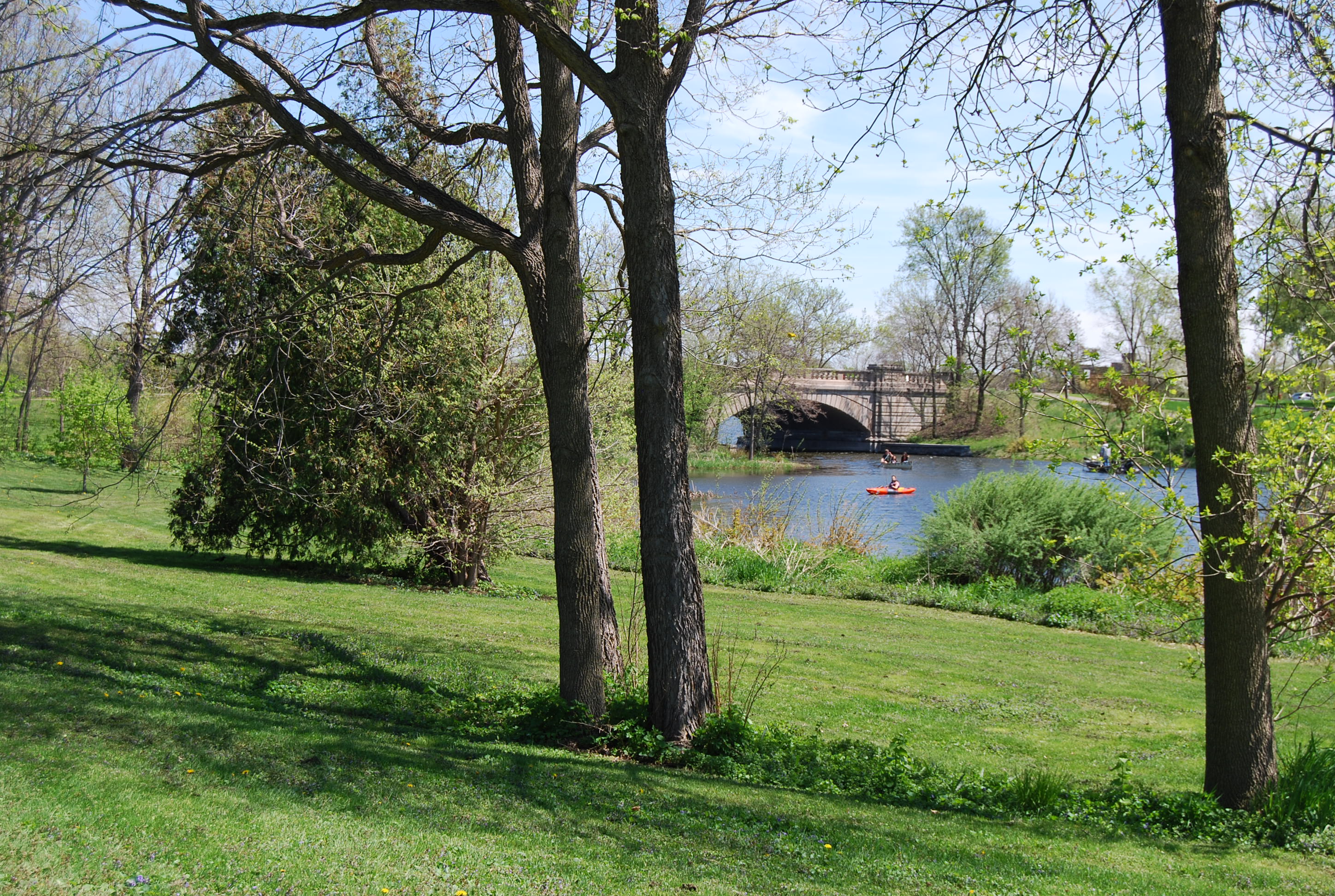
Lake of the Isles, Minneapolis
More than 40 years ago I read a poem by my friend and childhood schoolmate John Marquand that stuck with me all these years. It had something to do with love and a town in Colorado.
My memory is a bit fuzzy, but I think it started, “Remember the way we lay in Ouray ….” There was something about that repeated internal rhyme that knocked me out.
Unfortunately, I couldn’t remember any more of the poem. Years later I asked John about it and he couldn’t remember it either. Sadly, it may be lost forever.
That rhyme was kicking around in my brain recently and it inspired a poem about another experience in another place. It was Minneapolis, and it involved rediscovering love against all odds.
That Day We Lay Upon the Grass
That day we lay upon the grass,
A luminescent green.
The sparks that arced from arm to arm
Across the space between.
Our bodies quickened by the sun,
The willow leaves aflush,
The sunlight sparkling on the lake,
Our blood bestirred to rush.
Up and down the parkway, flowers
Enticing with their blooms,
Our loveless winter ended there,
Emerging from our tombs
For we had slept as sleepers sleep,
Unmindful of the world,
Astonishingly we awoke,
Much like a rose unfurled.
Spring does indeed come early here in western Washington. Two weeks ago, we were enjoying summer-like weather in early March. Which is unusual, even for here.
The ornamental flowering trees were bursting with blooms, the sun was warm, and I walked for miles in shirtsleeves. Life was good.
Two weeks and several rainstorms later, and the blossoms are much worse for wear. In some places the fallen petals cover the sidewalks like snow. The weather is back to normal — cool and wet, and occasionally windy.
As I walked tonight, I saw the fallen flower petals and was reminded of an old poem, written more than 30 years ago.
PASSION LIKE A FLOWER
Passion like a flower must expire.
Nothing can be rigged to spare desire
From life’s rigors — magic nor petitions.
Petals fall to various conditions.
When the dizzy petal-peak is past,
Some folks act as if the bloom could last,
Pick some wilting lilacs for their table,
Haul them homeward just to show they’re able,
Plunk them in a fruit jar lately washed
Clean of last fall’s bounty, cooked and squashed —
Like they thought the glass itself had power
To delay the spoiling of the flower.
It may work a day, two days, or so,
Then the smell and color start to go.
Nothing glassy can preserve desire;
Passion like a flower must expire.








 Poetic Champions