Forest Fire Haiku

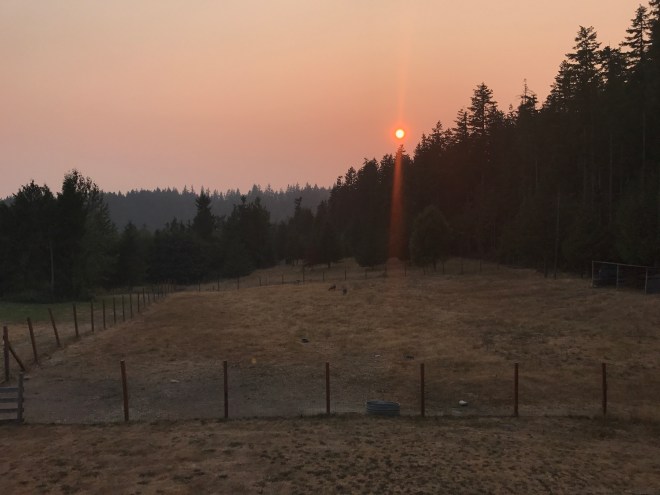
Canada forest fires sent smoke south into Washington state

When Canada burns,
smoke paints the sky with color.
But we’re all coughing.


REPORT: More than a dozen wildfires burning across British Columbia have produced enough smoke to cover much of Western Washington, delaying flights into Sea-Tac and creating a white haze hanging in the sky.

A Delightful Discovery

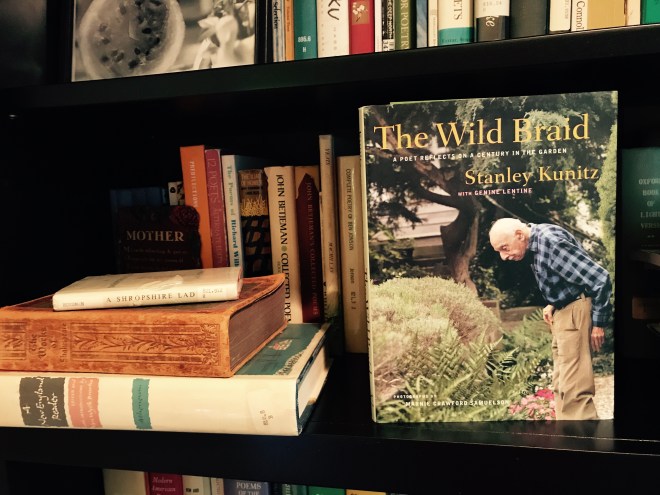
Just yesterday, I published my little sonnet, “Late Summer Sun” in this blog.  This morning as I was reading the wonderful book, “The Wild Braid,” by Stanley Kunitz.

When I came to his poem “Touch Me,” I had to pause.  This poem seemed to be hitting some of same notes.  Much deeper, but with little glimpses of the same melody.

The two poems are very different on the surface — mine is a sonnet, his is free verse.  He makes different observations about nature.

But the season is the same — late summer.  And there is something similar in the underlying emotion. Here’s his poem:

Touch Me
–Stanley Kunitz

Summer is late, my heart.
Words plucked out of the air
some forty years ago
when I was wild with love
and torn almost in two
scatter like leaves this night
of whistling wind and rain.
It is my heart that’s late,
it is my song that’s flown.
Outdoors all afternoon
under a gunmetal sky
staking my garden down,
I kneeled to the crickets trilling
underfoot as if about
to burst from their crusty shells;
and like a child again
marveled to hear so clear
and brave a music pour
from such a small machine.
What makes the engine go?
Desire, desire, desire.
The longing for the dance
stirs in the buried life.
One season only,
++++++++++++++ and it’s done.
So let the battered old willow
thrash against the windowpanes
and the house timbers creak.
Darling, do you remember
the man you married? Touch me,
remind me who I am.

Late Summer Sonnet

Late summer's sun has baked the grass to brown

Late Summer’s Sun

Late summer’s sun has baked the grass to brown.
The days grow shorter with each passing day,
Soon, autumn’s chill will make the leaves fall down.
All of this aching beauty will decay.

And yet I love the shadows’ slanting trace,
The once green grain gone golden in its rows,
And how I love the lines etched in your face.
It’s funny, as love ripens how it grows.

The number of our days we do not know.
No sleeper knows if he will ever wake.
So come, let’s join above, between, below.
My dear, let’s cause our fragile clay to quake.
Let us make love as if it’s our last go.
Let us embrace like dawn will never break.


NOTES:  It’s not really late summer yet, but it feels like it.  It has been hot and dry, giving us the sense of late August when July hasn’t even ended.

The seasons seen to come and go more quickly of late.  Perhaps I’m paying closer attention. Perhaps I realize more summers now lie behind me than still ahead.

Something in the air caused me to pull this sonnet out of the vault today.  I snapped the photo on my late afternoon walk.


Midsummer Haiku, Again


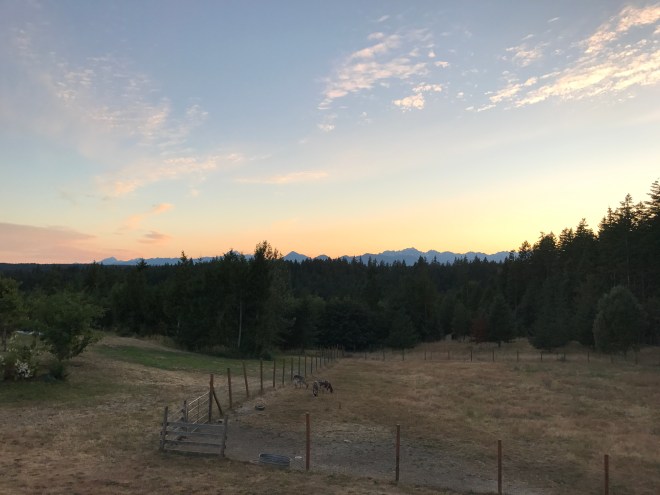
Midsummer sunset over the Olympics

The pasture is brown,
and snow has left the mountains.
But the sky. The sky!


NOTES:  Late summer signs are coming early to the Pacific Northwest this year.  This past winter we broke a 122 year record for rainfall in Seattle.  We got 44.67 inches of rain from October through April.  Which was the wettest such stretch since record-keeping began in 1895. (We rack up almost 9 inches in February alone.)

So, of course, we’re now working on a rainless record.   Nothing since June 17.

But not to worry.  This is the Pacific Northwest.  No matter how dry it gets this summer, we know that the rains will return in the fall and remain with us for what seems like forever.  So we can relax and appreciate the beauty around us.

Midsummer Haiku

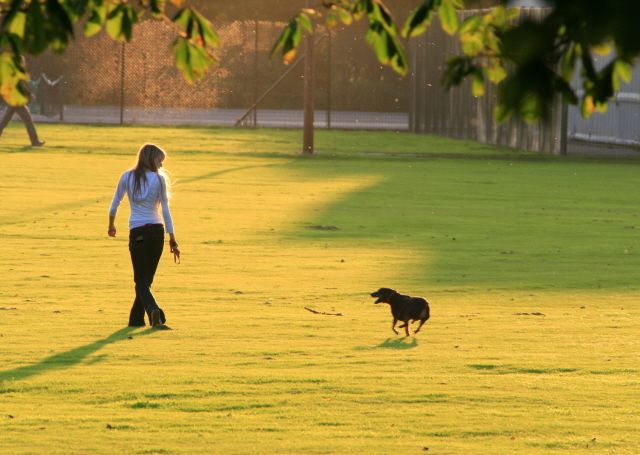
Blonde girl walks a black dog

Ah! Midsummer sun.
Blonde girl walking a black dog.
All downhill from here.


NOTES:  It’s become a bit of a tradition to post this when I sense summer has peaked and is beginning to slip away.

Love Poem

Evergreen tree

LUMBERJACK LOVE

Though I am not a bearded man nor burly,
I love you with a lumberjack-type love.
The only axe I take in hand securely,
This meager pen across the page I shove.

Please treat me not so fickle nor so surly,
Don’t shield your limbs below nor lips above.
I aim to fell you skillfully and purely;
Each word’s to chip the bark around your love.


Notes:  This one was written 35 years ago, almost to the day.

July 4th Love Poem

July 4th fireworks in Minneapolis, Minnesota

INDEPENDENCE DAY

The wind and you played in my hair,
You lambent in the moon,
The night arranged as by design,
Mysteriously boon.

Afresh the breeze and warm our hands,
So lately introduced,
Traced so gently new found lands,
From tyranny aloosed.

While all around with fire and bang
Our freedom was proclaimed,
A nation’s liberty was meant,
To us, two hearts unchained.


NOTES:  I celebrate the Fourth of July as a double holiday.  I’m proud and happy to honor our exceptional America and call it home.

And, it also warms my heart to remember the night I discovered my role in an on-going love story.

My personal affection for July Fourth goes back to 1982, when a young couple snuck to the roof of the Calhoun Beach Club in Minneapolis to watch the fireworks.  This perch, high above Lake Calhoun, offered a 360 degree view of the entire Twin Cities area.  You could see several fireworks displays from there, both near and far away.

It was rather romantic.

July 3 Love Poem

Lake of the Isles, Minneapolis
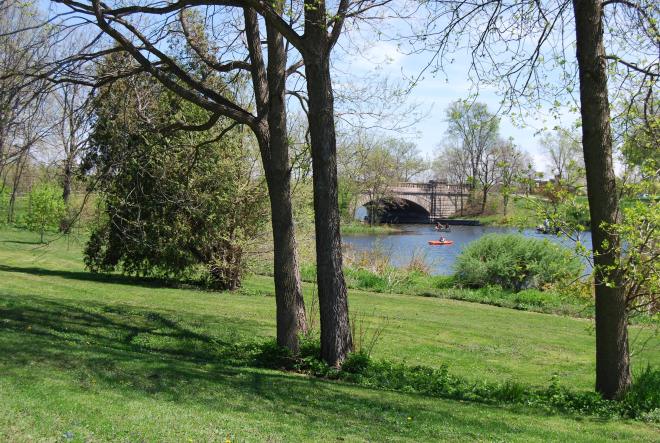
Lake of the Isles, Minneapolis … long ago

That Day We Lay Upon the Grass

That day we lay upon the grass,
A luminescent green.
The sparks that arced from arm to arm
Across the space between.

Our bodies quickened by the sun,
The willow leaves aflush,
The sunlight sparkling on the lake,
Our blood bestirred to rush.

Up and down the parkway, flowers
Enticing with their blooms,
Our loveless winter ended there,
Emerging from our tombs.

For we had slept as sleepers sleep,
Unmindful of the world,
Astonishingly we awoke,
Much like a rose unfurled.


Notes:  I have a theory that memorializing milestones in a relationship will fortify it to help it withstand the inevitable stresses and storms of life.  Remembering and celebrating events in the early, first phase of a love story are especially powerful.

On July 3, 1982 I took a walk with a beautiful woman around that most beautiful of the Minneapolis lakes, Lake of the Isles.  We had known each other less than two months. We sat down in the grass by the lagoon.  And then this happened.

July 3 has been my own personal holiday ever since.

Haiku Haiku

The haiku master
explicated his own work.
So I could do worse.


NOTES:  You could get the idea in sophisticated poetry circles, that it’s low-rent to indulge in writing poetry about yourself or discussing your own work.

You can almost hear a schoolmarmish voice laying out the ground rules.

“Best to write about concept and ideas, and always with an ironic detachment lest you should be accused of wallowing in sentimentality.

“Do not indulge in personal poetry. And, whatever you do, be sure to let the poem speak for itself. Don’t commit the sin of talking about your work or trying to explain what it means. The work is what it is, and it means what it means to the reader.”

Well, I say hogwash to all that.

And my first expert witness is none other than Matsuo Basho, the 17th century haiku master.

Like every fan of haiku, I had read Basho’s poems, but I couldn’t say that I had really gotten to know Basho until I stumbled across his travel diaries.

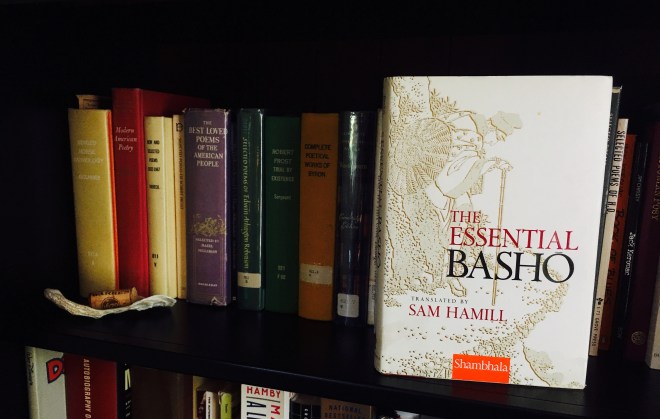
If I have some free time on a weekend, one of my favorite pastimes is to duck into our local used bookstore to see what new poetry books have trickled in. A couple of weeks ago, I spotted “The Essential Basho” translated by Sam Hamill.

After thumbing through a few pages, I knew I had to have it.

What I learned was that Basho made several walking journeys around Japan in the 1600s. Often accompanied by a student, he walked from town to town seeking out shrines and temples, natural landmarks, and other artistic souls along the way.

And as he went he not only wrote haiku, but he kept a journal. He would explain where he was and what he was seeing as he wrote his poetry.

Sometimes he would quote an ancient poem written about the same view he was seeing.  Sometimes he would write his own poem.  But sometimes he would humbly decline to add anymore.

Basho hired a boat at a town called Yoshizaki so he could sail out to see the famous pine trees at Shiogoshi.  He was well aware of the poem written some 500 years before by Saigyo.

All the long night
salt-winds drive
storm-tossed waves
and moonlight drips
through Shiogoshi pines.

Basho declined to write a poem of his own.

“This one poem says enough,” Basho wrote. “To add another would be like adding a sixth finger to a hand.”

But, when he does write his own poems, Basho often provides the setting to give the reader enough context to better understand the meaning.

For example, when he writes this haiku, it is possible to get a feel for what is going on from just the text itself:

If’ I’d walked Walking-
stick Pass, I’d not have fallen
from my horse.

But it means much more when you read Basho’s explanation.

“They say the ancient poet Sogi nearly starved to death in the high village of Hinaga,” Basho wrote. “I hired a horse to help me over Walking-stick Pass. Unfamiliar with horses and tack, both saddle and rider took a tumble.”

In other cases, without the poet’s explanation, you won’t really understand the poem at all.

On the second day,
I’ll rise early to welcome
the oncoming spring.

On the surface, this seems like a sentimental, but shallow little seasonal poem.  But when you read Basho’s context, it becomes a much more interesting and humorous glimpse into his soul.

“Reluctant to see the year-end,” Basho wrote, “I drank until well past midnight on New Year’s Eve, only to sleep through the morning on New Year’s Day.”

It turns out Basho missed the first morning of the new year because he was hung-over.

If he had been alive today, I’m pretty sure Basho would have been a blogger. I’m happy he left behind his journals to help us understand his work.

With such an illustrious example as his, I resolve to be less sheepish about providing commentary on my own poetry.
Suburban Summer Sonnet

Suburban summer

Our Paradise

Wafting comes the mower’s comforting hum,
Assuring all is just as it should be.
Our gates and fences all are rightly plumb,
We celebrate our capability.

New curbs and gutters sluice away wild rain,
Alarms and locks protect our doors from breach,
Our lives arranged to minimize our pain,
Designed to keep us safely out of reach.

But wreaking roots upheave the sidewalk path,
And worms devour our precious woolen thread,
The black and red mold creep into our bath,
Insomnia disturbs our peace in bed.
Despite our engineering and our math,
Our paradise is something less instead.


NOTES:  Summertime has finally come to the Pacific Northwest.  It seems fitting to haul out this sonnet from last year.

Don’t get me wrong.  I appreciate material comforts and modern conveniences.  Probably even more than most of my friends and colleagues.

I was born in the middle of the last century, and started out life on a farm that was primitive, even for that time.

How primitive?  Well, we milked our own cow, raised our own chickens for eggs, butchered our own hogs, and raised our own vegetables in the garden.

For special occasions and Sunday dinners, Mother would grab one of the slower chickens, chop off her head, and fry her up.

When we sold our farm to the Amish, they took one look at the house, and commenced on an immediate upgrading and remodeling project.

As for me, I was delighted in my new home in a Missouri farm town of 12 thousand souls.  For the first time in my life I had my own room, central heat, and indoor plumbing.

I could take a bath in something that wasn’t a galvanized wash tub in the middle of the kitchen floor.  In freshly drawn water that hadn’t been previously used by other members of the family.

I thought I’d died and gone to heaven.  I didn’t even notice that we didn’t have air conditioning, even when the Missouri summer visited its triple digit heat and humidity  upon us.

So, I am thankful for many things.  I am so  thankful I can enjoy sardines from Norway and wine from France.

I am grateful for antibiotics, and the miracles of modern medicine.  I missed the polio epidemic, but just barely.  Had I been just a couple of years older, I could have suffered withered limbs or worse, like the older brothers and sisters of some of my friends who were not so fortunate.

All of my ancestors as far back as I can research were dirt farmers.  I am grateful for a professional job in a meaningful enterprise.  (Inside work.  No heavy lifting.)

Many years ago, when I moved out to Seattle, we settled in the suburbs because — even then — the city was too expensive.  We made a serendipitous choice, because our little suburb has become a highly desirable place for Microsoft employees coming here to live from all over the world.

Heck, in one of those specious magazine “Top 15” lists, our little suburb was once ranked the “Most Friendly Town in America.”

Crime is low.  Violent crime is virtually non-existent.  The weather is temperate.  People take care of their property.  Unemployment is not really an issue.  You can walk or jog without fear.

Yet, sometimes it is good to remember that even heaven on earth is not really heaven.