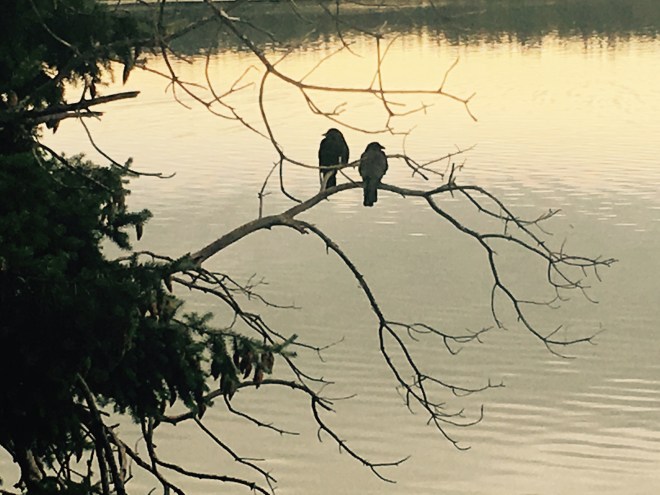
For thousands of years
others have walked this grey shore,
crows scolding them, too.
For thousands of years
others have walked this grey shore,
crows scolding them, too.
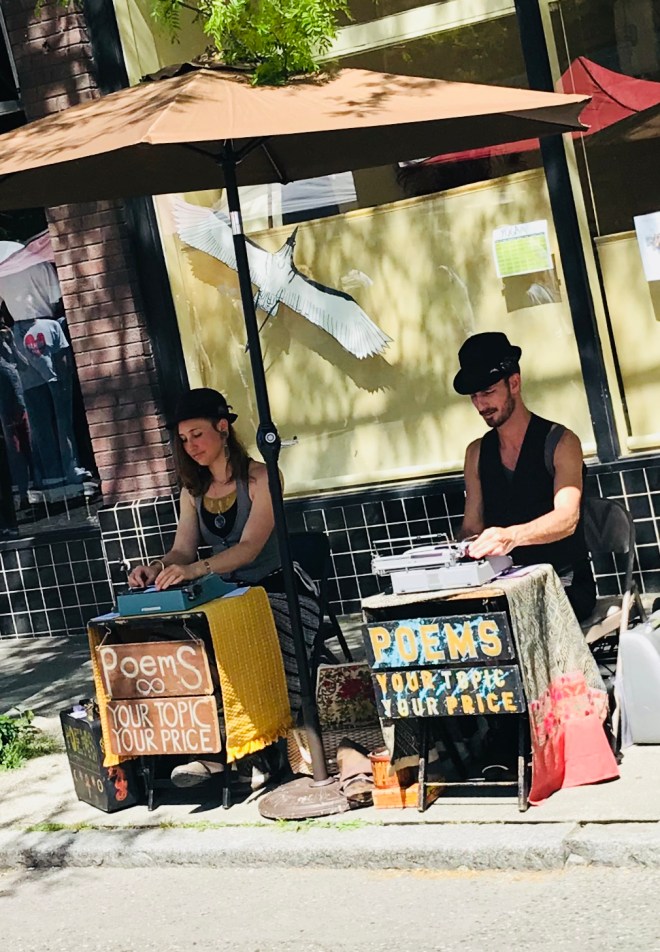
This whimsical scene at Seattle’s Ballard Market the other day made me smile. This pair of poetical hustlers are bittersweet reminders of the plight of poets everywhere.
They brought to mind the funny (but not-too-funny) little poem by Hayden Carruth, written when he was studying and writing about the Japanese haiku master, Basho, who lived and wrote in the late 1600s.
Basho, you made
a living writing haiku?
Wow! Way to go, man.
This pair at the market did not appear to be doing much business, but they were earnest and eager, and I wish them the best.

It’s quite obvious
you complement me so well,
I’m missing some things.
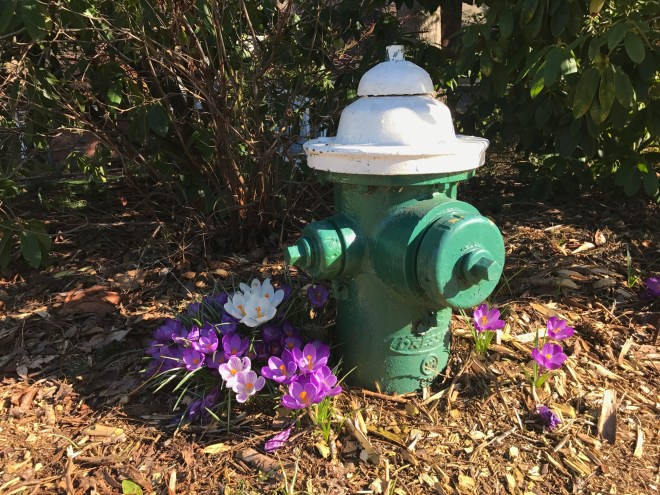
Late winter warm spell,
tree frogs in love calling out
“Cro-cro-cro-crocus!”
NOTES: Unseasonably warm weather this weekend in the Pacific Northwest. When I went to the mailbox I heard the tree frogs for the first time this year. They are awake and most certainly in love.
Even in winter
one whiff stirs a remembrance
of spring long ago.
Notes: I’ve heard that the sense of smell is the strongest trigger of memories. I’m not sure that is a scientific fact, but anecdotally it sure seems so.
The odor of a particular janitorial product can transport me back to the polished hallways of Southeast Grade School. A hint of Lily of the Valley can put me right back in the shoes of the little boy who was me tending a flower garden with my mother.
The smell of fresh baked bread lands me in my grandmother’s house, playing with my cousins, anticipating the first bite of that still-hot bread, smeared with homemade butter and smothered in honey from the comb.
And the smell need not be pleasant. Step into a campground outhouse, and I’m right back on my childhood farm. We weren’t the poorest farmers in the county — we had a two-seater.
And that reminds me. The smell of burning paper brings back the recollection of the out-of-date Sears & Roebuck catalogs, kept along with a box of kitchen matches in that old outhouse as a sort of forerunner to the modern room deodorizer. You just rip out a page, roll it tight, and light it. Everything smells much better than before!
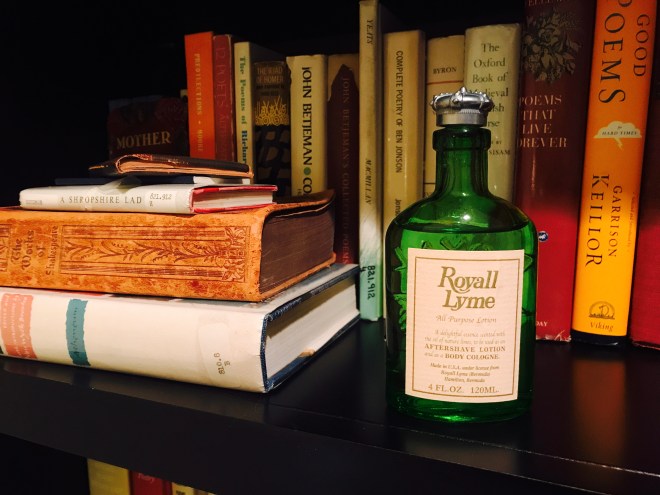
Last month while on vacation, I was delighted to find a fragrance from the past at an Brooks Brothers outlet mall store. The bright green of the Royall Lyme bottle caught my eye almost immediately.
The heavy metal crown-shaped lid felt the same. The faux-Old English font looked the same. And when I sprayed on a bit of the fragrance, I was taken back to the mid 1960s again.
The high school speech and debate club had boarded a school bus and driven to Kansas City for a weekend field trip. The stated educational rationale was to take in a film or two that were not available in my rural hometown. But it was really pretty much a junket, a good excuse to get out of town and hang out in the big city.
Some of the details are fuzzy, but I think we stayed at an old Howard Johnson’s out on I-70 and Noland Road. Then the next day, with our teacher, Mr. Washburn, driving the bus, we ventured into the city. I think the big movie most people wanted to see was Cat Ballou, which would most likely date this event in the spring of ’67.
We had no way of knowing it, but that summer in San Francisco would see the “Summer of Love,” with the full flowering of the hippie subculture. This was the era of “be-ins,” sex, drugs, and rock & roll.
But that was all to come later. Back in Kansas City, we caught a matinee, which I remember nothing about. We ate at the Italian Gardens, at its old location on Baltimore Avenue, my first experience with ethnic food. The spumoni was redolent. It must have been soaked in some type of booze, which I had also never tasted before. A classic spumoni in an old school Italian restaurant can sometimes take me back in time.
But the most memorable experience happened when we stopped into a fancy men’s clothing store. I didn’t have a lot of spending money, so I couldn’t afford the clothes. But I found a bottle of Royall Lyme cologne in my price range and bought it.
I had a crush on a girl, and there were signs she liked me too. We sat next to each other on the bus ride back home. I wore the lime-scented fragrance.
As I walked home from the school building by myself, I recall humming Simon and Garfunkle’s 59th Street Bridge Song, with its signature line, “Feelin’ groovy.” (From the first album I would buy for myself, incidentally.)
The sun was warm. The birds were chirping. My feet floated above the sidewalk. God was in His heaven. Everything was right with the world.
And all was infused with lime.
Speaking strictly for me, I could have died then and there.
As for peak experiences, this may seem fairly tame. But when you think about it, how many times in your life seem absolutely perfect?
I can only think of a handful.
The perfection was fleeting, of course. It always is. We went back to classes on Monday. The school year ended soon. The puppy-love romance fizzled. The summer was spent detasseling corn and bucking hay. Come mid-August and we had to endure the grueling two-a-day football practices. School started up again. I caught a cold. The entire football season I sat on the ice-cold aluminum bench as a third stringer.
Everything was not groovy.
But that one springtime, lime-soaked day was a glimpse. A foretaste of something pure and good and innocent and perfect.
My generation would try, just a couple of years later to take the Summer of Love to the next level and seize that innocence by force. At Woodstock, half a million young people would head to Yasgur’s Farm and try to “get back to the garden,” but would wind up wallowing in trash and mud instead.
I read about Woodstock in TIME magazine. I wanted to believe in it. But I had just been blessed with indoor plumbing and central heating a few years before. Something about the filth and the litter and the discomfort just didn’t jibe with what paradise was supposed to be like for me.
Then, in December of 1969, all the false hope of the Summer of Love and Woodstock would be slammed shut at the Altamont Raceway Festival Free Concert. While the Rolling Stones played Sympathy for the Devil, a fight broke out. And while they played Under My Thumb, a Hells Angels security guard stabbed a stoned-out and unruly concert-goer to death.
Although I didn’t realize it at the time, the counterculture had peaked, and I had pretty much missed it.
We were a long way from “all is groovy.”
By the time I would head off to college in 1970, eager to plunge into the counterculture, it had already been exposed as a false hope and an empty dream. I felt vaguely cheated, like I’d arrived late at the party.
In 1973, Van Morrison would capture the contradictions and the corruption of the hippie movement in his song The Great Deception on the album Hard Nose the Highway:
Did you ever hear about the great deception
Well the plastic revolutionaries take the money and run
Have you ever been down to love city
Where they rip you off with a smile
And it don’t take a gun— by Van Morrison
But the idea of paradise persists. And the scent of limes still brings it back.
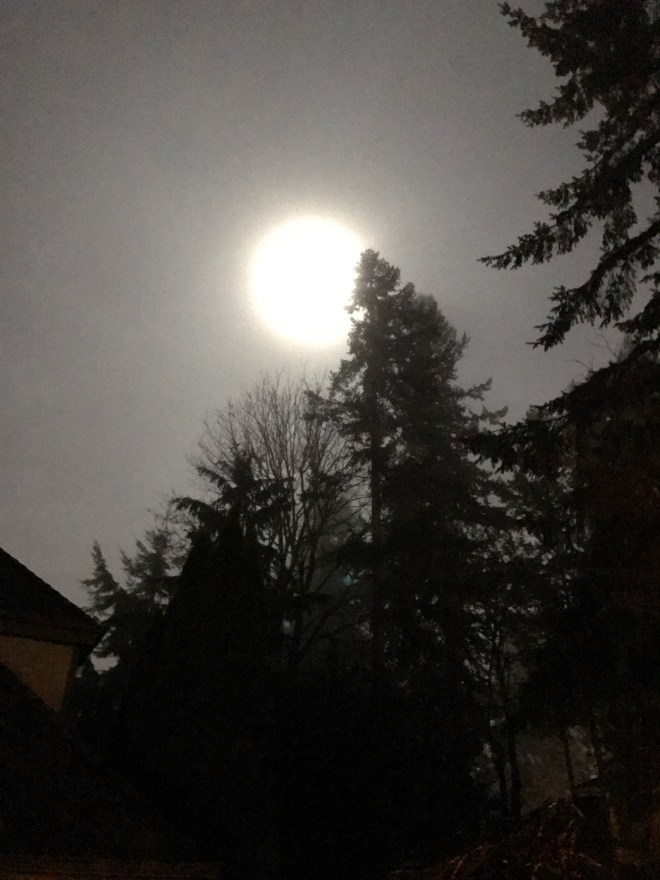
Autumn’s last full moon
illuminates my night walk.
No fear of stumbling.
Notes: The only supermoon of 2017 just happened Sunday night. We had a bit of fog that — instead of obscuring the light of the moon — only amplified it. It was so bright you could detect some colors.

The modest ginkgo
adorns herself in splendor
for All Hallows’ Eve.
NOTES: All Hallows’ Eve begins the 3-day observance of All Hallows’ Tide, dedicated to remembering the dead, including the saints, martyrs, and faithful departed.
According to current statistics from Open Doors, each month around the world, 322 Christians are killed for their faith,
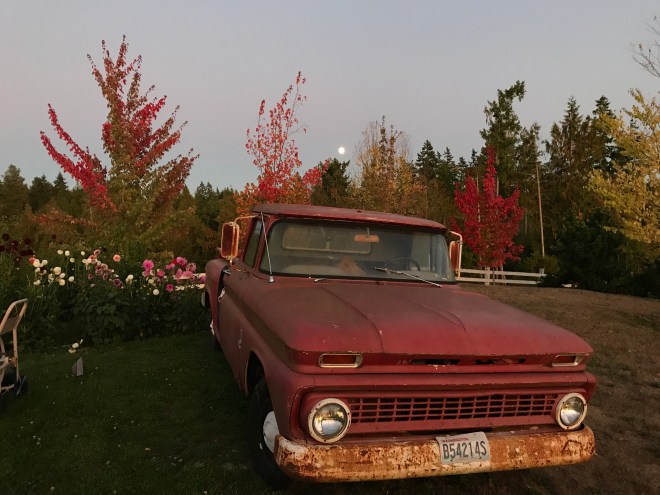
Autumn’s first full moon
upstaged by earthly beauty
and a rusty truck.
NOTES: We’re enjoying a gentle fall here in the Pacific Northwest. Just a kiss or two of rain to save the grass. Warm sunny days and cool nights.
We know the rains and clouds and grey will return and will be with us for months. But for now we’re basking in our little illusion of heaven on earth. Autumn flames and dies and winter comes.
Robert Frost says, “Nothing gold can stay.”
Gerard Manley Hopkins says, “It is the blight man was born for.”
I humbly say, “Soon, autumn’s chill will make the leaves fall down. All of this aching beauty will decay.”
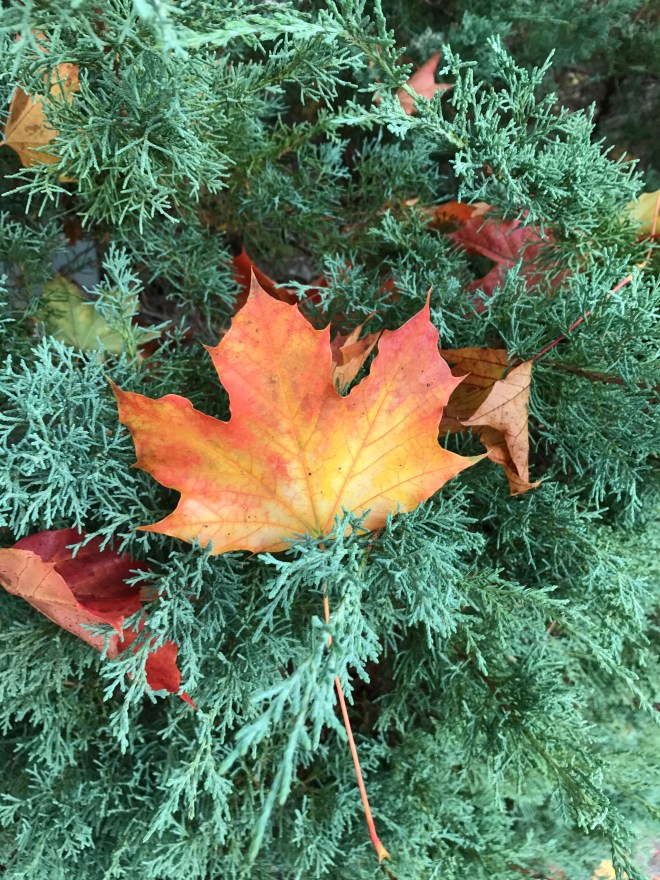
I’ve never been one,
For wallowing in the past,
But, the falling leaves …
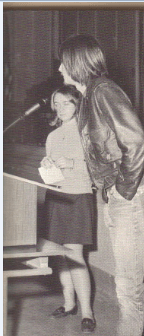
You exuded cool.
We all wanted to be you.
And now you’re gone.
NOTES: With great sadness I learned yesterday of the loss of a classmate. Tom Nicholas grew his hair long and sported leather jackets before any of the rest of us. He seemed to float above the traditional cliques and intrigues of high school.
Tom was cool without being a jerk.
His passion was rock and roll, and he pursued it with zeal. He got good, Really good. Played in some bands. Cut some records.
When Tom’s band Estus put out its self-titled album in 1973, it included Marc Bell on drums. Bell would go on to play in the Ramones for 15 years as Marky Ramone.
Tom would never make it big– like fill-stadiums-big — but he could play guitar and sing like crazy.
THE DAY TOM SETTLED THE MATTER
My most vivid memory of Tom was from the only all-class meeting of our senior graduating class of 1970. (I first wrote about this incident in a post last March.)
We were debating a motion to eliminate Honor Stations, a tradition that recognized the male and female student who best exemplified one of 4 qualities: Most Industrious, Best Citizen, Most Courteous, and Best Sport.
This was the fall of 1969, and revolution was in the air. The class immediately before us had voted to eliminate the position of Miss Fair Marshall, as it was considered a sexist relic of a bye-gone era. Now there was a push to finish the work of our predecessors and eliminate Honor Stations as a musty vestige from the past.
There may have been a person or two who spoke in opposition to doing away with Honor Stations. Most of our classmates were still fairly conservative.
But I distinctly remember the debate ending after Tom stood up.
Tom strode forward, leaned into the microphone, and pronounced with authority, “We have a word for this. It’s called ‘ego-trip.’” (That exact moment is preserved in the photo at the top of this page.)
That pretty much sealed the deal. Honor Stations were ego trips. The question was called, and the motion overwhelmingly carried.
The Class of 1970 had finished the work of the class that came before us. We had killed off the Honor Stations and drained the pomp from “Pomp and Circumstance.”
But, for better or worse, I’m pretty sure that never would have happened had Tom not spoken up.
Rest in peace, dear classmate.
 Poetic Champions